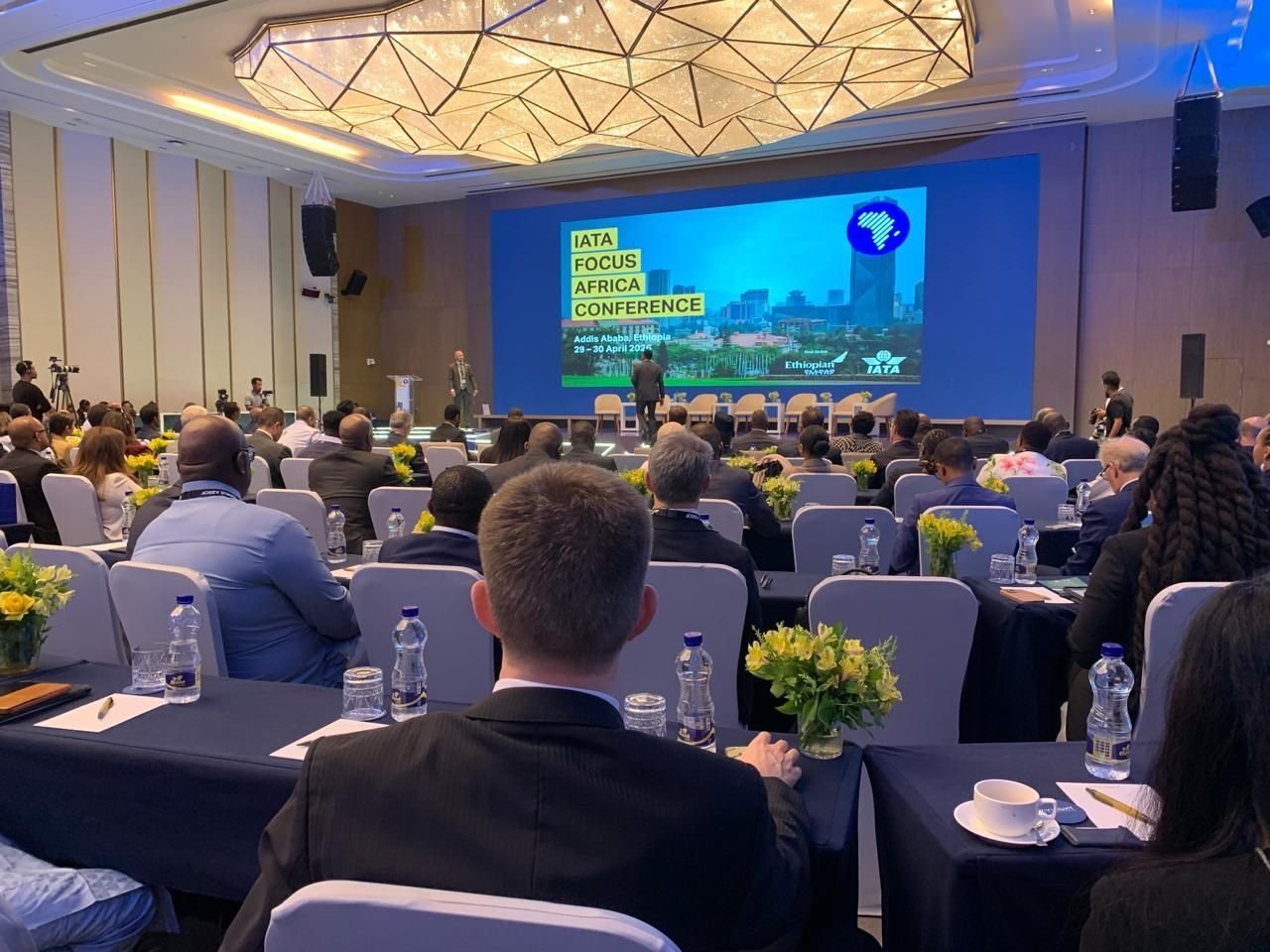
When Adenike Macaulay, CEO of Wakanow, took her seat on the Offers and Orders panel at IATA Focus Africa in Addis Ababa this week, her presence underscored a shift the agenda no longer needed to explain. The transformation reshaping how airlines build, price, and sell travel products is no longer a conversation airlines can have among themselves. The OTA layer is now central to whether modern retailing reaches the African traveller at all.
That recognition is overdue. For much of the past three years, the Offers and Orders debate in Africa has been framed almost entirely around airline readiness. Which carriers have activated NDC. Which are still on EDIFACT. Which have the technology partners and the internal will to move. The seller question has sat at the edges of that debate, treated as a downstream concern to be addressed once the airline side is sorted.
Focus Africa 2026 made clear that framing is no longer adequate.
The panel moderated by Diala Halaseh, Regional Head of Distribution and Payments, Africa and Middle East at IATA, brought together Julius Thairu of Kenya Airways, Alem Bayu of Ethiopian Airlines, and Giuseppe Candela of TPConnects alongside Macaulay. The discussion produced a conclusion that was direct in its implications for the seller community. Customer expectations are evolving faster than the supply chain can accommodate. Collaboration across the value chain is no longer optional. And modern retailing is already generating measurable returns for those who have committed to it. Every one of those statements applies as much to OTAs as it does to airlines.
The structural reality is straightforward. An airline can invest heavily in Offers and Orders capability, including dynamic pricing, personalised bundles, ancillary integration, and real-time availability, and none of it reaches the traveller if the OTA sitting between the carrier and the customer is still connecting through legacy connectivity that cannot carry that content. A traveller who wants a specific seat, a branded fare with flexibility, or a bundled ancillary offer is increasingly being directed toward channels that can actually deliver it. The last mile of modern retailing in Africa runs through the OTA. Right now, for most of that last mile, the infrastructure is not there.
This is not a technology problem in isolation. It is a commercial and strategic one. African OTAs operate in a market defined by price sensitivity, fragmented payment systems, inconsistent connectivity, and customers who often have limited alternatives. The business case for investing in NDC connectivity and Offers and Orders capability has to compete with more immediate operational pressures. Managing supplier relationships, navigating currency volatility, maintaining razor-thin margins, and serving customers across markets with vastly different payment preferences all consume the attention and capital that modernisation requires. For many smaller OTAs across the continent, the Offers and Orders investment case has not yet won that internal competition.
But the window for that calculation to remain acceptable is narrowing. Airlines that have committed to modern retailing are increasingly able to offer differentiated content through direct and NDC-connected channels that legacy-connected OTAs simply cannot match. For regional OTAs that cannot match that experience, the loss is incremental at first, but it compounds quickly into margin pressure, lower conversion, and reduced customer retention. The traveller who finds what they need elsewhere does not always come back.
The technology provider community is also moving. Aggregators and booking platforms that have built NDC connectivity are now able to offer seller partners access to content that was previously unavailable through traditional channels. The OTA that delays building those connections is not just falling behind airlines. It is falling behind its own direct competitors in the seller market.
Wakanow’s presence at the Focus Africa panel was telling precisely because it signalled that the conversation has shifted. As one of West Africa’s most prominent online travel agencies, its inclusion reflected a growing recognition that Offers and Orders in Africa cannot be treated as an airline-only transformation. The question is no longer whether African OTAs need to engage with modern retailing. It is how quickly they can move, and whether the technology and commercial support structures exist to help them get there without the resources that their counterparts in more developed markets take for granted.
That support question matters. The transition to Offers and Orders carries implementation costs, technical complexity, and commercial risk that are not evenly distributed across the market. Smaller OTAs without dedicated technology teams or established aggregator relationships face a steeper climb. Addressing that gap requires more than industry conferences. It requires concrete investment in the seller layer from airlines, technology providers, and industry bodies that have the most to gain from full value chain participation.
The airlines are not waiting. The technology providers are not waiting. IATA is not waiting. The African OTA that treats Offers and Orders as a future consideration rather than a present commercial imperative is not standing still. It is ceding relevance in the fastest-moving part of the travel value chain.