
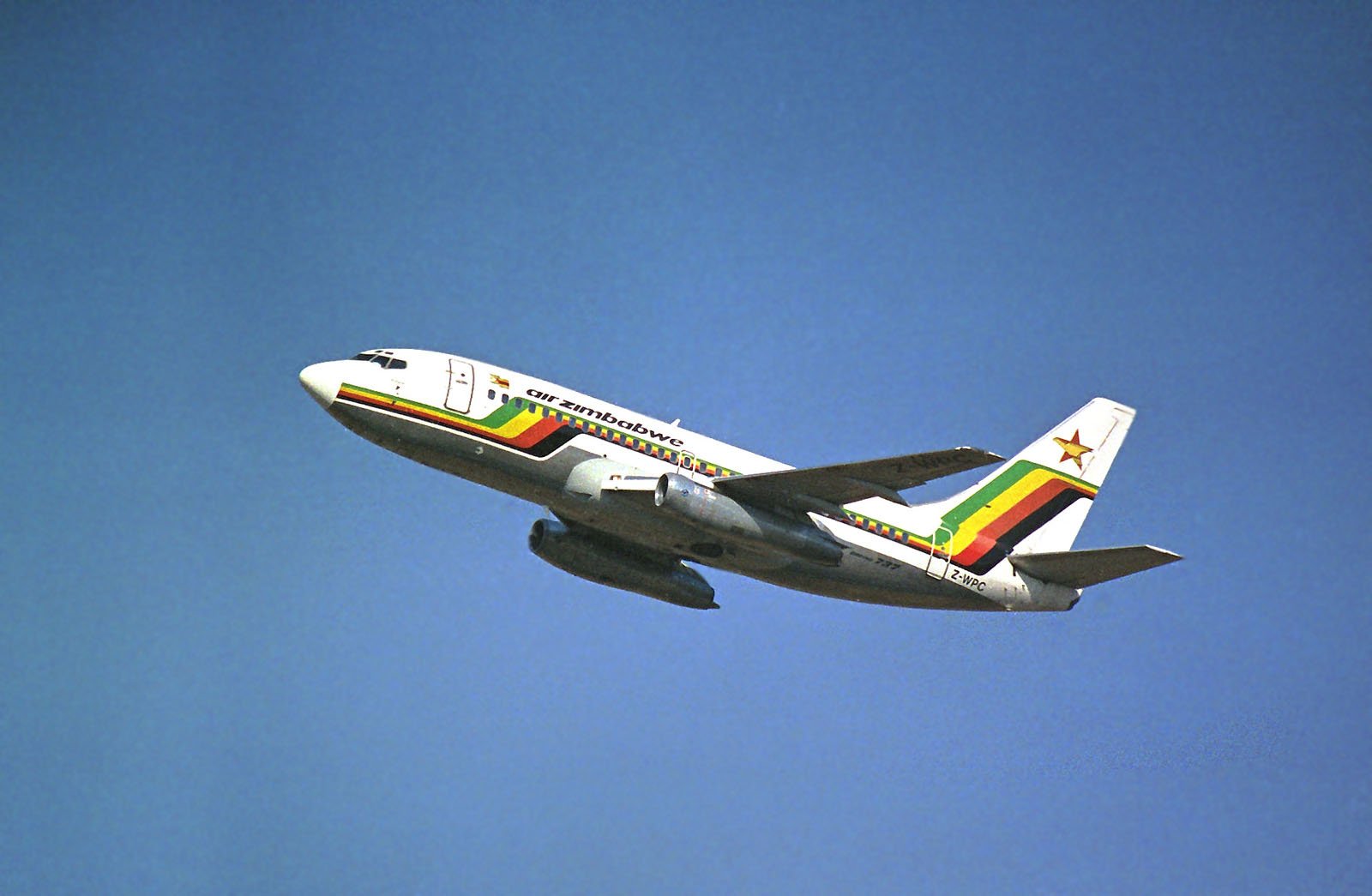
Air Zimbabwe is preparing to fly directly to London for the first time since 2011. The aircraft and the ACMI structure behind it are only part of the story. The more consequential question is what happens after the first flight goes on sale: Air Zimbabwe is not simply reopening a route. It is attempting to rebuild a distribution market that has evolved for fifteen years without it.
The airline plans to relaunch Harare to London Gatwick service by the end of July 2026, according to Zimbabwe’s Information Minister Zhemu Soda, who confirmed the timeline during a post-Cabinet briefing. The route will run three times weekly, on Wednesdays, Fridays and Sundays, using a leased Airbus A330 provided by Spanish carrier Plus Ultra Líneas Aéreas under an ACMI arrangement. Deputy Minister Mhona said the delay to the originally planned July 1 launch came down to licensing: Air Zimbabwe had been waiting on a foreign operator permit from the UK Civil Aviation Authority, which it has now secured.
Note on the record here: government officials, not Air Zimbabwe or Plus Ultra directly, are the source for both the relaunch confirmation and the aircraft specification. Soda cited a 302-seat configuration, 30 in business and 272 in economy. Other reporting in the weeks before the slip referenced an A330-200 rather than the -300 variant government sources now describe. TDN has not been able to independently verify the aircraft type with either airline, and treats the discrepancy as unresolved pending direct confirmation.
The regulatory mechanics explain why this route is returning through a lease rather than Air Zimbabwe’s own metal. The airline’s fleet has been barred from EU and UK airspace since 2017, when the European Commission placed the carrier on its Air Safety List over unaddressed safety oversight gaps, a designation tied to systemic compliance rather than a specific incident. That prohibition has stood for nine years. The ACMI structure, brokered by Chapman Freeborn Aviation Services, lets Air Zimbabwe sell and market the route under its own code while Plus Ultra supplies the aircraft, crew, maintenance and insurance required to legally operate into European airspace. Air Zimbabwe’s shareholder, the Mutapa Investment Fund, has described the London route as central to the airline’s broader recovery, with MIF chief executive John Mangudya positioning the ACMI period as a bridge toward eventual self-operated service if Air Zimbabwe can work its way off the safety list.
This is not a novel structure in African aviation. Other carriers have used wet-lease arrangements to restore or launch long-haul service without the capital outlay of owning widebody metal outright. What makes the Air Zimbabwe case notable is the explicit regulatory function the lease is performing: it is not primarily a capacity or cost solution, it is the mechanism by which a blacklisted carrier’s brand re-enters a market its own aircraft still cannot legally serve.
The commercial case rests on suppressed rather than absent demand. Citing Sabre Market Intelligence data, reporting on the relaunch puts total Zimbabwe-UK air travel at roughly 190,000 passengers in 2025, with about 108,000 of those trips specifically on the Harare-London city pair, routed indirectly through Addis Ababa, Dubai, Doha, Johannesburg and Nairobi.
Winning those passengers back is not automatic, and this is where the harder distribution question sits. Fifteen years is an unusually long period for booking habits to solidify around a route that does not exist. In markets like this one, corporate travel programs tend to settle into standing agreements with whichever connecting carriers have served the route reliably, online travel agencies tune their search rankings around the one-stop itineraries that have dominated the market, and frequent flyers accumulate loyalty balances with the connecting operators, plausibly including Ethiopian Airlines, Emirates, Qatar Airways and Kenya Airways given the hubs cited in the routing data. None of this is confirmed for the Zimbabwe-UK market specifically; TDN has not seen data on actual corporate contracting, OTA ranking behavior or loyalty distribution on this route, and offers it here as informed expectation rather than reported fact. But the general pattern is well established: consumer and corporate booking behavior does not automatically reset when a direct option returns. Air Zimbabwe has to actively persuade a market to change habits that have become routine, not simply offer a faster flight and wait for demand to follow.
That is a retailing problem as much as a scheduling one. Commercial success will depend on operating reliability, but also on fare competitiveness against the connecting carriers already entrenched in this market, on how broadly the route is loaded and priced across GDS and agency channels, on whether corporate travel buyers get negotiated access on comparable terms to what they already hold with Ethiopian or Qatar, and on the strength of Air Zimbabwe’s own digital sales channels for a diaspora audience that has spent fifteen years booking elsewhere.
Several of those commercial questions remain unanswered publicly: how broadly the service will be distributed through global distribution systems, whether it will be NDC-enabled or sold only through traditional GDS content, which agencies will have access to sell it, whether BSP settlement will run smoothly for a carrier re-entering a market after this long an absence, and whether any interline or codeshare relationships are planned to extend feed beyond Gatwick into the rest of the UK and Europe. None of this has been addressed in public statements so far, and it is worth watching for as the launch date approaches.
Air Zimbabwe’s return to London is a live test of a distinction that matters across African aviation right now: regulatory access and market access are not the same thing. Clearing the UK CAA and standing up a compliant aircraft solves the first problem. Whether that is enough to move a market that has spent fifteen years routing itself through Addis Ababa, Dubai, Doha, Johannesburg and Nairobi is a separate and considerably harder question, and one that will be answered in booking data, not press briefings.
Methodology note: This piece relies on statements from Zimbabwean government officials (Information Minister Zhemu Soda, Deputy Minister Mhona) reported via allAfrica/New Zimbabwe and Nehanda Radio, and on Sabre Market Intelligence passenger figures as cited in that reporting. TDN was unable to locate an on-record statement from Air Zimbabwe or Plus Ultra Líneas Aéreas directly confirming aircraft type, and flags the A330-200/-300 discrepancy across sources as unresolved. The paragraph on corporate contracting, OTA ranking and loyalty distribution reflects general distribution patterns rather than data specific to this route, and is labeled as such above. The July 1 launch date reported in earlier coverage did not materialize; this piece reflects the revised end-of-July timeline as of the most recent government confirmation.