
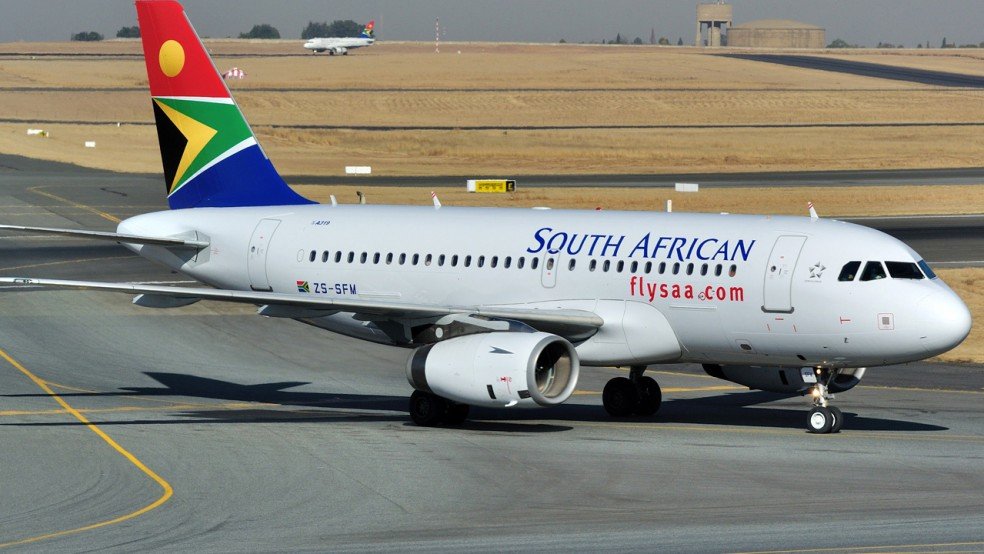
South African Airways and Turkish Airlines activated their codeshare partnership on 15 July, with the first joint flights operating a day later. The agreement itself is not new. It was signed in December 2025 in Geneva, on the sidelines of a Star Alliance Chief Executive Board meeting, by Turkish Airlines chairman Ahmet Bolat and SAA chief executive John Lamola. What changed this month is that the paper commitment became a live distribution product, with both carriers’ codes now sitting on each other’s metal and both fare structures now flowing through the same booking channels.
The routes tell the shape of the deal. Turkish Airlines places its TK code on SAA-operated flights out of Johannesburg and Cape Town to Durban, Port Elizabeth, Windhoek, Harare, Victoria Falls, and Mauritius, extending its reach into the regional network SAA already flies. In return, SAA places its SA code on Turkish Airlines flights connecting Johannesburg, Cape Town, and Durban to Istanbul, along with onward legs to Frankfurt, Paris, and London Heathrow. Turkish Airlines already serves 65 destinations across 41 African countries, more than any other non-African carrier. This codeshare does not add aircraft or new routes to that count. It adds distribution reach, letting Turkish Airlines sell deeper into southern Africa’s domestic and regional network without deploying a single additional flight, while giving SAA a wide-body long-haul network into Europe that it does not operate itself.
That is the part worth sitting with. SAA has spent years rebuilding capacity after its 2020 business rescue, and its own long-haul footprint remains a fraction of what it once was. A codeshare with Turkish Airlines does more for SAA’s global reach than any single aircraft order could in the near term, because it converts Istanbul into a functional hub for South African travelers heading to Europe, without SAA needing to fly there itself. For Turkish Airlines, the trade runs the other way. Rather than building out its own regional African network city by city, which is slow and capital intensive, it buys distribution depth through a single agreement with a carrier that already holds the domestic and regional slots, schedules, and local market knowledge.
This is a pattern that keeps recurring across African aviation, and one TDN has tracked before: African carriers offering network access to global partners in exchange for connectivity their own balance sheets cannot support alone. Ethiopian Airlines has built an entire strategy around inbound partnerships of this kind. Egyptair, Kenya Airways, and others have pursued similar arrangements with varying degrees of reciprocity. The SAA-Turkish deal fits the pattern closely, though the terms here look more balanced than most, since SAA is not simply granting access, it is receiving a long-haul network in return that materially extends what its own passengers can book on an SA code.
The distribution mechanics behind this deal matter as much as the commercial logic. Codeshare agreements live or die on how cleanly they move through GDS content, fare construction, and interline agreements, and a codeshare between a Star Alliance carrier already deep into NDC deployment and a partner still rebuilding its own retailing infrastructure is not a trivial technical lift. Whether SAA’s systems can support the fare filing, ticketing, and servicing that a codeshare of this scale requires, at the same standard Turkish Airlines runs elsewhere in its network, is worth watching. SAA has been rebuilding its commercial and technology infrastructure since its 2020 business rescue, and how far that rebuild extends into NDC and retailing capability is not yet public. That gap, more than the route map, is the real test of whether this partnership scales into something larger or stays a modest regional add-on.