

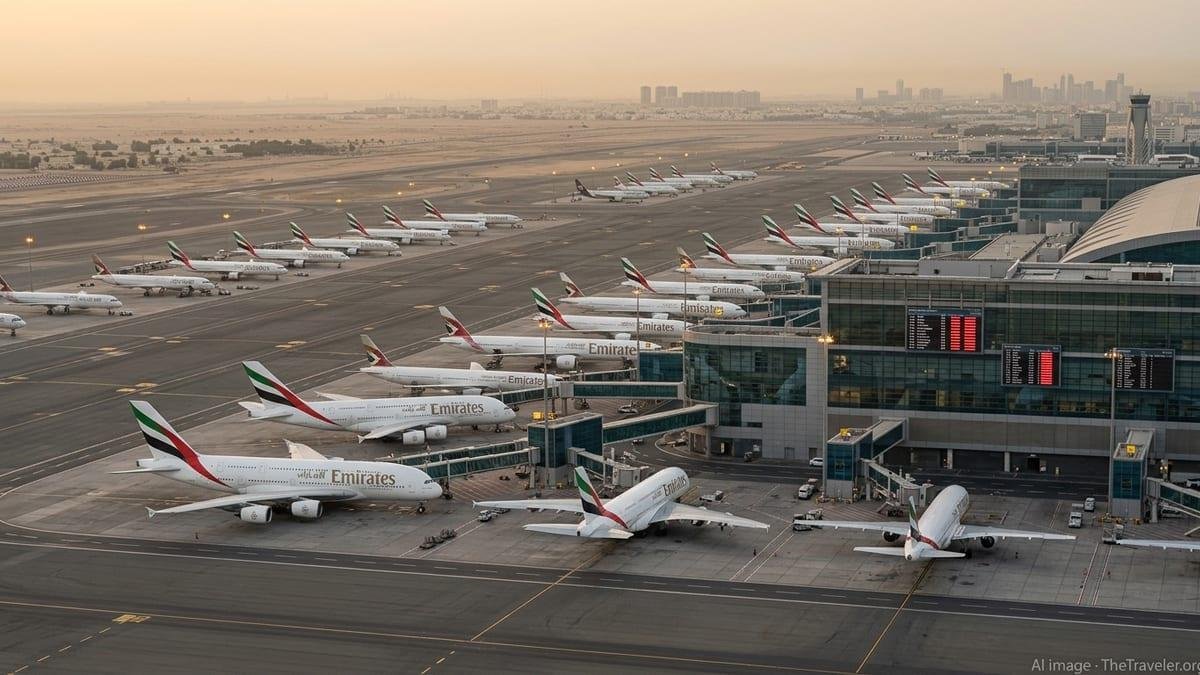
The February 2026 strikes on Gulf airports created an immediate operational crisis. Hubs closed. Aircraft were grounded. Thousands of flights were cancelled. Six months later, the deeper problem is still unfolding in a place where few in the airline industry look: payment settlement infrastructure.
Airlines across MENA are discovering that payment, refund, foreign exchange and liquidity systems designed for stable routes and predictable transaction flows behave very differently when demand collapses, refund volumes spike and routes are redrawn. This is not merely a customer service problem or a cash-flow squeeze. It is a structural vulnerability in how most airlines have architected their payment operations.
The lesson extends far beyond the Gulf. As airlines in Africa and other emerging markets make foundational decisions about their payment and settlement infrastructure over the next two to three years, they should pay close attention to what MENA’s disruption has revealed about payment resilience.
The Visible Crisis and the Invisible One
IATA’s June 2026 outlook captured the headline damage: Middle East airlines face a collective $4.3 billion loss in 2026, a swing from $7.2 billion profit in 2025. Passenger demand is down 11.4 percent. Airspace closures and rerouting have dismantled the hub transfer model that generated much of the region’s profitability.
That framing focuses on revenue. But it obscures a different problem: the cost to payment operations themselves.
When a major geopolitical disruption hits an airline hub, refund volumes do not just spike. Cancelled bookings need to be rebooked, often on different routing at different prices. Airlines face chargebacks from card networks. Settlement cycles that normally run on predictable 14- or 21-day rhythms hit cash-flow constraints. Multiple currencies amplify foreign exchange exposure. Reconciliation becomes complex. Manual exceptions balloon.
Repayd CEO Will Plummer addressed this in a March roundtable with The Paypers, noting that the real friction in MENA payment operations comes from several pressures simultaneously: increased cancellations compressing timelines, higher refund volumes straining reconciliation infrastructure, and the challenge of managing foreign exchange exposure and settlement timing across different markets during periods of volatility. The greatest operational strain emerges not from the refund decision itself, but from the simultaneous pressure on liquidity, timing alignment and cross-border transaction costs.
In other words, the payment infrastructure was exposed as fragile because it was never designed to absorb that much pressure at once.
How Payment Architecture Shapes Resilience
The Billing and Settlement Plan, which has underpinned airline ticketing for decades, is fundamentally a settlement and reporting mechanism. Agents report sales and refunds through a centralized process and remit one net amount on the settlement date. The model assumes periodic stability: predictable refund volumes, consistent timing, manageable currency flows.
That model worked during normal operations. When disruption hits, it exposes a structural weakness that is almost never discussed in airline distribution or payment strategy conversations.
A sudden spike in refunds can create cascading pressures across the settlement ecosystem that was designed around more predictable transaction flows. Refund settlement timing becomes a constraint. When refund obligations accelerate faster than normal settlement and cash cycles, airlines can face liquidity gaps. Currency conversions across multiple markets amplify foreign exchange exposure without matching treasury management resources. Reconciliation across agents, airlines, payment networks and BSP becomes complex when exception volumes exceed manual processing capacity. Agents and TMCs dependent on BSP settlement cycles to manage cash flow face pressure when those cycles slip or chargebacks reverse already-received funds.
Airlines, meanwhile, become responsible for refund guarantees they may not have sufficient liquidity to honor if they are also managing sudden capacity losses and revenue declines.
The payment infrastructure does not simply process fewer transactions more slowly. Under enough pressure, the assumptions supporting it can begin to fail.
The Distribution Question
Over the past several years, airlines have begun shifting from relying solely on the BSP model toward direct distribution through NDC channels and toward accepting direct payment from customers or travel companies. This is not a single shift; it is multiple parallel shifts: distribution (offer and order formats), merchant relationships (who accepts the payment), and settlement and reconciliation (how money flows and is reported).
These shifts are sometimes conflated in industry conversation, but they are distinct problems. NDC is a distribution format. It does not by itself solve payment, acquiring, merchant-of-record responsibilities, or reconciliation. An airline using NDC still needs to decide how it will process payment, manage FX exposure, reconcile transactions, and handle refunds. Those decisions are architectural questions separate from the distribution question.
MENA carriers have taken different paths. Qatar Airways maintains tiered NDC settlement arrangements: agents in BSP markets can sell through NDC without a separate agreement and continue to settle through the BSP, while agents in non-BSP markets must sign direct NDC Seller Agreements. That flexibility created options when conflict disrupted operations. Some payment flows could run through the familiar BSP rhythm; others could run through direct airline settlement.
Etihad invested in direct distribution and payment relationships earlier than most regional carriers. That investment created a different architectural positioning, with more direct relationships between the airline and its distribution partners. Whether that positioning specifically reduced payment settlement strain during the 2026 disruption is unclear without access to internal payment operations data. The broader point is that earlier NDC adoption gave Etihad different options than carriers still primarily dependent on BSP and legacy distribution channels.
Most carriers in MENA continue to operate hybrid models: BSP for core agency operations, NDC for growth channels, direct payment relationships for select segments, and manual processes for exceptions. When disruption spikes exception volumes, those manual processes become the bottleneck. Refund processing timelines slip not because of policy but because the headcount and systems capacity cannot keep pace.
Who Bears the Cost
When payment systems strain, the burden does not distribute evenly. Travel agents and TMCs absorb chargebacks for disruptions outside their control. They must refund customers but may not receive funds back from airlines on the timeline they expected. Small agencies dependent on airline commission revenues and BSP settlement cycles face cash-flow crises.
Airlines manage foreign exchange exposure on routes that no longer exist, currency hedges that are no longer effective, and liquidity demands that grow as they extend refund timelines.
Payment processors and acquiring banks handle higher dispute volumes and chargebacks without necessarily being compensated for the incremental work.
Passengers bear the uncertainty and delays, waiting weeks for refunds to appear.
The system does not break gracefully. It breaks in ways that impose costs across the entire distribution chain.
What This Means for Emerging Markets
Airlines in Africa and other Second-Speed Markets are currently making foundational decisions about their core systems architecture: PSS, payment processing, settlement and reconciliation, currency management, and distribution. Most of these airlines do not yet have the operational complexity or legacy system constraints that MENA carriers have accumulated.
That is an opportunity, not a liability.
A carrier designing its payment architecture today can build in payment resilience from the foundation. It can embed redundancy in payment processing and reconciliation. It can structure settlement relationships to handle disruption without cascading failure. It can plan currency management and hedging strategies that do not assume perpetual stability.
MENA’s crisis offers a template for what not to do: build payment infrastructure assuming normal conditions will hold. The lesson is not that disruption is predictable. It is that payment resilience is a structural capability that must be designed in before disruption occurs.
Carriers making PSS decisions today face a choice: treat payment, settlement and distribution as separate domains built in sequence, or integrate them from the beginning. A carrier building a new PSS now has an advantage that MENA’s carriers did not: the opportunity to think about payment resilience as a foundational requirement, not a problem to solve after the technology is deployed.
The Lesson for Emerging Markets
Payment infrastructure does not generate headlines. It does not fit into quarterly earnings calls. It does not appear in analyst reports on distribution strategy.
But MENA’s disruption has demonstrated something that airline distribution conversations often overlook: the ability to sell a ticket is only one part of the system. The harder question is whether the money can still move, settle, reconcile and return when the operating network suddenly changes.
MENA carriers are managing disruption with the payment infrastructure they built before the crisis. African and other emerging-market carriers still have an opportunity to make different choices.
The question is whether payment resilience will remain a technical backend consideration or become part of the strategic architecture of the airline itself. Because when routes disappear, currencies move, refunds accelerate and settlement cycles come under pressure, distribution does not operate independently of payment. The two become inseparable.
The airlines that design for resilience before they need it will have more options when disruption comes. The point is not to predict the next crisis. It is to make sure the payment infrastructure is ready when the operating model changes.
Build it before you need it.