
There is a version of the NDC story that gets told about Europe as if the region moves as one block: legacy carriers pushing surcharges, agencies grumbling, adoption climbing steadily toward some inevitable order-based future. Look carrier by carrier and that story falls apart. What Europe actually has is half a dozen different adoption strategies running in parallel, several of them contradicting each other on basic questions like whether a surcharge should even exist, sitting on top of a GDS layer that is itself splitting into three incompatible bets, while much of Europe’s largest capacity sits outside the conventional NDC story altogether.
Lufthansa Group is the reference case because it has been at this longer than anyone and because its numbers are public enough to track. The Distribution Cost Charge, first introduced in 2015, rose again for tickets issued from January 1, 2026, from 17.50 euros to 18.00 euros on Amadeus bookings and from 22.00 euros to 22.50 euros on Sabre. Trade press then reported a further increase effective May 5, 2026, putting the Amadeus-routed charge at 19.00 euros, timed to coincide with ITA Airways formally joining the group’s NDC ecosystem following Lufthansa’s move from 41 percent to 90 percent ownership of the Italian carrier. The group says roughly three-quarters of total bookings now route through NDC or direct channels. That figure comes from Lufthansa itself, not from an independent audit, and TDN treats it as a company claim rather than a verified industry statistic, but even discounted for self-interest it is the strongest evidence in Europe that a sustained multi-year surcharge campaign can move volume rather than simply function as a toll.
Air France-KLM has spent the same period doing the opposite while claiming to arrive at the same place. The group has repeatedly delayed its own EDIFACT surcharge, most recently pushing implementation from an earlier date to July 1, 2026, and has framed its posture publicly as accompanying the market rather than imposing on it. That is not a softer version of Lufthansa’s playbook. It is a different theory of change entirely, betting that agencies and corporate buyers convert faster when a deadline feels earned rather than forced, even at the cost of surcharge revenue Lufthansa has already collected for years. The two largest network groups in Europe are running opposite experiments on the same underlying problem, in the same market, at the same time, and neither has published results that let an outside observer say definitively which bet is winning.
IAG occupies a third position that gets less attention because it never centered on a punitive fee at all. British Airways, Iberia, Vueling, and Aer Lingus each signed NDC distribution agreements with both Amadeus and Travelport, giving IAG content to agencies through two separate GDS-native NDC pathways rather than forcing a migration through cost. The group’s approach reads as enrichment-led: richer ancillary content, additional price points, and intelligent storefronts delivered through the GDS itself, instead of a fee designed to push volume off it. IAG posted the strongest operating margin among the three major European groups in the first half of 2026, and it would be a mistake to credit that margin to distribution strategy specifically since fuel costs, labor agreements, and network mix all moved in the same period, but it does mean IAG has had no commercial emergency forcing it toward Lufthansa’s more aggressive model, and has not adopted one.
Finnair is the case that deserves more attention than its size suggests it should get, because it has consistently moved first and moved further than any of the larger groups around it. It committed in 2021 to phasing out EDIFACT for agency channel sales by the end of 2025, describing itself at the time as the first airline to make that commitment. It had already become the first airline to create a Native Order in 2025. In August 2026 it took that strategy further, introducing native Offer and Order capabilities on its pilot agency platform, built on Amadeus’s Nevio, distributing bundled ancillary products through NDC in a way that runs on Order infrastructure directly rather than as an add-on layered onto a traditional passenger service system. That evolution, from Native Order to a fuller native Offer and Order rollout on Nevio, is a materially different technical trajectory from simply adding an NDC connection alongside EDIFACT, which is what most of the carriers described above have done. Finnair’s own agency communications frame the move under the heading “why NDC is not the endgame,” which is a more advanced articulation of the strategy than almost any other European carrier is currently making public, small as the airline is relative to the three big groups.
Turkish Airlines sits closer to the Lufthansa model but arrived by a different route and with sharper numbers. The carrier introduced a distribution cost recovery fee in October 2024 that has since risen to 30 dollars per ticket for bookings made through GDS EDIFACT channels, effective May 1, 2026, confirmed on the airline’s own distribution pages. Its NDC platform, TKConnect, is exempt, and Turkish Airlines offers agencies three onboarding paths: an aggregator connection that the carrier itself describes as plug and play for agencies with an existing aggregator relationship, a web portal, and a direct API connection that Turkish Airlines’ own documentation estimates takes six to eight weeks to implement. That detail is worth sitting with, because it is the airline conceding in its own language that the alternative to paying the surcharge is not a switch you flip but a technical project with a timeline, which changes how genuinely optional the fee is for a smaller or less resourced agency.
Air Europa took a structurally different approach again, introducing a Distribution Channel Fee from July 1, 2026, priced by origin and destination rather than by ticket, at 12 euros for a one-way itinerary within its core European and rest-of-world points of commencement, doubling to 24 euros for a return. Certain origin markets are billed in dollars instead. An itinerary that generates more than one origin-destination pair through connections can accumulate the fee more than once on a single journey, which makes it a meaningfully different cost structure from a flat per-ticket surcharge and one that will land hardest on exactly the connecting itineraries that indirect channels tend to specialize in.
Underneath all of these carrier-level strategies sits a GDS layer that is no longer moving in one direction either. Sabre’s chief executive has publicly accused Amadeus of anti-competitive practices tied to Altéa system access and said the company is exploring regulatory and legal remedies, a level of public aggression between the two companies that trade press has described as unusual for an industry that typically settles its disputes through quiet contract negotiation rather than statements on investor calls. Travelport, meanwhile, has taken a third path that has nothing to do with the Sabre-Amadeus fight, committing capital toward positioning itself as the connective infrastructure layer for AI-native booking agents rather than competing directly on the traditional NDC adoption narrative at all. European network carriers building Offer and Order strategies are doing so on top of infrastructure providers who no longer agree on what the technology is for, which is a variable that shapes what airlines can actually build and on what timeline in a way that gets little attention in adoption coverage focused purely on carrier announcements.
Consolidation adds a further complication that has nothing to do with any airline’s technology readiness. Air France-KLM and Lufthansa have submitted binding offers for a stake in TAP Air Portugal, after IAG withdrew from the process in April. Lufthansa has already moved from 41 to 90 percent ownership of ITA Airways, while Air France-KLM is moving to take a majority stake in SAS. Every one of those target carriers sits somewhere on its own NDC and distribution timeline, and every one of those timelines becomes subordinate to whichever group ends up holding the controlling stake once a deal closes. SAS’s distribution strategy under Air France-KLM ownership will increasingly be shaped by the strategy of its new parent. The practical effect is that European adoption, already concentrated among a handful of large groups, is becoming more concentrated still, not because more airlines are actively choosing to adopt NDC, but because fewer airlines are left making that choice independently at all.
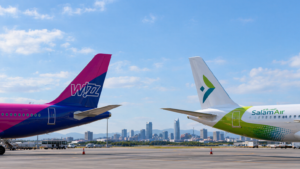
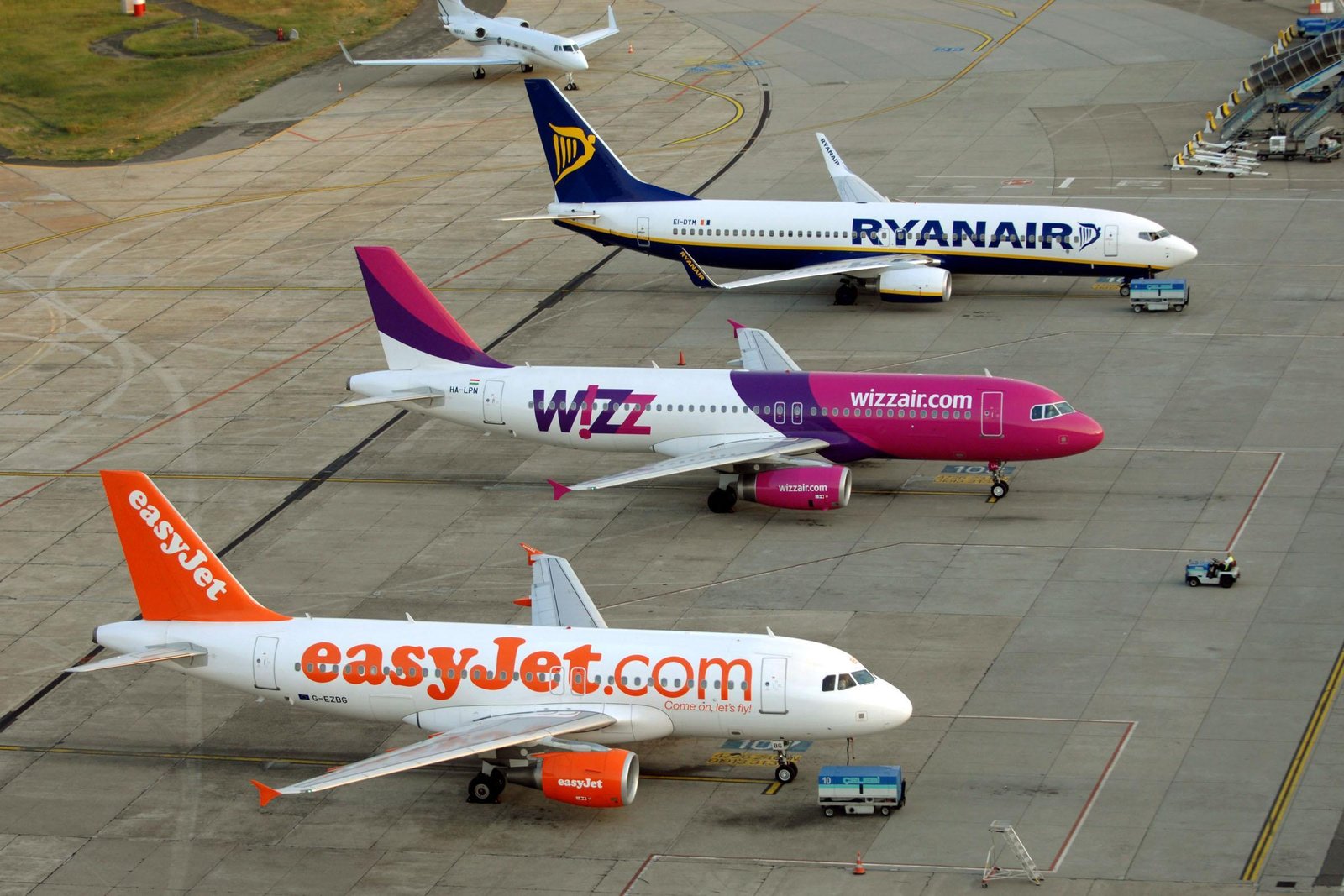
And then there is the part of European aviation that appears in almost none of this. Ryanair, easyJet, and Wizz Air are, by seat capacity, the three largest airlines operating in Europe as of September 2026, and none of them is a meaningful part of the conventional NDC adoption story, because none of them ever depended on a GDS to begin with. Their distribution model was direct-only before NDC existed as a standard. Wizz Air added 1.7 million seats year on year through September 2026, a 25.8 percent increase and the fastest growth of any top-ten European carrier, achieved with none of the Offer and Order infrastructure Lufthansa, Air France-KLM, and Turkish Airlines are currently investing in. For a large and growing share of European airline capacity, adoption is not slow. It is simply not the question anyone is asking, which means every percentage figure quoted about European NDC adoption is, implicitly, a statistic about network carriers only, applied to a region where network carriers no longer carry most of the passengers.
Put the pieces together and the honest description of European NDC adoption in 2026 is not a single curve moving toward maturity. It is at least four distinct experiments running simultaneously: Lufthansa’s high-pressure surcharge model, Air France-KLM’s delayed and voluntary version of the same destination, IAG’s enrichment-without-punishment approach, and Finnair’s technical leap past all three into native Order infrastructure that none of the larger groups have matched yet, all balanced on top of a GDS layer that is fracturing into three separate strategic bets, while consolidation quietly transfers adoption decisions away from the airlines that were making them and toward whichever acquirer ends up holding the stake. Europe’s three biggest carriers by seat count are watching none of it. Anyone still describing this as Europe adopting NDC is describing a fifth of the picture and calling it the whole thing.