

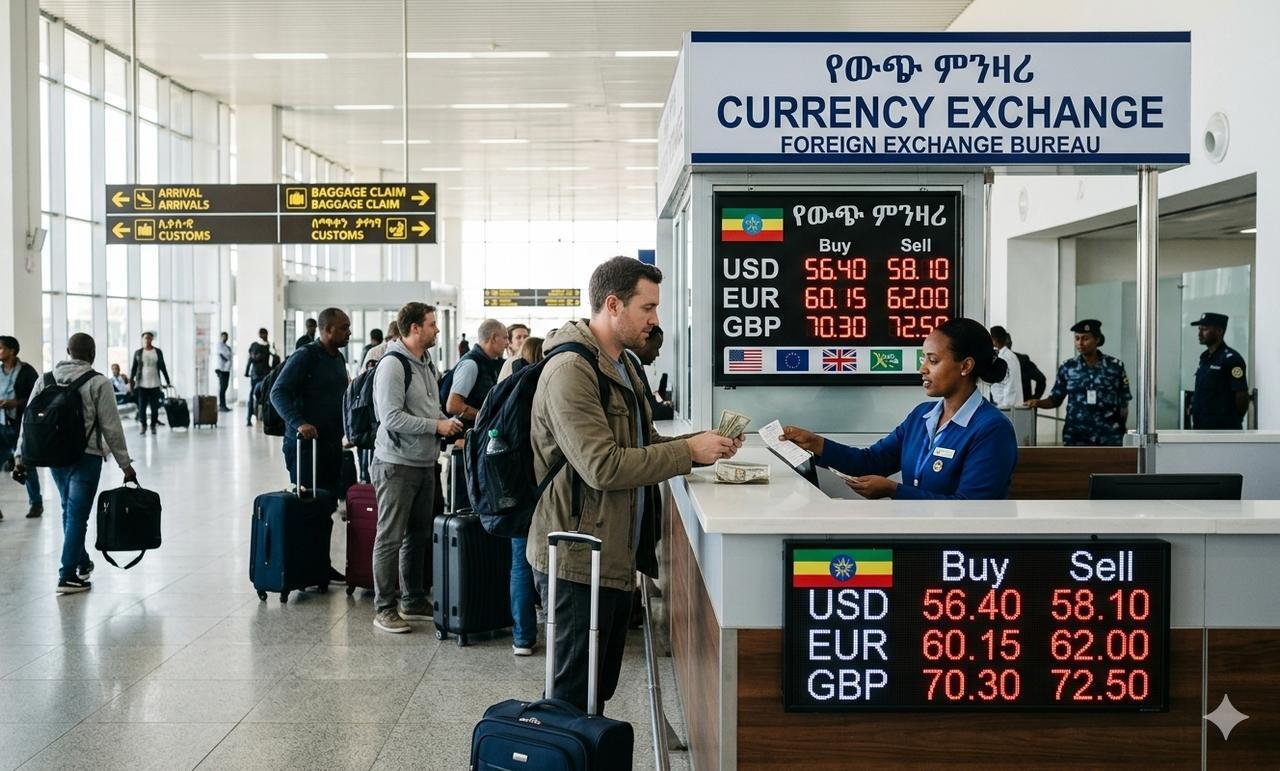
A “full refund” is a nominal claim. In currencies under pressure, it is not necessarily an economic one. TDN looks at a payments gap the industry doesn’t have a shared answer for.
An airline that refunds a cancelled fare has, by its own definition, made the passenger whole. The refund policy was followed. The full amount paid was returned. Nothing in that transaction is necessarily wrong.
But “full” here means full in the currency and amount originally charged, not necessarily full in what that money can still buy. In markets where the local currency is depreciating meaningfully against the dollar, a passenger can receive back every unit they paid and still be worse off than on the day they booked.
The airline’s ledger says full refund. The passenger’s purchasing power says otherwise.
That gap between the two, rather than any airline error, is the actual subject here.
FX loss and processing delay are not the same problem
Two things often get blurred together in refund complaints: how long a refund takes, and what happens to its value while it is being processed.
A slow refund is a service failure regulators already know how to legislate against. A refund that arrives within the required period but has lost value because the currency moved is a different problem entirely, one that timeliness rules do nothing to address.
It is also important to separate currency depreciation from inflation. Inflation erodes purchasing power over time within a currency. FX depreciation is the exchange rate itself moving against another currency, typically the dollar in international travel. The two can compound each other in a market such as Ethiopia, but they are not interchangeable.
That distinction matters because the industry has mechanisms for managing some forms of currency risk. What it does not have is a commonly accepted framework for determining who should absorb the loss when a passenger’s refund crosses a period of significant FX movement.
A currency doing this in real time
Ethiopia is a useful live example.
The National Bank of Ethiopia floated the birr in July 2024 as part of an IMF-backed reform programme, a move widely reported at the time as producing an approximately 30% devaluation. The currency has remained under pressure since.
Public reporting has pointed to further depreciation in 2025 and continued weakening through 2026, illustrating how quickly the value of a local-currency payment can change in a market experiencing sustained FX pressure.
The point is not that Ethiopian airlines are doing anything wrong, nor that a particular refund is taking an unusually long time.
It is that a currency moving this quickly creates a form of exposure that is largely invisible in conventional refund reporting.
Consider a simple example.
A passenger pays 100,000 birr for a ticket. The booking is cancelled, and the airline refunds exactly 100,000 birr.
The airline has returned 100% of the nominal fare.
But if the birr has depreciated materially in the interim, that 100,000 birr may buy less in dollar-linked goods and services than it did when the ticket was purchased.
Nothing went wrong with the refund transaction itself.
The economic outcome has nevertheless changed.
And the exposure window does not necessarily begin and end with the airline. Depending on the payment route, a refund can pass through the airline’s approval process, a processor or acquirer, and the passenger’s bank before the funds become available again.
Every additional handoff creates another point in time at which the currency can move.
The issue, therefore, is structural rather than dependent on a particular refund taking 30, 45 or 60 days.
Who is supposed to hold that risk?
This is the question the industry does not have a settled answer to.
There are several places the loss could theoretically land.
The passenger can absorb it, which is effectively what happens when the refund obligation is defined purely as returning the original currency amount.
The airline could absorb it by returning an FX-adjusted amount rather than simply the nominal fare.
The payment processor or acquirer could absorb some of the exposure by incorporating currency risk into how refunds are priced and settled.
Or the industry could develop some form of shared mechanism in which the exposure is divided between the parties.
None of these approaches is straightforward.
An FX-adjusted refund, for example, creates a new financial obligation for the airline and raises questions about which exchange rate should apply, who determines it, and what happens when the currency appreciates rather than depreciates.
That is precisely why this has remained largely outside the industry’s standard refund conversation.
The comparison already exists inside travel payments
The more interesting comparison is not consumer protection. It is airline distribution and settlement.
BSP and ARC settlement processes already recognise that timing and currency create financial exposure between airlines and travel sellers. Those risks are not simply treated as somebody else’s problem. They are built into settlement structures, treasury processes, commercial agreements and financial controls.
Passenger refunds are different.
The industry has sophisticated infrastructure for managing currency and timing risk between airlines and intermediaries, while the final leg between the airline and the passenger is generally governed by a much simpler principle:
Return the amount originally paid.
That principle is operationally clean. It is also increasingly uncomfortable in markets where the underlying currency can move substantially during the life of a transaction.
The question is not whether the airline should be punished for currency depreciation.
It is whether the industry should continue treating the passenger as the automatic holder of that risk simply because the existing definition of a refund is denominated in the original currency.
Nigeria shows the other half of the problem
Nigeria provides a useful comparison because its aviation regulator has increasingly focused on the timeliness of passenger refunds.
The Nigeria Civil Aviation Authority’s refund rules provide defined timelines for electronic refunds and immediate cash refunds in relevant circumstances. The regulator has also publicly disclosed refund enforcement and payments by domestic carriers.
That addresses one side of the equation: time.
It does not address the other: value.
A refund arriving within the prescribed period can still be worth less in real or FX terms than the money the passenger originally committed.
The distinction matters because a faster refund reduces exposure. It does not eliminate it.
And this is different from Nigeria’s earlier trapped-funds crisis involving airlines and blocked foreign-currency repatriation. That was primarily an airline-to-central-bank currency and settlement problem. The issue examined here is airline-to-passenger exposure.
Both involve currency risk inside the travel payments chain.
They simply put that risk on different parties.
The actual provocation
The question worth putting to airlines, PSPs and regulators is therefore not simply whether a passenger received a refund.
It is whether “full refund” should continue to mean the full nominal amount in the original currency, regardless of what happens to that currency between payment and repayment.
There is no obvious answer.
An airline cannot reasonably be expected to guarantee every passenger’s purchasing power against every currency movement. At the same time, a passenger can reasonably ask why a transaction described as a “full refund” can leave them economically worse off through no action of their own.
That is the gap.
And it is potentially a payments problem before it becomes a passenger-rights problem.
A processor that could materially shorten the FX exposure window would have something meaningful to sell. An airline that developed a transparent framework for handling substantial currency movements during refunds would have something genuinely differentiated to offer. A regulator that recognised the distinction between refund timeliness and refund value would be addressing a problem that existing rules largely leave untouched.
The industry does not necessarily need to decide that every FX loss belongs to the airline.
But it may need to decide who the risk belongs to.
Right now, the answer is mostly implicit.
The passenger takes it.
A note on the numbers
The figures above have been checked against multiple public sources rather than left as unverified claims.
The initial roughly 30% devaluation following the National Bank of Ethiopia’s July 2024 float is confirmed by contemporaneous AP wire reporting from the day it happened, corroborated by Wikipedia’s summary of the policy and by regional business coverage. The 2025 decline of more than 15%, the August 2026 level of around 162 birr per dollar, and the birr’s standing as the weakest of the 23 African currencies Bloomberg tracks all trace back to Bloomberg-sourced reporting picked up consistently by regional outlets through 2026. The roughly $2.2 billion in central-bank support spent in 2026 comes from the same reporting line. That figure is distinct from a separately reported $2.6 billion in foreign-exchange losses the National Bank of Ethiopia recorded in its own audited accounts for the year ending June 2025, a different metric covering a different period, and the two should not be conflated in the piece.
Nigeria’s Part 19 refund timelines, immediate refunds for cash purchases and a 14-day window for electronic payments, are drawn directly from on-record NCAA statements reported consistently across multiple Nigerian outlets, not paraphrased secondhand.
The BSP/ARC comparison holds up under scrutiny rather than overstating what that infrastructure does. IATA’s own published material on its Currency Clearance Service describes it explicitly as a mechanism airlines use to manage exchange-rate exposure and reduce conversion losses on foreign sales, and its Five Day Rate mechanism governs how local-currency billings convert for settlement. The characterization in this piece, that airline settlement infrastructure already treats currency exposure as something to be actively managed rather than left to fall where it lands, is accurate to what that system does.
The refund-exposure framing itself, including the 100,000 birr example, remains TDN’s own analytical construction rather than a disclosed figure from any airline, processor, or financial institution.