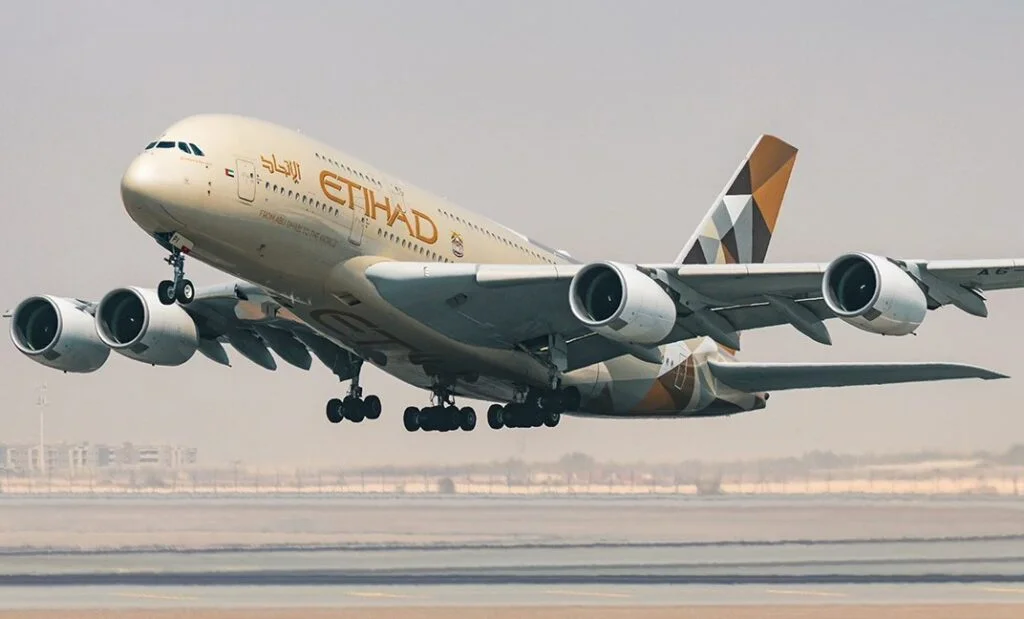
Etihad Airways has spent the past three weeks signing interline agreements with three African carriers across three regions: Air Peace in Nigeria, Africa World Airlines in Ghana and Fastjet Zimbabwe. None of the agreements put an Etihad aircraft on the ground in a new African city. Instead, they are building the ticketing, loyalty and distribution infrastructure for routes that are still months away.
The pattern is consistent enough to be a strategy rather than a coincidence.
Three deals, one shape
The Fastjet Zimbabwe agreement was signed in Harare on 7 July 2026. It covers interline, a future codeshare and reciprocal frequent flyer benefits, with ticket sales opening 24 August. Fastjet becomes Etihad Guest’s 32nd airline partner. Passengers connecting through Harare gain single-ticket access onward to Bulawayo, Victoria Falls and Johannesburg. The agreement explicitly prepares the ground for Etihad’s direct Abu Dhabi to Harare service, confirmed for 24 March 2027.
The Africa World Airlines agreement was signed in Accra and took effect 24 July 2026. It covers codeshare, interline, cargo and frequent flyer cooperation, to be phased in stage by stage. AWA’s network already reaches Kumasi, Tamale, Takoradi, Lagos, Abuja and Ouagadougou, all of which become reachable from Etihad’s 118 destinations on a single ticket once the interline portion goes live. This deal also precedes a direct Etihad route, Abu Dhabi to Accra, confirmed for the same date as Harare: 24 March 2027. Arik De called Ghana one of West Africa’s most dynamic aviation markets and AWA the natural partner there, framing the agreement as connecting Ghanaian travellers and businesses to Etihad’s network across its fastest-growing markets.
The Air Peace agreement, the earliest of the three, gives Etihad passengers interline access to 20 destinations across Nigeria, West and Central Africa through Lagos, signed 23 July in Lagos. It was structured the same way: interline first, loyalty and codeshare cooperation to follow, no immediate Etihad metal into the market. Air Peace CCO Nowel Ngala framed the deal as a natural extension of the airline’s mission of opening doors for Nigerian and West African travellers, while Etihad’s Arik De described Nigeria as central to the carrier’s long-term African ambitions and pointed to Air Peace’s domestic and regional reach as the reason for the partnership.
Three regions. Three local carriers already carrying the domestic and regional traffic. Three interline agreements signed months before Etihad puts its own aircraft on any of the routes. Two of the three, Accra and Harare, converge on the identical launch date for direct Etihad service.
What the pattern says
Etihad is not entering Africa the way a Gulf carrier historically has, by launching a route and letting distribution catch up. It is reversing the sequence. The interline goes live first. The loyalty integration follows. The direct flight arrives last, onto a route that already has a built-in feeder network and a frequent flyer base primed to redeem into it.
What emerges is what could be described as a second-speed market entry model, to use the framework TDN has applied to airline strategy in emerging markets elsewhere. Rather than launching a route first and letting commercial relationships develop over time, Etihad is establishing distribution, loyalty and domestic feed before its own aircraft arrive. It is effectively renting distribution reach from carriers that already possess it: AWA’s established West African network, Fastjet’s domestic Zimbabwe connectivity and Air Peace’s scale across Nigeria and the wider region, converting that reach into feed for its own hub before a single aircraft is repositioned.
The sequencing also reduces launch risk. By the time Etihad inaugurates flights to Accra or Harare, local travel agencies, corporate accounts and loyalty members will already have experience booking itineraries that connect through Abu Dhabi. The route arrives into a market with a distribution ecosystem already in place, rather than one it has to build after the fact.
For the local carriers, the arrangement is not without value. AWA’s Sohail Mahmood described the deal as giving customers a direct line into Abu Dhabi’s network. Fastjet’s Vivian Ruwuya called it an opening to the world for Zimbabwean travellers, and Fastjet country head Donahue Cortes framed it as the beginning of a significant partnership that would broaden travel options and strengthen Zimbabwe’s international links. Air Peace’s Nowel Ngala struck a similar note on the Lagos deal, describing it as continuing the airline’s mission of opening doors for Nigerian and West African travellers. Both framings are accurate as far as they go. What is less discussed publicly by either side is where the commercial leverage sits once these interline pipes are built and an Etihad direct flight is running the same route eighteen months later. An interline partner today may ultimately become a feeder into Etihad’s long-haul network once direct services begin. That evolution can alter the commercial balance of the relationship over time, even if the precise economics remain private.
The open question
What is confirmed: three signed agreements, three regions, a repeated structure, and two identical direct-launch dates. What is not yet confirmed is whether this is Etihad’s full African blueprint or the first phase of a longer list. A fourth or fifth signing in Kenya, southern DRC access, or the Maghreb would turn this from a pattern into a stated continental strategy, and it would be worth watching whether any of these interline partners are offered equity, codeshare depth, or loyalty tiering beyond what AWA and Fastjet have been given so far.
The evidence so far suggests Etihad is quietly assembling a distribution network across three African regions using other airlines’ aircraft, doing so on a timeline that places its own metal in the market only after the commercial foundations have already been laid. If further agreements follow, the strategy will become difficult to dismiss as a series of isolated partnerships. It will represent a deliberate model for African expansion: build the commercial network first, launch the aircraft second. In an industry that has traditionally done those steps in reverse, that may prove to be Etihad’s most significant innovation on the continent.