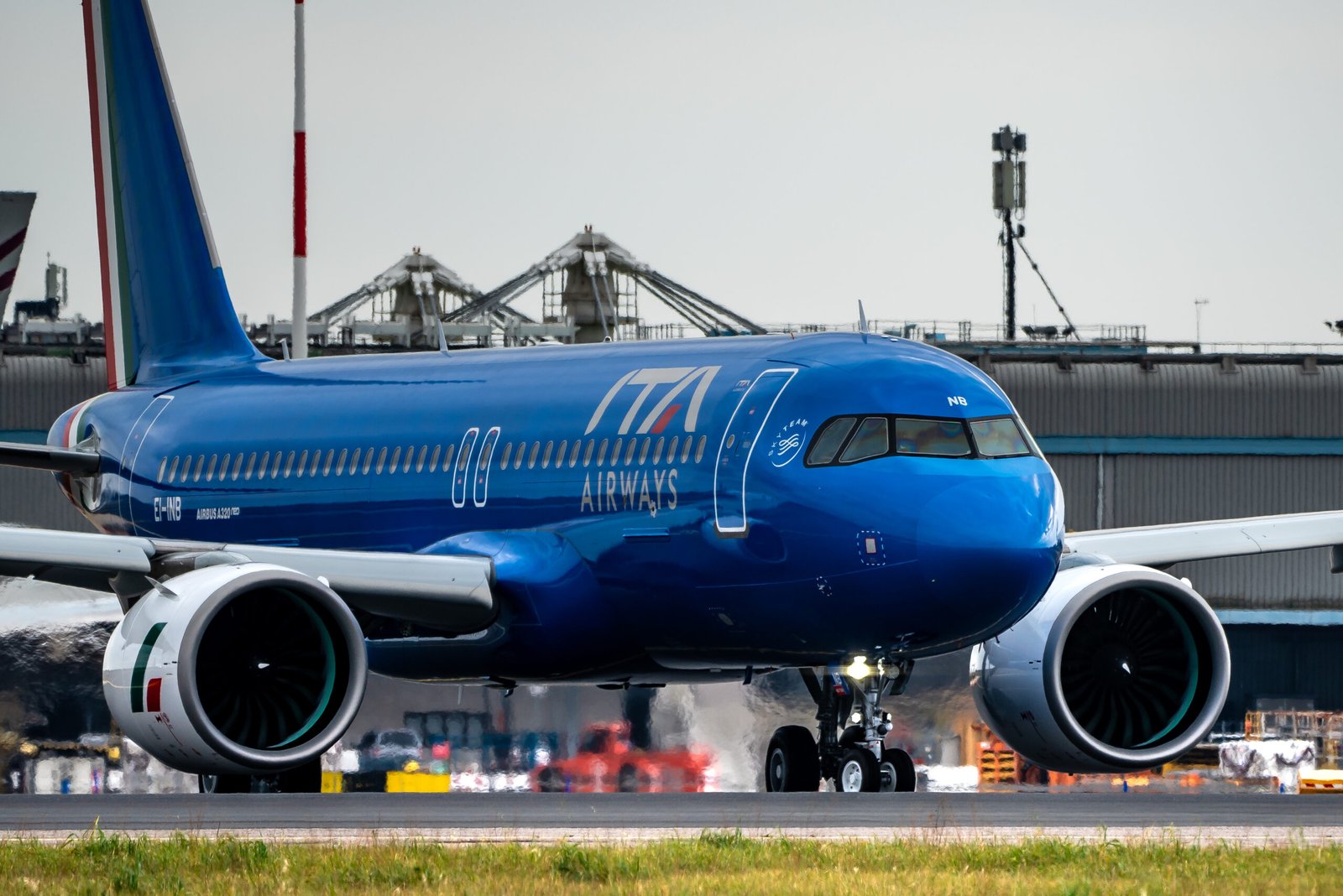
ITA Airways, Italy’s flag carrier, is now available through AirGateway’s platform via NDC, marking one of the more significant connectivity additions in European airline distribution this year. The airline went live last week through AirGateway’s API and BookingPad interface as part of the Lufthansa Group NDC program, of which ITA became a member following its acquisition by Lufthansa Group.
The move positions ITA alongside a growing roster of carriers that agencies can access through a single NDC and LCC aggregator rather than through traditional GDS channels.
What the Integration Covers
The capabilities made available through the integration are comprehensive. Agencies connecting via AirGateway can now shop and issue ITA Airways tickets, add seats and ancillary services, process refunds, handle involuntary changes, and access automated rebook workflows, all without GDS surcharges. That last point is not incidental. For agencies managing thin margins on European itineraries, the elimination of GDS distribution fees on ITA content represents a direct cost reduction on every transaction.
AirGateway currently aggregates content from more than 35 direct NDC and LCC connections. The consolidated workflow model means agencies do not need a separate integration or platform to add ITA to their portfolio. It plugs into the same environment already handling other NDC-capable and low-cost carriers, with back-office synchronization built in.
The Lufthansa Group NDC Angle
ITA’s presence on AirGateway sits within the broader Lufthansa Group NDC strategy, which has been among the more aggressive in driving agencies toward direct connectivity over the past two years. Lufthansa, Swiss, Austrian, Brussels Airlines, and Eurowings have progressively pushed NDC as the preferred channel, applying surcharges to GDS-booked content to shift the economic calculus. ITA’s addition to that ecosystem extends the same logic to Rome and Milan, two of the busiest hubs for long-haul connections.
For travel agents in markets where Italian routing matters, including much of Francophone and Lusophone Africa where Rome Fiumicino operates as a key onward connection point, accessing ITA through NDC rather than GDS now carries a clear financial argument. Agencies in Dakar, Abidjan, Luanda, and Maputo that route passengers through Rome are working in exactly the segment where surcharge elimination adds up across volume.
The Aggregator Model Gains Ground
AirGateway’s approach reflects a broader shift in how NDC connectivity is being delivered to the market. Rather than requiring agencies to build and maintain bilateral connections with each airline, aggregators absorb that technical overhead and present a unified access point. The tradeoff has historically been questioned on content parity grounds, but as NDC programs mature and content equivalence improves, the aggregator model is becoming a credible default for mid-size agencies that lack the technical infrastructure for direct airline connections.
ITA on AirGateway is a data point in that trend. It is also a signal that the Lufthansa Group NDC program is moving past its early adoption phase and into the stage where the content is complete enough to make aggregator distribution commercially viable rather than just technically possible.
For agencies still evaluating whether to move ITA bookings off traditional GDS workflows, the question is no longer whether the capability exists. It does. The question now is whether the internal processes are ready to follow.