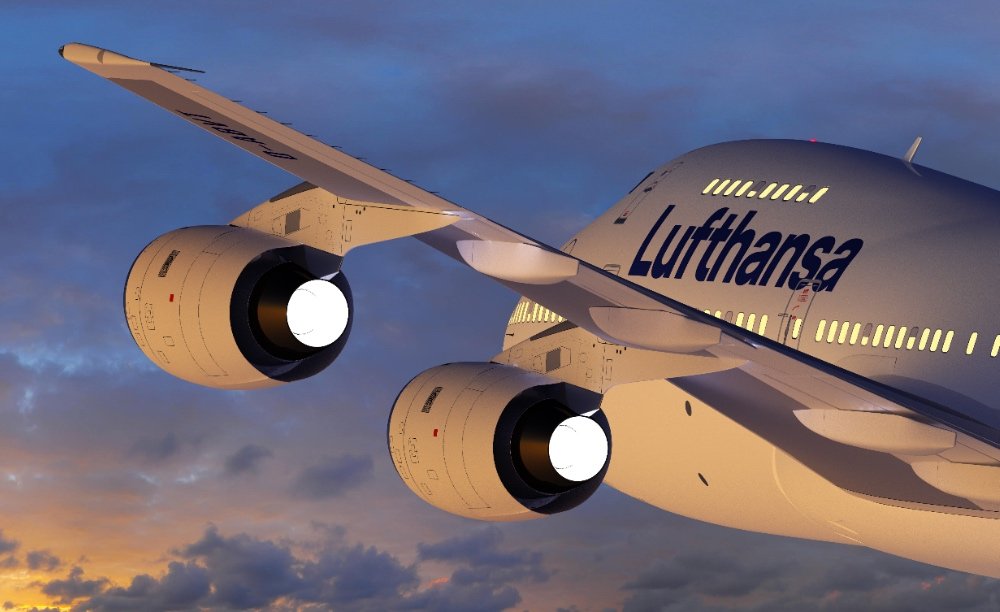
Lufthansa Group has quietly built something the rest of the industry has not: a formal, points-based grading system for its NDC aggregator partners, with the results made public. The move changes what has traditionally been a private commercial relationship into one with public recognition and competitive incentives attached to it. The NDC Connectivity Program sorts Lufthansa Group’s aggregator partners into three tiers, Standard, Advanced, and Premium, based on points earned across a set of business pillars the airline group has defined internally, spanning technical performance to partner engagement. Reach the top tier and the rewards are concrete: priority support, performance analytics, co-branding opportunities, exclusive event invitations, direct engagement with Lufthansa’s own management and technical teams, and a public-facing Premium badge.
For 2026, ten aggregators have been named as Lufthansa Group Premium Partners: Aaron Group, AirGateway, proQuest Computersysteme, SoftConEx, Technoly, TPConnects, Travelfusion, Verteil, WonderMiles, and Wooba. The list was not published quietly. It was announced as part of a broader industry gathering, alongside news that ITA Airways is joining Lufthansa Group’s NDC API following its integration into the group, with contributions from American Express Global Business Travel, Etraveli Group, Accelya, Despegar, Koin, Spotnana, and ATPCO. That context matters. This is not a scorecard buried in a partner portal, it is a recognition Lufthansa Group chose to make visible to the wider distribution community.
That list sits against a much larger field. Lufthansa Group’s full NDC aggregator directory lists more than 40 companies spanning every region from North America to Asia Pacific, including major global players such as Sabre, Amadeus, Travelport, and Duffel. None of those four appear on the named Premium list.
That absence is worth sitting with carefully rather than reading too much into. Lufthansa Group has not published its scoring criteria in detail, and there is no confirmation of why any specific company sits in Standard, Advanced, or Premium. Their absence should not be interpreted as a measure of overall market leadership. Lufthansa Group’s program evaluates participation and performance within its own ecosystem specifically, not an aggregator’s global distribution capabilities. Sabre, Amadeus, and Travelport all operate at a scale and role in global distribution that a single airline group’s internal scorecard was never designed to capture in full. What can be said with confidence is narrower: this is the first time an airline group has taken its NDC aggregator relationships, historically negotiated privately and unevenly, and turned them into a structured, tiered, and partly public system with named winners.
That is a meaningful shift in itself. Since NDC adoption began exposing the same fragmentation problems TDN has tracked across multiple pieces, aggregators have largely competed on coverage, technical capability, and relationships built one airline at a time, out of public view. A formal scorecard changes the incentive structure. An aggregator now has a visible, named benchmark to work toward with a specific airline group, and a public badge to show for it. Whether other airline groups adopt something similar, or whether this becomes a Lufthansa-specific tool other carriers watch from a distance, is an open question worth tracking.
There is also a genuine tension embedded in the program’s own framing. Lufthansa Group has described the model as designed to balance control with collaboration. A scorecard that rewards top performers with closer access to the airline’s own teams is, by definition, also a mechanism of control, it creates a clear incentive for aggregators to align their technical roadmaps and engagement practices with what Lufthansa specifically rewards, rather than with the industry more broadly. In effect, Lufthansa is creating incentives for aggregators to optimize not just for NDC generally, but for Lufthansa’s own implementation of NDC specifically. That is not necessarily a bad thing for either side, but it is a different model of partnership than the more arm’s length relationships aggregators have historically had with the carriers whose content they distribute.
If other airline groups eventually build comparable frameworks of their own, an open question rather than a confirmed trend, aggregators could find themselves pursuing multiple airline-specific certifications rather than simply expanding raw content coverage. That would introduce a new competitive dimension to distribution, where recognition by individual carriers becomes part of an aggregator’s commercial value proposition, alongside coverage and technical capability. Nothing currently confirms any other airline group is building something similar, so this remains a possibility worth watching rather than a documented pattern.
For agencies and the broader distribution ecosystem, the practical question is what a Premium badge actually signals. If it correlates with more reliable technical performance and better issue resolution on Lufthansa Group content specifically, it becomes a useful signal for agencies choosing which aggregator to route bookings through. If it mainly reflects engagement activity rather than technical outcomes, the badge risks becoming more of a marketing credential than a meaningful differentiator. Lufthansa Group has not published enough detail on its scoring weightings for an outside observer to know which of those is closer to true.
What is confirmed: ten named aggregators hold Premium status for 2026, the tiering system exists and carries real benefits, and several major global aggregators are absent from the named Premium list for reasons the program has not made public. Whether Lufthansa Group’s framework becomes an industry template remains uncertain. But by publicly ranking its NDC aggregators and attaching tangible commercial benefits to those rankings, the airline group has introduced a new idea into airline distribution: partnership itself can become a measurable product. If other carriers follow, competition among aggregators may increasingly be shaped not only by how many airlines they connect, but by which airlines have publicly endorsed them.