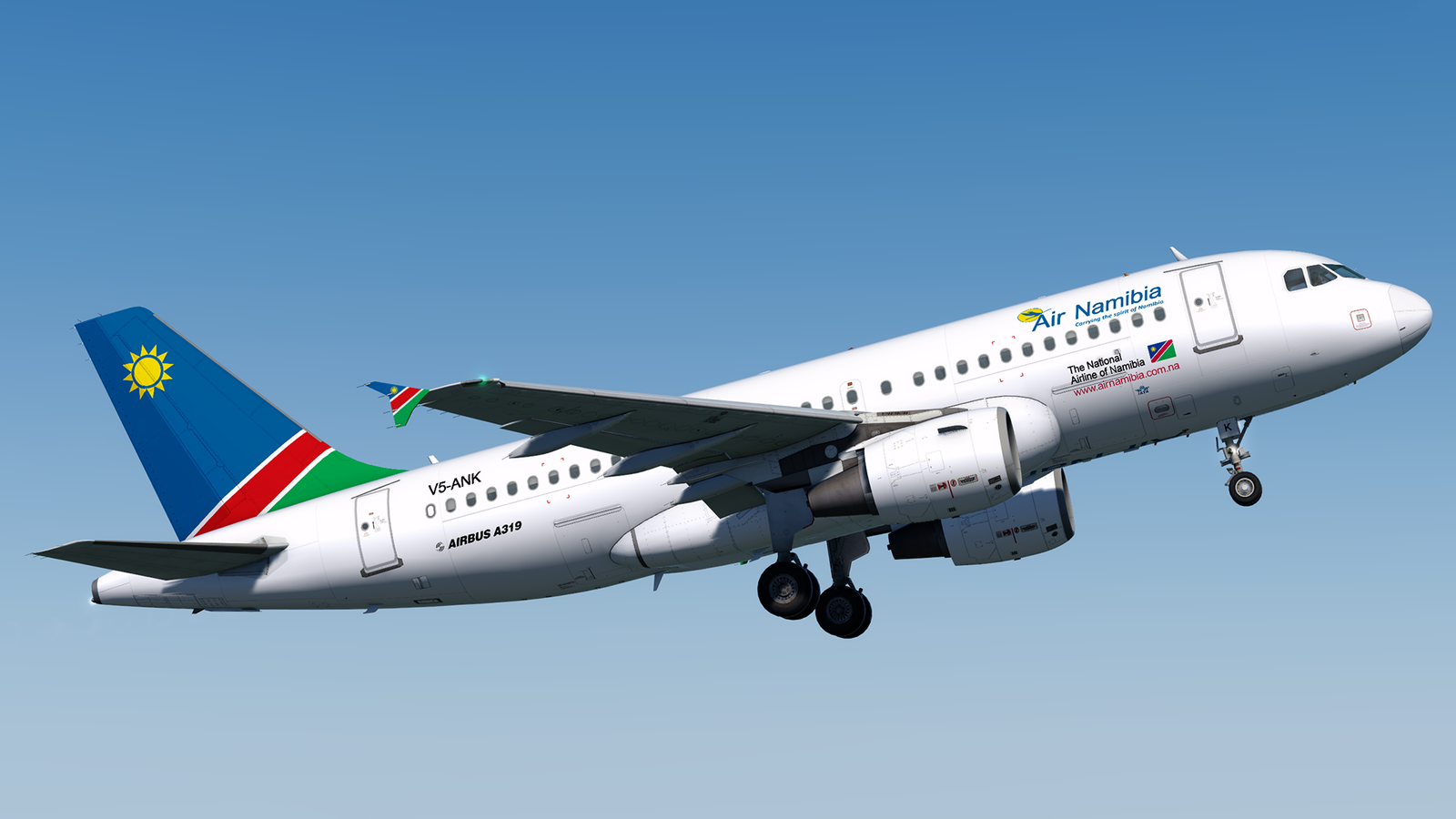
Southern Africa is attempting to build two national carriers at the same time, without deciding how they fit together
Southern Africa is attempting to build two national airlines simultaneously, without publicly resolving how they relate to each other. That unresolved question is not a footnote. It is the story.
Within the space of a single week in April 2026, Botswana and Namibia confirmed plans to establish a joint national airline backed by a strategic partner, while the Namibian government separately affirmed it is pressing ahead with Namibia Air, a standalone carrier targeted for launch before the end of 2026. Nobody has said publicly whether these are two parallel tracks, a sequential process, or whether Namibia Air is intended to eventually fold into the joint venture.
Every foundational decision both carriers face; PSS selection, GDS strategy, fleet acquisition, route economics hinges on that answer.
Namibia Air: Built to Avoid the Last Airline’s Mistakes
Namibia’s previous flag carrier was liquidated in February 2021 after years of financial losses, poor management, and repeated state bailouts. What is being built now is explicitly not its successor. Officials have been unambiguous. “We are not reviving Air Namibia. We are reviving a national airline,” Works and Transport Minister Veikko Nekundi stated publicly.
Cabinet has approved the Namibia Air name. The carrier will be registered as a 100% state-owned entity under an interim ten-member board, with the ministry finalising market analysis, traffic forecasting, and the business model. A fleet plan will follow further economic analysis, with no decision yet on whether to buy or lease aircraft.
The stated commercial philosophy is a direct inversion of Air Namibia’s operating culture. The new carrier must avoid the missteps that contributed to Air Namibia’s collapse particularly uncompetitive lease rates, overstaffing, and unprofitable routes. All decisions on routes, fleet, and staffing will be commercially driven to ensure long-term sustainability and to protect taxpayer funds.
The airline is expected to support regional integration by using newly ratified fifth-freedom rights, with potential strategic partnerships and feeder arrangements with other carriers. Ethiopian Airlines has been consistently cited as a potential collaborator and operational benchmark. A carrier that has built one of the continent’s most sophisticated distribution and commercial operations from a single-country base.
The Joint Carrier: A Bigger Ambition, A Weaker Foundation
The Botswana-Namibia joint airline is the more structurally ambitious announcement and, simultaneously, the less credible one on current evidence.
The plan was initially agreed upon in a meeting between the two countries’ respective presidents in 2025. The vision is genuinely significant, a jointly owned carrier connecting Windhoek and Gaborone directly to each other and to key regional and international destinations, backed by an unspecified strategic partner.
The problem is that both partners are arriving at this table from positions of aviation weakness.
Namibia has been without a national carrier for five years. Air Botswana, while still operational, has been in sustained difficulty. The airline has frequently drawn complaints about cancellations and dropped schedules, partly as a result of its small fleet encountering unexpected maintenance issues. It also underwent significant governance turbulence in 2025: general manager Lulu Rasebotsa left in October, four months after being placed on administrative leave for unspecified reasons.
New GM Bao Mosinyi has claimed significant operational gains in recent months, with a drastic reduction in flight delays and fewer cancellations. Whether that trajectory holds as the airline simultaneously manages a potential merger into a bilateral entity is a different question.
Air Botswana currently operates just three aircraft: two ATR72-600s and one E175. That is the physical foundation on which a joint national carrier connecting two capital cities to key regional and international destinations is being proposed.
The Sequencing Problem
If Namibia Air launches as a standalone entity before a joint venture governance structure is agreed, it will select a PSS, negotiate GDS agreements, hire commercial staff, and begin building route economics — all of which become either stranded assets or negotiating chips in any subsequent merger conversation. If the joint venture is the end state, building Namibia Air as a separate entity first is an expensive way to get there.
The Trans-Kalahari context is relevant here. The joint airline follows broader transport cooperation between the two nations, including a planned 1,500 km rail freight line linking Namibia’s South Atlantic port of Walvis Bay with Gaborone, with construction planned to begin in 2027. The bilateral transport integration ambition is real. But rail freight lines and airlines have very different commercial logic, governance requirements, and failure modes.
Why This Is a Distribution Story
Every new carrier launch is, at its core, a distribution decision tree.
Namibia Air will need to select a PSS. It will need to define its GDS strategy, whether to connect via full content agreements, NDC-only, or a hybrid approach reflecting the realities of a Southern African market where indirect distribution remains dominant. It will need to decide which OTAs and TMCs access its inventory and on what commercial terms. It will need a payments infrastructure capable of handling multi-currency transactions across a region where mobile money penetration, card acceptance rates, and banking infrastructure vary sharply between Namibia, Botswana, and their neighbors.
If Ethiopian Airlines takes a technical or equity stake, its distribution architecture becomes Namibia Air’s starting point by default. Ethiopian runs on Sabre’s infrastructure and has built a continental network on the back of disciplined commercial operations. That is not a neutral technology choice it shapes everything from NDC readiness to agency settlement timelines.
The joint carrier adds a second layer of complexity. A multi-government airline implies shared governance over commercial decisions, including distribution policy. Who controls the PSS contract when two governments have equal ownership? Which procurement framework applies when one country’s regulations require competitive tender and the other’s allow direct negotiation? If Botswana’s government is content with full GDS distribution and Namibia’s commercial team leans toward a direct-first NDC strategy, who decides?
These are not hypothetical governance questions. They are the precise failure modes that have derailed multiple African airline joint ventures before them.
A Market Worth Watching
The underlying connectivity gap both announcements are attempting to address is real. Windhoek and Gaborone are the capitals of neighboring countries with growing trade and tourism ties, and until recently had no direct scheduled air link. Air Botswana itself scrapped the Gaborone-Windhoek route in November 2025 after it generated approximately $3.3 million in losses over nine months. That a route Air Botswana could not make work commercially is now the centerpiece of a bilateral carrier ambition underlines the tension between connectivity obligation and commercial reality that defines so much of African aviation policy.
Namibia is also moving ahead with plans to expand Hosea Kutako International Airport, including a new terminal under a Build, Own and Transfer model, as part of a 2026-2031 strategic infrastructure plan. The airport investment and the airline launch are proceeding in parallel, a coherent national aviation strategy, even if the bilateral dimension remains unresolved.
What Comes Next
The milestones to watch: confirmation of Namibia Air’s PSS selection; any formal announcement of an Ethiopian Airlines technical agreement or equity stake; a public governance framework for the Botswana-Namibia joint venture that resolves the sequencing question; and whether Air Botswana’s claimed operational improvements survive the pressure of building something entirely new alongside them.
Whoever shapes Namibia Air’s distribution architecture first will have an outsized influence on how Southern Africa connects for the next decade. That decision is being made now and the window for early engagement will not stay open indefinitely.
The Botswana-Namibia joint airline was confirmed by Botswana’s Ministry of Transport and Infrastructure on April 18, 2026. Namibia Air is targeted for launch between June and December 2026.