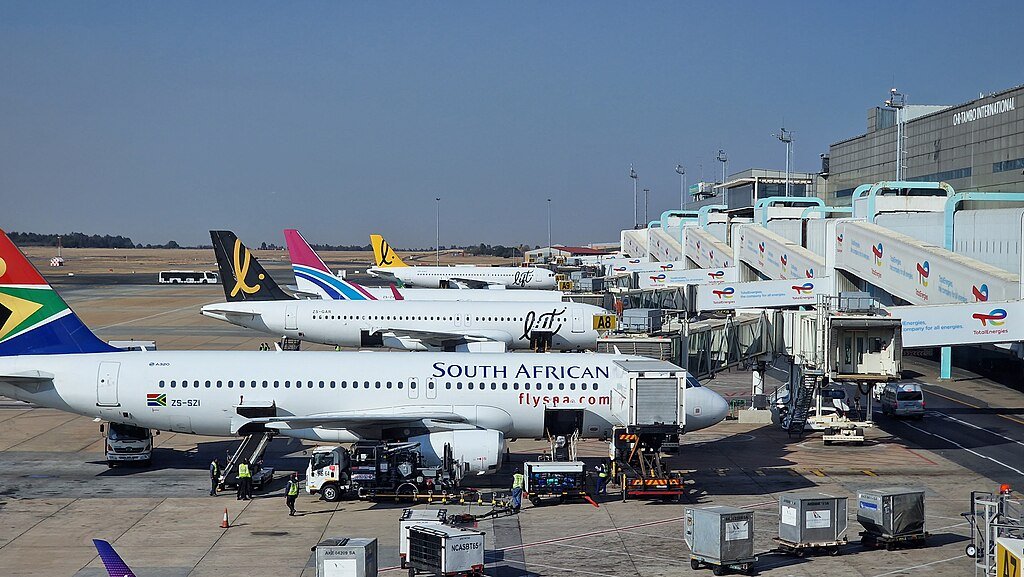
The continent is not a single NDC story. Three markets have confirmed go-lives, real commercial momentum, and structural reasons to keep moving forward. The rest of Africa is watching and falling behind.
The Narrative Is Wrong
The default assumption in global distribution conversations is that Africa is behind on NDC. That assumption is lazy, increasingly inaccurate, and more importantly, it is causing the industry to misread where the real distribution battleground on the continent is forming.
Africa is not lagging uniformly. It is splitting. A cluster of markets is moving with genuine intent, backed by confirmed go-lives and structural conditions that most of the continent does not yet have. South Africa, Kenya, and Ethiopia are not ahead because IATA applied pressure or because vendor sales teams worked harder there. They are ahead because the five conditions that make NDC commercially viable converge in those markets simultaneously in ways they do not elsewhere.
That convergence is not accidental. It is the product of years of airline investment, ecosystem development, and external connectivity that have quietly built the conditions for modern distribution to take hold. The continent did not need to wait for a global NDC mandate. Three of its markets built the conditions themselves.
The gap between these three and the broader continent is widening fast. That gap will shape where aggregators invest, where GDSs choose to defend, and where the next wave of distribution infrastructure gets built. The industry needs to understand which side of that gap its partners, investments, and commercial strategies are sitting on.
Kenya: First in Sub-Saharan Africa on Amadeus
Kenya Airways has the clearest paper trail of any African carrier on NDC progress, and the commercial logic behind each move is more deliberate than most of the industry has acknowledged.
KQ launched NDC with Verteil Technologies as its first aggregator, establishing the channel architecture early. Then it did something that separated intent from theatre: it implemented a GDS surcharge of USD 5 per segment for domestic bookings and USD 8 for international, with no equivalent charge on the NDC channel. That is not an incentive programme. That is a structural repricing of the indirect channel designed to migrate volume. Agents who missed the announcement will feel it in their margins before they fully understand what happened.
In April 2025, KQ went live with NDC content on the Amadeus Travel Platform, becoming the first Sub-Saharan African airline to distribute NDC content through Amadeus. That second move matters more than the first. Verteil gave KQ reach into a specific aggregator ecosystem. Amadeus gives it reach into the global community of travel sellers. Together, the two moves mean KQ now has NDC distribution coverage across both specialist aggregator and mainstream GDS channels simultaneously. No other African carrier has achieved that combination.
The technology choice is also instructive. KQ adopted Altea NDC as its underlying platform, which means it is not building offer and order management from scratch. It is plugging into infrastructure that already handles that complexity at scale. The result is faster time to market, lower implementation risk, and a cleaner upgrade path as NDC standards evolve toward full Offer and Order architecture.
There is a second-order effect here that the industry should be tracking. Once KQ’s NDC content is live across Amadeus-connected sellers in Kenya, South Africa, and the UK, those sellers face a choice: integrate to access better content, or accept a degraded product at a higher effective cost. That choice, repeated across enough agencies, reshapes the entire distribution economics of the route network. KQ is not just modernising its technology. It is renegotiating its commercial relationships with the trade.
Kenya’s broader technology ecosystem amplifies this. Nairobi has produced travel tech companies and aggregators with real NDC integration experience. The same developer density that gave Kenya M-Pesa has created product teams comfortable building at the intersection of payments and travel data. When an airline like KQ moves on NDC, it does not have to import all the implementation capability. Some of it already exists in the market.
Ethiopia: Scale Doing Its Job
Ethiopian Airlines has been building its NDC capability systematically for years, and the pace shifted into a different gear in the second half of 2025. The milestone announcements arrived in a cluster, which is how serious NDC programmes tend to mature: quietly, then all at once.
Ethiopian holds IATA’s ARM certification, obtained in February 2022, covering offer and order management including post-booking servicing such as changes. That is a meaningful technical baseline. Many African carriers have not reached Level 3 capability. Ethiopian reached it and kept building.
In November 2025, Ethiopian began processing NDC transactions through ARC Direct Connect, becoming the first airline to integrate using ARC’s new Transaction API. Days later, the airline adopted Accelya’s FLX Select product to offer its NDC content across channels. Two separate go-lives in the same month, with two different infrastructure partners, signals an airline that has moved from capability building into active deployment across multiple distribution layers at the same time.
The scale argument is the one the rest of the continent cannot replicate. Ethiopian flies to more than 160 destinations across five continents. When it activates NDC content through a settlement platform like ARC, it is making that content accessible to a significant slice of the global agency community in a single move. Smaller African carriers pursuing NDC have to build market by market, partner by partner. Ethiopian’s network reach compresses that process.
The Gulf carrier parallel is relevant here. Carriers like Emirates and Qatar Airways used their hub scale and long-haul network dominance to accelerate NDC adoption with global distribution partners, because those partners had commercial reasons to prioritise the integration. Ethiopian is applying the same logic from an African hub. Addis Ababa handles a significant share of intra-African connecting traffic and operates as a gateway between Africa, Asia, and the Middle East. Distribution partners that want access to those flows have a commercial reason to integrate. Ethiopian’s network is the leverage.
Ethiopian’s Vision 2035 strategic plan targets a position among the top 20 most competitive aviation groups globally. That ambition requires modern retailing capability. NDC is not a side project for Ethiopian. It is load-bearing infrastructure for the commercial model the airline is trying to build.
South Africa: A Different Kind of Progress
South Africa’s NDC story does not have a single landmark go-live announcement in the KQ or Ethiopian mould. What it has is something harder to build and more durable: an ecosystem that makes NDC commercially viable without requiring airlines to force the issue.
FlySafair went live on TPConnects’ Iris platform in February 2025, giving travel agencies including Flight Centre Travel Group access to FlySafair’s content through a single unified interface alongside EDIFACT, NDC, and other aggregator content. That move matters not because FlySafair is a network carrier pushing sophisticated NDC retailing, but because it shows that even South African LCC distribution is now routing through modern aggregator infrastructure. The baseline has shifted.
The structural argument for South Africa runs deeper than any single go-live. The TMC ecosystem is the most sophisticated on the continent. The corporate travel sector is large, structured, and accustomed to demanding differentiated content. Payment infrastructure functions reliably. Card penetration among business travellers is high enough that NDC payment flows do not collapse at the settlement layer, which is where NDC adoption breaks down in most of sub-Saharan Africa.
That last point deserves more attention than it typically receives. Payment and settlement friction is the hidden barrier to NDC adoption across Africa. Most NDC implementations outside developed markets fail not at the technical integration layer but at the payment layer: unsupported card types, currency instability, BSP settlement gaps, and the absence of reliable virtual card infrastructure for corporate bookings. South Africa has largely solved these problems. Most of Africa has not. That gap alone explains a significant share of the NDC adoption differential.
South Africa also has something that NDC adoption literature rarely discusses: genuine competitive pressure between carriers. Airlink, FlySafair, and a recovering SAA are all competing for the same corporate contracts and agency relationships. That competitive tension creates a commercial incentive to differentiate through channel and content strategy that simply does not exist in markets where a single national carrier operates without meaningful competition. In competitive markets, NDC becomes a tool for building distribution advantage. In monopoly markets, there is no distribution advantage to build.
What These Three Have That Others Do Not
Five factors explain the gap between these markets and the rest of Africa. They do not operate independently. They compound.
Airline commercial ambition. Carriers in these markets are treating distribution as a revenue architecture question. They are making deliberate choices about surcharge structures, channel economics, and aggregator partnerships. That strategic framing is largely absent in markets where airline management still views distribution as a cost to be minimised rather than a channel to be optimised.
Agency ecosystem readiness. The TMC and OTA landscape in Nairobi, Johannesburg, and Addis Ababa has the technical capacity and commercial appetite to work with NDC-sourced content. Readiness is not uniform within these cities, but the capability exists. In markets like Lagos or Dar es Salaam, the agency community is almost entirely GDS-dependent, with limited ability to integrate new content pipelines even when airlines push them to.
Payment infrastructure. Functional BSP settlement, reliable card processing, and manageable currency volatility reduce the friction that kills NDC transactions at the payment layer. This is the least-discussed but most practically significant barrier to NDC adoption across Africa.
External distribution pressure. Airlines in these three markets connect to NDC-capable partners across Europe, the Gulf, and North America. Gulf carriers, Star Alliance partners, and SkyTeam connections create constant pressure to build and maintain NDC capability. That external pressure forces internal investment. Airlines in purely domestic or intra-regional markets do not feel it in the same way.
Technology partner appetite. Aggregators and retailing platform vendors are directing investment toward these markets because they see commercial return. Verteil, Accelya, Amadeus, TPConnects, and ARC have all made active moves in this geography in the past 18 months. That vendor concentration is not random. It reflects commercial judgement about where NDC volume will actually materialise on the continent.
Markets like Nigeria, Tanzania, or Cote d’Ivoire are not absent from the NDC conversation. But the absence of one or more of these five factors means implementation stalls before it reaches commercial scale. A carrier can achieve technical certification and still fail to move meaningful NDC volume if the agency ecosystem cannot integrate or the payment rails break at settlement.
RwandAir is the market worth watching most closely outside these three. Kigali’s positioning as a premium hub, the airline’s Qatar Airways partnership, and Rwanda’s broader ambition to build financial and technology infrastructure suggest distribution modernisation is a genuine strategic priority rather than a compliance exercise. RwandAir does not yet have the scale of Ethiopian or the ecosystem depth of South Africa, but the direction of travel is visible and the conditions are being built.
What This Means
The implications of this divergence are sharper than most industry commentary has been willing to state. There will be clear winners and clear losers, and the positions are being locked in now.
For airlines in these three markets, the window for building direct channel leverage is open and will not stay open indefinitely. GDS contracts will not hold permanently against a better-merchandised, lower-cost NDC channel. The carriers that move now on NDC-based offer and order management will build structural pricing and ancillary advantages within three years that latecomers will struggle to close. The airlines that wait are not preserving optionality. They are ceding ground.
For sellers, the cost signal from KQ’s surcharge architecture is the clearest indicator of where the market is heading. This is not a pilot or a preference. It is a permanent repricing of EDIFACT distribution. The agencies that integrate NDC now will access better content at lower effective cost and deepen their commercial relationships with the airlines that matter. The agencies that wait will pay more for less. In a margin-thin business, that arithmetic is existential.
For GDSs, the calculus is more complicated. The confirmed go-lives in these markets represent a structural shift in how African airline content reaches the trade. GDSs that move aggressively to offer NDC content alongside EDIFACT, as Amadeus has done with KQ, will retain their position as the primary interface between airlines and sellers. GDSs that treat NDC as a threat to defend against rather than a capability to integrate will find their African market positions eroding faster than their global business, because the African agency community is less locked in and more willing to switch infrastructure than their counterparts in Europe or North America.
For aggregators, these three markets are not just commercial opportunities. They are strategic beachheads. The aggregator that owns the NDC infrastructure layer in South Africa, Kenya, and Ethiopia will have the distribution relationships and technical integrations that make it the default connection point as NDC adoption radiates outward to the next tier of African markets. First-mover advantage in distribution infrastructure compounds over time. The window for establishing that position is narrowing.
The bold statement the industry needs to hear: the African airlines that are not actively building NDC capability today are not behind on a technology project. They are behind on a commercial strategy that their competitors are already executing. The gap is not technical. It is strategic, and strategy gaps are harder to close than technology gaps.
The Next Three Years
NDC adoption in Africa will not spread evenly from here. It will radiate from these three markets outward along airline partnership networks, hub connections, and technology ecosystem influence. The question is not whether the rest of Africa will move toward NDC. It is whether they will move fast enough to shape the infrastructure being built or simply inherit the infrastructure others built for them.
The most credible next movers are RwandAir, Royal Air Maroc, and ASKY Airlines in West Africa. Morocco’s RAM is further along than most industry commentary acknowledges and belongs in the same conversation as the three markets covered here. Egypt Air has the scale and the international connectivity to move quickly if it chooses to prioritise distribution modernisation.
Global partners will accelerate the timeline. Gulf carriers operating into African hubs are already NDC-capable on those routes and will create increasing pressure on African interline and codeshare partners to build compatible infrastructure. European carriers operating Star Alliance and SkyTeam connections into East and Southern Africa are applying the same pressure. The NDC upgrade cycle in Africa is being pushed as much from outside as from within.
The carriers that fall furthest behind will be in markets where payment infrastructure remains unreliable, agency ecosystems remain wholly GDS-dependent, and airline management has not yet reframed distribution as a commercial priority. That describes a substantial portion of the continent. But it does not describe the portion that matters most to the global distribution industry right now.
Africa is not one market. It never was. The industry allocates capital, builds integrations, and closes commercial partnerships more accurately when it stops treating the continent as a single distribution story and starts treating it as what it actually is: a collection of markets at sharply different stages of readiness, moving at sharply different speeds, toward the same destination.
Travel Distribution News covers airline distribution, NDC, GDS dynamics, and travel technology across emerging markets.