

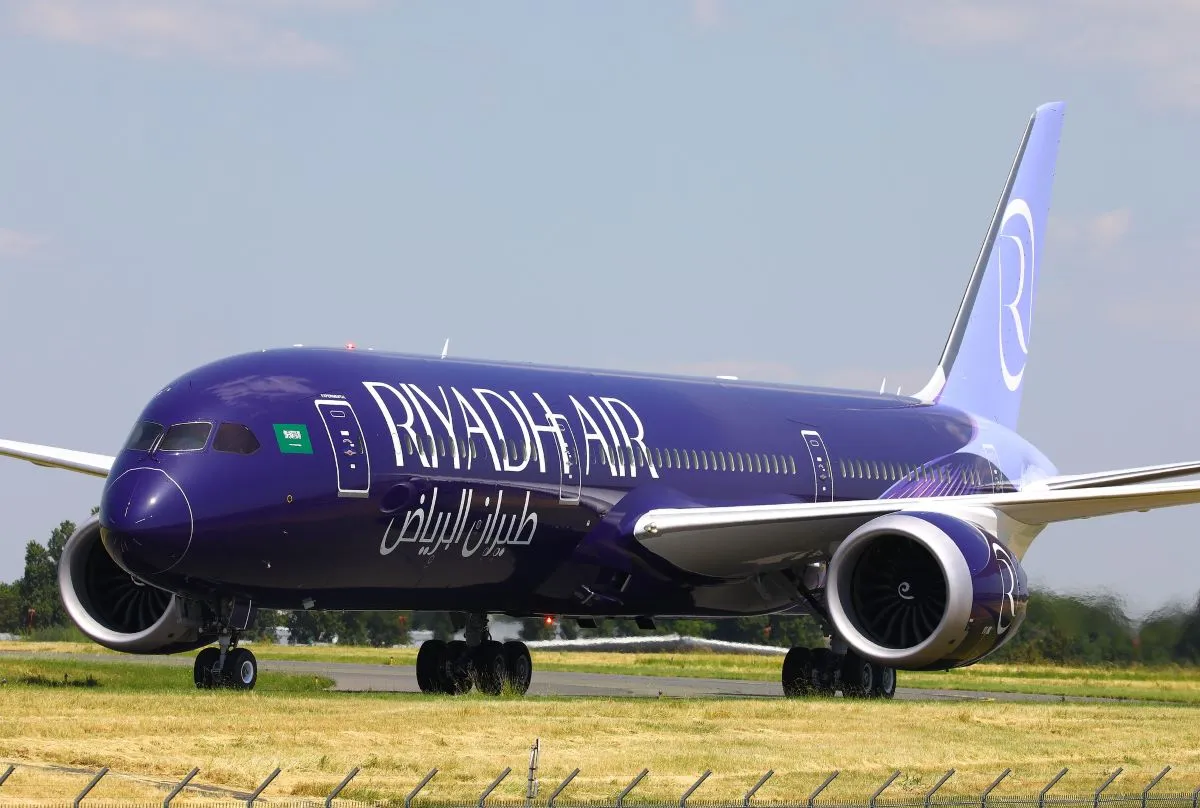
Riyadh Air’s latest product launch is less a loyalty story than an architecture story. RX Pay, unveiled this week, is a suite of Mastercard-branded cards issued through leading Saudi banks that lets guests earn Sfeer Points on everyday spending, not just at the point of booking a flight. Read on its own, the announcement sounds like standard airline loyalty fare: co-branded cards, points that redeem toward travel, a phased rollout starting in the carrier’s home market. Read against what TDN has already established about how this airline operates, it looks like something else: the same clean-sheet philosophy that shaped Riyadh Air’s distribution stack, now extended into payments.
The comparison is not incidental. Riyadh Air’s Chief Financial Officer Adam Boukadida framed the card launch in explicitly architectural terms: the airline did not want to put its name on someone else’s product, it wanted something designed end to end around the guest. That is the same logic that produced the airline’s Offer and Order retailing platform with FLYR, making Riyadh Air the world’s first native ONE Order network carrier. Instead of reconciling passenger name records, tickets and EMDs across legacy and modern systems, the airline operates around a single order from day one, as TDN explored in its Second-Speed Market coverage of the Gulf. Riyadh Air had no legacy PSS to protect when it built its distribution ecosystem across Sabre, Travelport, Verteil, TPConnects, and Travelfusion. It has no legacy card portfolio to protect now either. For Riyadh Air, payments appear to be another retail capability to design rather than another back-office function to outsource.
The real competitive advantage here is not capital or geography. It is the absence of legacy infrastructure. An airline retrofitting NDC onto a decades-old PSS faces years of parallel running. An airline retrofitting a payments stack onto an existing bank-issued card program faces renegotiated terms, brand dilution, and slow rollout. Riyadh Air faces neither problem, in distribution or in payments, because it started with nothing to unwind.
What RX Pay confirms and what it leaves open are two different things. Confirmed: the consumer card program is live, issued by Saudi banks, running on Mastercard’s network under an exclusive arrangement for the Saudi market. Left open: the original February announcement of the Riyadh Air-Mastercard alliance described a second component alongside the consumer card, an airline-branded virtual card program for travel trade settlements, positioned as a first for the industry globally. This week’s RX Pay announcement does not mention that B2B piece. Whether it has quietly gone live, is still in development, or has been resequenced behind the consumer launch is not established by what Riyadh Air has published, and TDN has not independently confirmed its status.
That gap matters more to this publication’s audience than the consumer card does. A branded virtual card for travel intermediary settlement would sit adjacent to the BSP and IATA EasyPay questions TDN has tracked through its blocked funds and settlement lag coverage, and it would be a genuinely novel entrant into the travel payments layer rather than a loyalty product wearing an airline’s colors. Until Riyadh Air or Mastercard confirm a live date for that program, the more consequential half of February’s announcement remains a stated intention rather than a shipped product.
Riyadh Air has earned the benefit of the doubt on execution speed. It went from confirmed distribution partnerships to live NDC content on multiple aggregator platforms inside a single year. If the virtual trade card reaches market on a similar timeline, Riyadh Air will have moved beyond modern airline retailing into redesigning how airlines settle with the travel trade itself. At that point, payments will be as much a competitive differentiator for this carrier as distribution already is.