

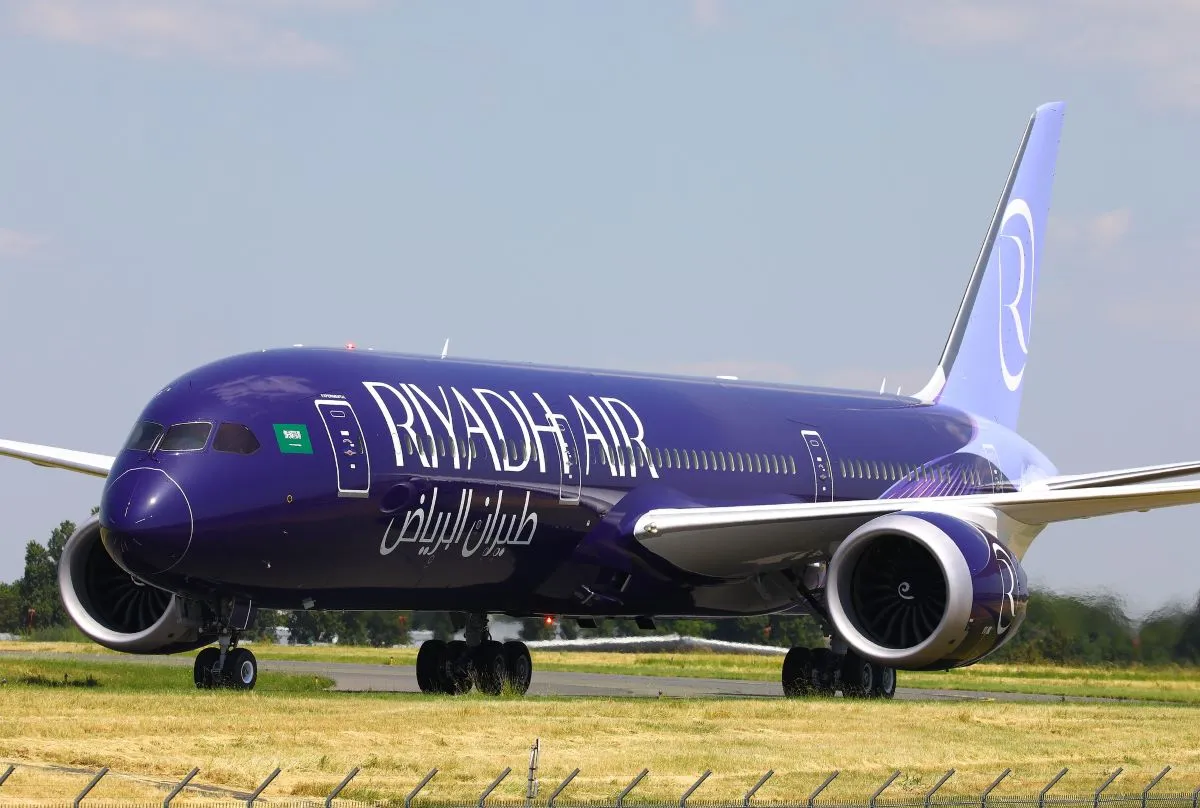
Riyadh Air is designed as a native Offer and Order airline. After attacks disrupted Riyadh’s airport and pushed part of its flying to Al Qassim, a plain distribution question is left open: when the airline moves, who rebooks the ticket an agent sold?
What happened
Riyadh Air, Saudi Arabia’s new national carrier, spent the second half of 2026 adding Boeing 787-9 routes to Asia, including Kuala Lumpur, Bangkok and Manila. The war has interrupted that build. Houthi attacks have disrupted King Khalid International Airport in Riyadh, according to One Mile at a Time, which reports that passenger flights there stopped.
Riyadh Air moved selected services to Al Qassim Airport, about 400 kilometres from the capital, from 25 October, with a complimentary coach of roughly four and a half hours from a Riyadh hotel. Its latest schedule, published by AeroRoutes on 9 November, shows one daily Heathrow flight resuming at Riyadh, while Cairo, Dhaka, Islamabad, Jeddah and Lahore continue from Al Qassim.
Riyadh Air’s own travel update describes the arrangement as temporary. It initially covered six routes, to Cairo, Dhaka, Jeddah, London, Lahore and Islamabad, and the picture has since moved: by 9 November London had returned to Riyadh while the other five continued via Al Qassim. The Al Qassim details should therefore not be read as covering every affected flight. The position was still changing as this piece was written.
The airline’s passenger notice, quoted by Time Out Riyadh and last updated on 10 November, says cancellations on some Riyadh flights run to 14 November, with flexibility for anyone booked to travel up to 31 January. It then draws a line. Customers who booked directly can manage eligible changes through Riyadh Air’s digital channels. Customers who booked through a travel agent need to contact that agent for rebooking or refund assistance.
Three possible owners of the problem
In the GDS era, agents generally had established workflows and tools for post-booking changes. A schedule change reached the booking, and an agent with the right ticketing authority could often reissue within the airline’s rules and fare restrictions. It was frequently slow and manual, and not every change was possible, but the agent usually had both the tools and the passenger’s number.
Offer and Order changes where the booking lives, but not in a single step. In an order-based model the airline’s order management system holds the order, and different sellers can reach it through different connections, such as a direct API, an aggregator or a GDS. What a seller can do with an order, including servicing it, depends on how the airline has implemented its interfaces and which permissions it grants each connection. Riyadh Air was built on that model, with Verteil as its launch NDC aggregator and FLYR as the provider of its Offer and Order platform. That leaves three parties with a stake when the airline has to move part of its operation. The airline holds the order and decides how passengers are reaccommodated. The aggregator provides the connectivity and functionality through which an agent reaches that order, within what the airline and its platform permit. The agent holds the customer relationship and, usually, the complaint. FLYR supplies the order platform behind the airline’s side of that arrangement, so the open question is which servicing functions it exposes to outside sellers and which the airline configures.
Both pieces are now described as live. Verteil’s release, published on 1 April under an 18 March dateline, says sellers can shop, book and manage Riyadh Air’s offers, including “order-aware servicing”. FLYR announced on 20 May that Riyadh Air had launched exclusively on its Offer and Order platform, promising faster, simpler servicing of post-booking changes. Those are company statements about normal operations. Neither says what a seller can do when the airline changes airport. Verteil’s release mentions order-aware servicing but does not establish whether disruption-specific rebooking and refunds are available to sellers.
One distinction matters here. A passenger who asks an agent for a different date is making a voluntary change, which agents handle routinely. An airline that moves a flight to another airport is causing an involuntary disruption, where the airline sets the reaccommodation rules and controls the alternative inventory. This piece is about the second kind, and the public notice does not say how it works for agent-sold orders.
Riyadh Air’s notice gives its answer for the customer: ask your agent. That is a reasonable instruction if the agent can act. It becomes a problem if the agent can only pass a request back to an airline call centre.
The wider NDC experience suggests why that matters. On 3 March, in the first days of the conflict, Travel News in South Africa reported agents describing NDC changes that took days, against about 20 minutes in a GDS, with airline call centres flooded. The article named no airline and no system, and its sources were three agents, so it describes sentiment rather than measured performance, and it is not evidence that Riyadh Air’s own implementation has the same weakness. It does show the failure mode: when volumes spike, whoever holds the keys decides who waits.
What is established and what is not
Three things are established. Riyadh Air temporarily moved selected flights from Riyadh to Al Qassim from 25 October. Its current guidance tells agent-booked customers to go back to their agent. And its distribution has been built around NDC, an aggregator and an order-based platform.
Several things are not. Public sources do not say whether agent-sold orders are reaccommodated by the airline automatically or only when the agent asks. They do not say whether agents connecting through an aggregator can action changes themselves or must ask Riyadh Air to do it. And they do not say how passenger contact details are used for schedule-change notices on agent-sold orders. An agent booking does not necessarily mean the airline lacks them. This piece is TDN’s reading of a public notice, not a finding about how Riyadh Air’s servicing has actually performed.
The test Offer and Order has not yet taken
The promise of Offer and Order is that one order, owned by the airline, beats a PNR copied across systems. A war is a blunt way to test that promise, and Riyadh Air is a clean case, launched on an Offer and Order core with no legacy booking base. FLYR’s platform does include a Legacy Translator for GDSs and older partners, but whether Riyadh Air uses it for particular channels is not established here. If the airline can reaccommodate an agent-sold order and the agent can see and sell the result without a phone call, the model has earned its claim. If the answer is that the customer should ring the agent and the agent should ring the airline, then ownership of the order has moved to the airline while the work of servicing it has stayed with the agent.
Other airlines in Africa and the Middle East are moving towards the same model, mostly on the strength of what it does at the shopping stage. Disruption is where the servicing stage gets examined, and the airlines and aggregators that can show their working before the next one will have the better argument with agencies.