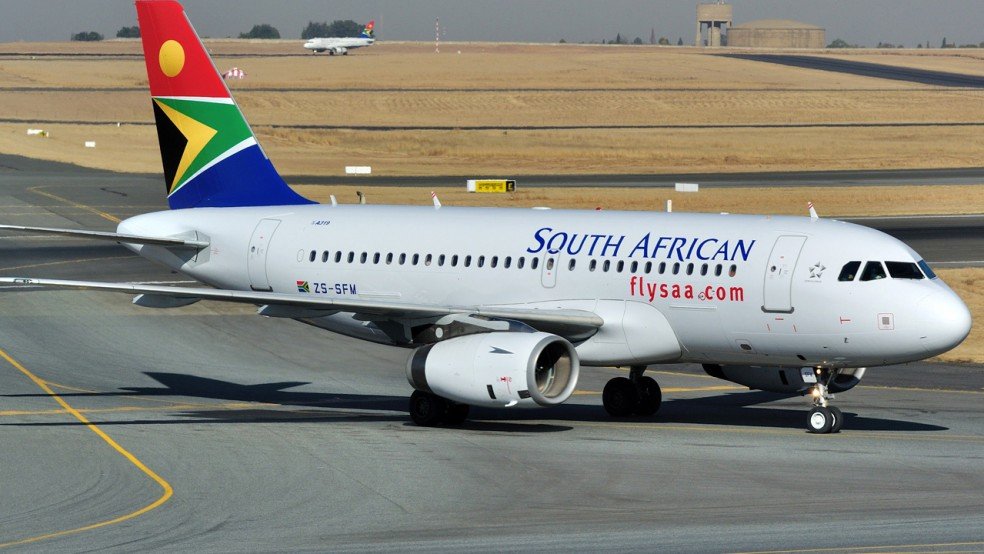
When South African Airways announced it would accept Bitcoin for flight bookings in early 2026, the headlines followed a predictable path. First-mover in Africa. Crypto goes mainstream. Digital assets meet aviation. The framing was almost uniformly wrong.
SAA is not making a bet on Bitcoin. It is making a bet on settlement infrastructure. The distinction matters more than the announcement itself.
SAA’s Treasury Never Sees a Single Satoshi
The mechanics are worth understanding precisely because they are so deliberately unglamorous. A passenger selects “crypto” at checkout on SAA’s website or mobile app, scans a QR code from a supported wallet, including Binance, Luno, or VALR, and the transaction is complete. At no point does SAA hold Bitcoin. The moment funds leave the passenger’s wallet, MoneyBadger, the South African fintech powering the backend, converts the Bitcoin to rand instantly. SAA’s treasury receives the invoiced amount in its operating currency. The airline assumes zero exposure to Bitcoin’s price volatility.
The partnership runs through Ozow, one of South Africa’s most established payment processors, whose merchant network already includes DStv, Takealot, and Dis-Chem. SAA did not build a crypto capability. It activated one that already existed within Ozow’s infrastructure, requiring no additional integration on the airline’s side.
That is the architectural point. Bitcoin is functioning here as an input rail, not a stored asset. The airline’s books never see it.
The Real Problem Was Never the Asset. It Was the Settlement Lag.
Travel payments have long operated on infrastructure that was not designed for the speed, cost, or cross-border complexity the industry actually faces. Card networks charge interchange fees that compress airline margins on every transaction. International bank transfers introduce settlement delays of two to five days. Currency conversion layers add costs and opacity. For an airline operating across multiple African markets, each with its own banking infrastructure, FX controls, and settlement norms, these frictions compound quickly.
The MoneyBadger and Ozow model addresses a specific version of this problem. By converting crypto to fiat at the moment of transaction, it eliminates the settlement lag without requiring SAA to navigate crypto custody, regulatory reporting obligations, or balance sheet risk. South Africa’s Financial Intelligence Centre Travel Rule directive, which mandates that crypto service providers share transaction data, came into force in April 2025. SAA’s reliance on licensed third-party processors is partly a compliance move, insulating the airline from direct custodial and reporting obligations while still accessing the payment rail.
The chargeback problem is equally significant. Fraud-related chargebacks are a material cost for airlines and online travel agencies. Blockchain-based transactions are irreversible by design. MoneyBadger CEO Carel van Wyk has noted that crypto processing offers reduced fraud rates alongside lower transaction costs compared to traditional card fees. For SAA’s finance team, that combination, faster settlement, lower fraud exposure, and no FX volatility risk, is more compelling than any narrative about digital assets going mainstream.
Every Payment Layer in Travel Was Built to Fix the One Before It
The travel industry’s payment stack was built in layers, each added to solve a problem the previous layer created. Cards solved the cash problem. Online payment gateways solved the card-not-present problem. Virtual cards partially solved the B2B settlement problem. Each layer reduced one friction while introducing another, typically in the form of fees, delays, or reconciliation complexity.
What MoneyBadger and Ozow have built is closer to a payment rail than a product. The crypto network, specifically Bitcoin’s Lightning Network in this implementation, enables near-instant, low-cost value transfer. The conversion layer at the end translates that into something airlines, regulators, and accounting systems can work with. The asset itself is incidental. It could be any programmable value transfer mechanism. Bitcoin happens to be the one with the network depth, wallet penetration, and regulatory recognition in South Africa to make it operationally viable right now.
Emerging markets have repeatedly demonstrated that infrastructure constraints accelerate payment innovation rather than inhibit it. Mobile money in East Africa is the canonical example. Kenya and Rwanda built real-time payment ecosystems on mobile networks precisely because legacy banking infrastructure was thin. The same logic applies here. South Africa’s crypto ecosystem is unusually mature for an emerging market, with over six million registered exchange users and a regulatory framework that, following the 2026 Budget, formally incorporates crypto assets into the Currency and Exchanges Act. SAA is not an early mover into speculative territory. It is activating infrastructure that already exists at scale.
The B2B Settlement Layer Is Where This Gets Interesting
Airlines are acutely sensitive to working capital. Revenue collected weeks before a flight departs sits in holding accounts, subject to settlement cycles that vary by payment method and market. Anything that accelerates the movement of funds from passenger wallet to airline treasury has direct cash flow value. The instant settlement architecture MoneyBadger provides is not a marginal improvement. For high-volume routes with significant international passenger mix, it changes the cash conversion cycle in ways that card networks structurally cannot.
The broader implication for distribution is less obvious but potentially more significant. If instant-settlement crypto rails work at the consumer checkout level, the same architecture is available at the B2B layer, where OTAs, aggregators, and consolidators settle with airlines. The friction in that layer is considerably larger. Settlement between a GDS-connected agency and an airline can involve multiple intermediaries, delayed BSP cycles, and currency conversion at each step. A programmable settlement layer that eliminates those intermediaries without requiring any party to hold crypto would address a problem the industry has discussed for years without resolving.
SAA’s implementation is consumer-facing and relatively contained. But the underlying model, instant conversion, no custody risk, reduced fraud exposure, lower fees than card networks, applies directly to the B2B settlement infrastructure that distribution technology companies have been trying to modernise for a decade.
Bitcoin Is the Rail. The Destination Is Faster Cash.
Bitcoin did not give SAA a new customer segment. It gave SAA a cleaner way to receive money from the customers it already has. That is an infrastructure decision, not a crypto strategy.
The travel industry’s payments challenge has never been about finding new things to accept. It has been about reducing the cost, delay, and risk embedded in how value moves between buyers and sellers across borders and currencies. The SAA announcement is a small but precise demonstration that crypto rails, stripped of their asset narrative, can address that challenge in ways legacy infrastructure has not.
The airlines and distribution platforms that pay attention to the settlement architecture rather than the Bitcoin headline will be better positioned when that infrastructure scales.