

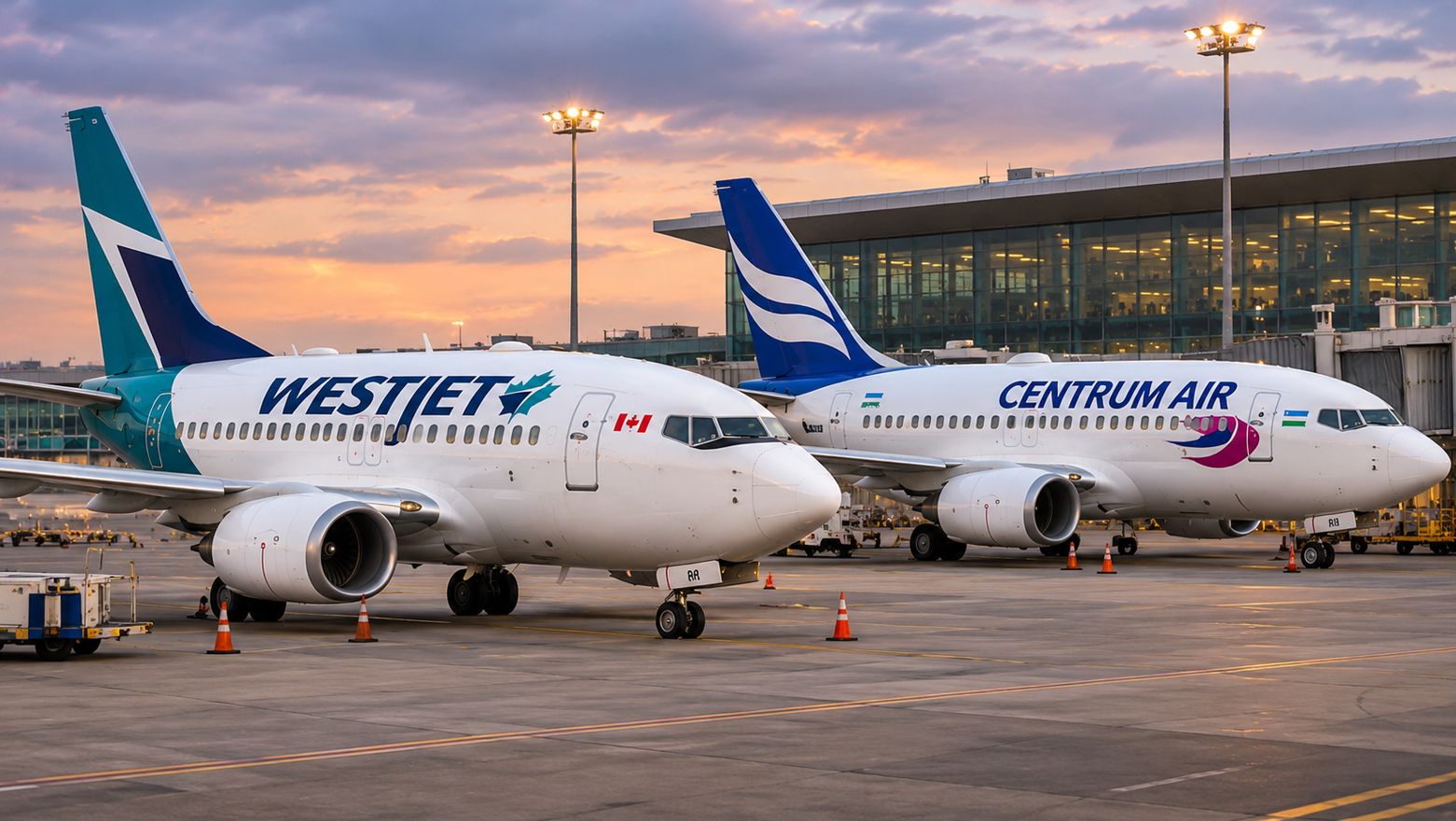
Travelport announced two airline deals within four days, and they could hardly look more different. On 16 November it said Centrum Air, which it describes as Uzbekistan’s leading private airline, is now live on Travelport under a long-term distribution agreement. On 19 November it said WestJet’s NDC content is available to agencies through Travelport, in a phased rollout. Read together, they show what Travelport is selling: one storefront that takes an airline at whatever stage of retailing it has reached.
WestJet: connected first, differentiated later
The WestJet content is available now for points of sale in Canada, the United States, the United Kingdom and Mexico, with more markets planned for 2027. Phase 1 lets agencies connect, set up their workflows and finish operational readiness before new content arrives. Phase 2 will add content and pricing differentiation, which the release describes as giving connected agencies access to differentiated fares and offers. It gives no date for Phase 2.
WestJet says it completed more than 8,000 hours of testing across its NDC programme. Jorge Rozo, its senior vice president of revenue and distribution, says the phased approach was chosen so that NDC fits agencies’ existing workflows. That is a defensible way to launch. Agencies connect, servicing is proven, and richer content then arrives into a workflow that already works. It also means that, on the day of the announcement, “NDC content is available” describes a connection rather than a change in what an agent can sell.
Centrum Air: a shop window, not an NDC story
The Centrum Air release is about presentation. Agencies using Travelport can access the airline’s full range of fares and content, and Centrum Air will use Travelport’s content and branding tools so agents see photos, descriptions and fare details for each product. Travelport also points to its AI-powered Content Curation Layer and Content Optimizer as ways to return more relevant, personalised content in search.
The release names no routes and gives no figures. Its body text does not mention NDC or say which connection standard the airline is using. It says Centrum Air’s network spans Europe, the Middle East and Asia, and that the deal brings more Central Asian content onto Travelport. Damian Hickey, Travelport’s global head of air partners, frames the benefit as offering the same content available through other channels, plus richer branded product information.
What the two have in common
Both airlines want agency reach, and both are getting it through a GDS rather than around one. That is the part the releases support. For a carrier from an emerging market such as Uzbekistan, a GDS agreement remains a quick route to agencies worldwide, though the release does not make that argument itself.
The agent’s question is the same in both cases: is what I see on Travelport different from what I could see elsewhere? For WestJet, the release’s own answer is, in effect, not yet, because differentiation is Phase 2. For Centrum Air, the stated aim is parity of content with richer branding on top. Neither announcement says an agency will find a better fare, a broader offer or an easier servicing path on day one.
That does not make the deals trivial. Travelport adds one of Canada’s largest airlines through NDC and a fast-growing Central Asian carrier to its platform, which supports its pitch as a retailing platform that can carry whatever an airline is ready to offer. The airlines gain distribution. But all of that is access, and access has never been the scarce part of airline distribution.
The measure that will matter for both is whether an agent has a reason to book them through Travelport rather than elsewhere. WestJet has told the market when its answer starts to arrive: at Phase 2, on a date it has not given. Centrum Air has said it is present. Until the offers themselves differ, announcements like these show who is connected. Agencies will judge carriers on whether they are richer, cheaper or easier to service, and these two releases cannot yet show that.