
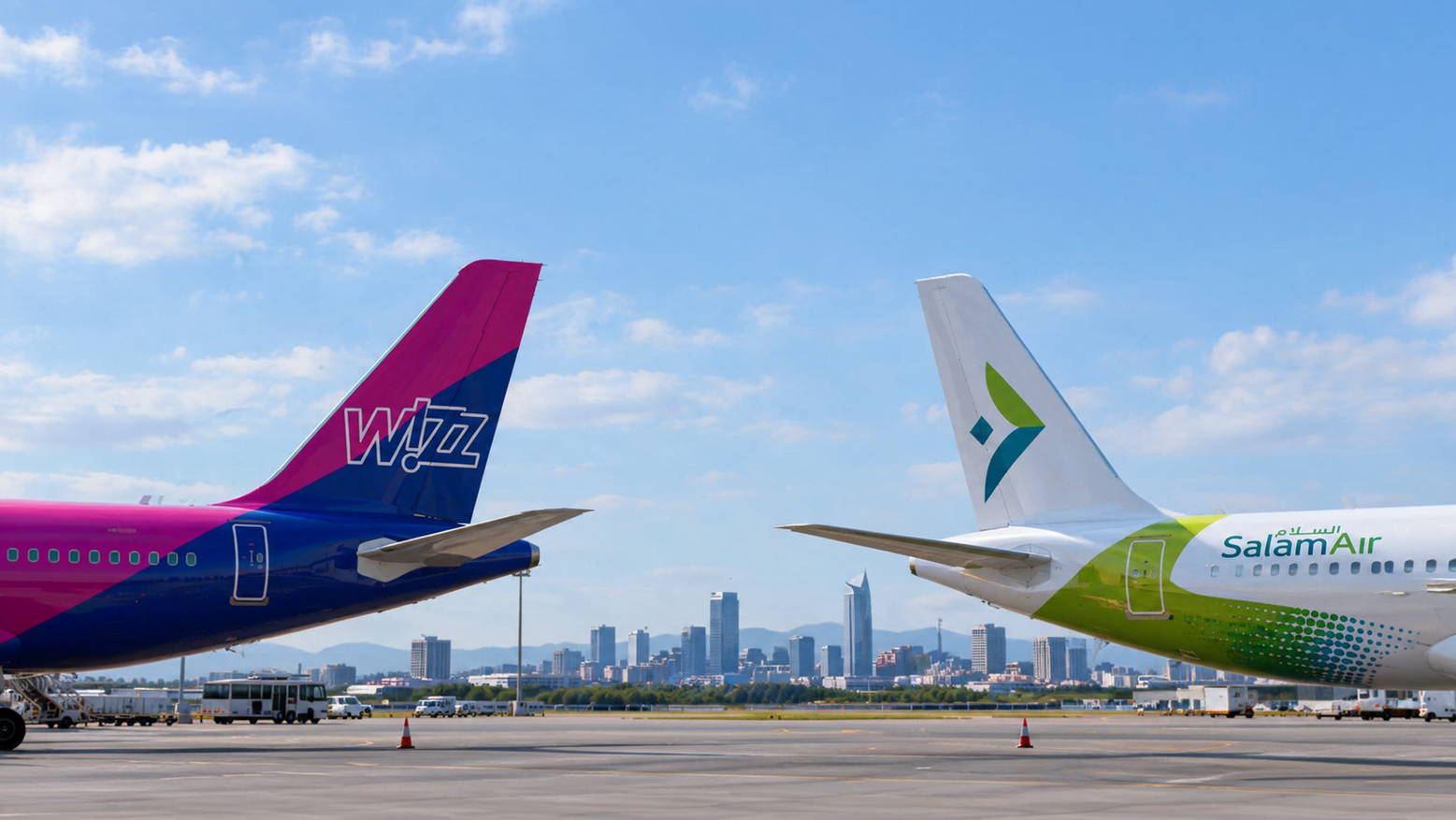
Amadeus announced two low-cost carrier agreements in the space of 48 hours. On 20 October, SalamAir, Oman’s low-cost airline, signed a distribution agreement with Amadeus. On 22 October, Wizz Air and Amadeus announced an agreement under which Wizz Air content will become available on the Amadeus Travel Platform for the first time. Neither announcement says the content is live. Read together, the two deals say more about how low-cost carriers approach indirect distribution than either does alone.
The Wizz Air Mechanism
Under the agreement, Wizz Air content will reach Amadeus-connected travel sellers in selected markets through Amadeus Ticketless Access, known as ATLA. The release names travel management companies, travel agencies, online travel agencies, tour operators and other retail travel businesses as the intended audience. Sellers will be able to search and book Wizz Air flights and ancillaries inside the Amadeus workflows they already use.
ATLA is the mechanism identified in the announcement, and NDC is not mentioned. That does not tell us whether NDC is planned later or was deliberately set aside, and the release does not say. What it does show is a route into the agency channel that fits existing seller workflows, which is a practical choice for a carrier that wants reach without asking sellers to change how they work.
The SalamAir release is thinner. It says the agreement gives the carrier greater visibility and access to a wider range of markets through Amadeus’ network of travel sellers, but it does not describe how the content will be delivered. Nothing in it should be read as confirming ATLA.
Two Sides, Two Emphases
Elena Avila, Amadeus’ Executive Vice President for Travel Distribution, said the Wizz Air agreement supports the airline’s ambition to grow its indirect distribution strategy. Wizz Air’s own statement, from Marketing & Revenue Officer Silvia Mosquera, was more modest. She described the deal as a way of making the airline’s network and fares more accessible to Amadeus’ sellers.
SalamAir’s Chief Commercial Officer, Steven Allen, called the agreement a step in supporting the airline’s growth plans and its presence in international markets. Maher Koubaa, Executive Vice President of Amadeus’ Travel Unit and Managing Director for EMEA, said the deal reflects the company’s commitment to the low-cost segment.
Taken together, the statements describe carriers extending their reach, not abandoning other channels. Whether either airline is changing its wider distribution approach is something the announcements do not establish.
The Terms Nobody Has Disclosed
The commercial questions that matter to buyers and sellers are unanswered. Neither release says which markets count as “selected” for Wizz Air, or when bookings will open. Neither says whether fares will match those on the airline’s own channels, whether bundles and ancillaries will appear at parity, or what the distribution costs will be for airlines and agencies.
Those details decide whether agencies actually book this content. If prices and ancillaries lag the airline’s website, a seller has little reason to move the booking, and a corporate buyer has even less reason to insist on it. Until the terms emerge, both announcements are best read as statements of intent, not changes in distribution economics.
Amadeus’ Growing Low-Cost Book
Amadeus says its platform already carries more than 130 low-cost and hybrid carriers, 90% of which can be booked like any ticketing carrier. Once their content becomes available, the two agreements would extend Amadeus’ low-cost portfolio. Their timing also points to continued efforts to attract carriers in the segment.
For agencies and travel management companies, the practical appeal is simplicity. Low-cost fares sitting alongside full-service content in a single workflow save time and cut the need to check several sites, which matters most to corporate programmes that want one place to compare. For the airlines, the attraction is reach into a trade audience that is expensive to cultivate one agency at a time.
What to Watch
The next signals are practical. The first is which markets Wizz Air opens and how quickly. The second is whether sellers see parity on fares, bundles and ancillaries. The third is whether other low-cost carriers follow the same path. SalamAir’s move is also worth tracking in the Middle East, where regional carriers are deciding how much of their sales to route through intermediaries.
If parity and pricing hold, two quiet agreements could mark a real shift in how low-cost content reaches the agency channel. If they do not, their commercial significance will remain unproven.