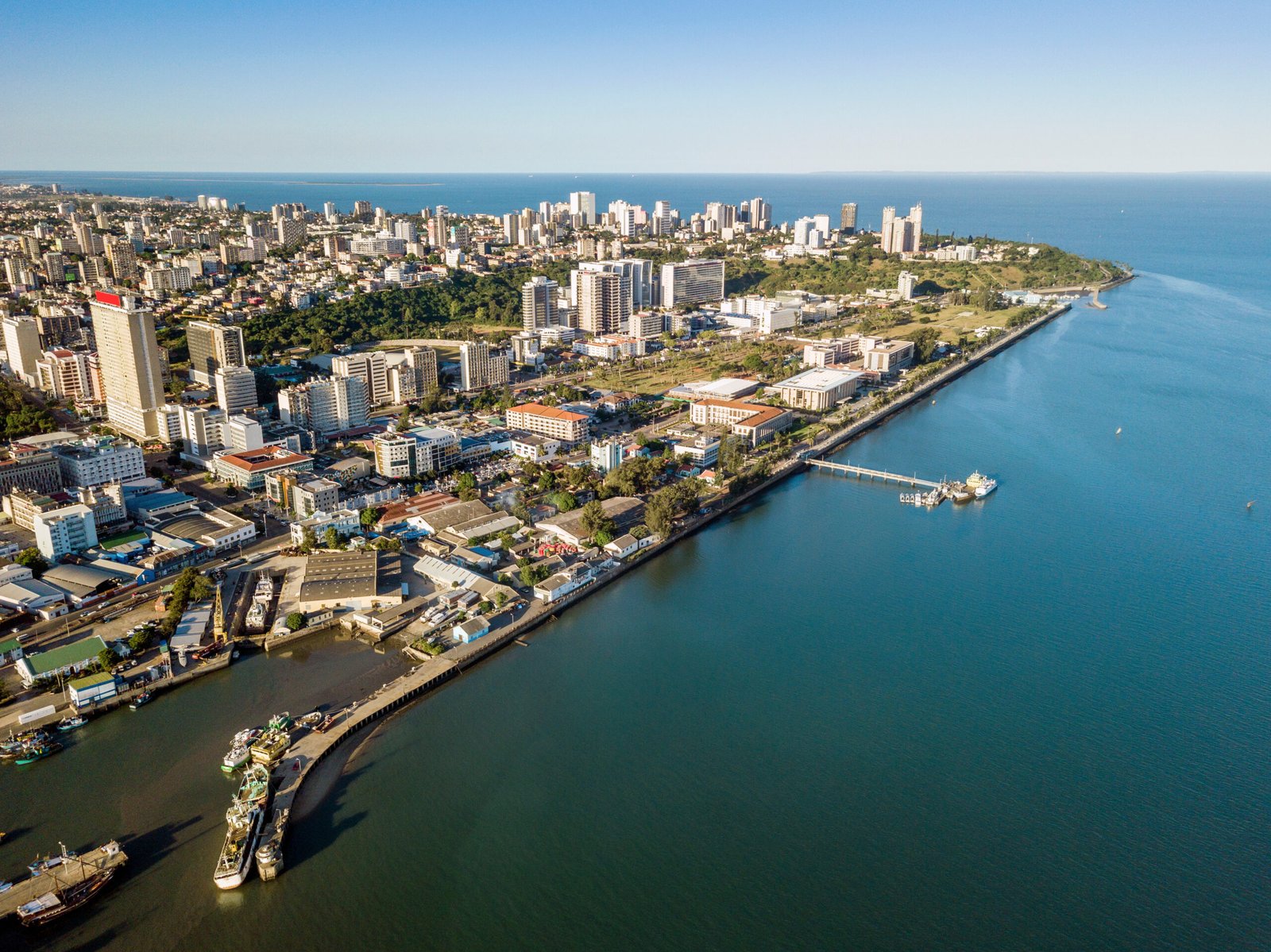
Mozambique’s tourism demand is no longer the question. The infrastructure required to capture it still is.
Arrivals reached 1.27 million in 2025, up nearly 15% year-on-year, growth that held despite post-election unrest that disrupted the country through the first quarter of the year. Foreign guests staying in hotels more than tripled over five years, reaching close to 760,000 in 2024, according to the National Statistics Institute. The government has set a target of tourism contributing 6% of GDP by 2029, against a current figure under 1%. Demand is not the constraint. Conversion is. That is where the opportunity sits.
A market the industry has mapped but not served
Mozambique’s tourism geography is well defined. The government’s National Development Plan identifies five priority zones: Niassa for eco-tourism, Quirimbas for coastal culture, Gorongosa for safari and adventure, Vilankulo for marine and beach, and Maputo for business, culture, and MICE. Each zone has a distinct product and a distinct visitor profile. None has the distribution infrastructure that would allow a travel technology vendor to treat the market as commercially mature.
Connectivity into the country has improved meaningfully. Maputo International Airport is served by TAP, Qatar Airways, Turkish Airways, Ethiopian Airlines, TAAG, Kenya Airways, LAM, and Airlink, which covers multiple domestic routes including Beira, Nampula, Pemba, Tete, and Vilankulo. Visa access has been liberalised for 29 countries, with a further 18 African nations benefiting from a full waiver. The barriers to arriving in Mozambique have been substantially reduced. The barriers to booking, distributing, and paying for travel within Mozambique remain largely intact.
What the government is actually signalling
At the inaugural Mozambique Tourism Summit held in Vilankulo in November 2025, President Chapo announced six structural reforms for the tourism sector. Two carry direct implications for travel technology and distribution.
The first is the declaration of Vilankulo, Pomene, and Inhassoro as a Special Economic Zone for tourism investment. For technology vendors, a designated investment zone with government backing is a materially different entry environment than a fragmented market with no policy anchor. It signals where infrastructure spending will concentrate and where private sector partnerships will find institutional support.
The second is a commitment to regulate the cost of domestic airfares. This is a direct intervention in airline commercial policy. Price regulation on domestic routes shapes the economics of airline retailing, affects ancillary revenue strategy, and determines which distribution partnerships remain viable. Any technology company thinking seriously about the Mozambican aviation market needs to understand that the government is prepared to participate in pricing decisions. That is not a reason to avoid the market. It is a reason to engage early, before the regulatory framework solidifies around decisions made without industry input.
The government’s Strategic Tourism Plan 2025-2029 identifies ICT investment as a core pillar of tourism growth.
Why vendors are not here yet
The travel technology industry does not ignore Mozambique because it lacks potential. It ignores it because it lacks shortcuts.
Nairobi has a critical mass of NDC-engaged carriers and a developed OTA sector. Cape Town and Johannesburg anchor Southern Africa’s corporate travel market. Lagos commands attention through sheer outbound volume. Mozambique offers none of those ready-made advantages. Local partnership structures are less established. There is no dominant in-market aggregator to route distribution through, no single lever to pull.
The companies that built distribution infrastructure in East Africa in the early years of the last decade are not competing for market share today. They own it. Mozambique is at an earlier stage of that cycle, and the window for first-mover positioning is narrowing faster than most vendors are tracking.
The specific gaps worth acting on
Hotel properties across Mozambique’s priority zones, including established resort brands along the Inhambane coast, operate with limited connectivity to global distribution channels. Where properties appear in GDS or OTA inventory at all, they are typically listed with incomplete content, static rates, and no dynamic pricing capability. Modern hotel retailing infrastructure is either absent or a generation behind.
Payments remain the sharpest constraint. Cross-border settlement, foreign exchange complexity, and the difficulty of processing international cards through local acquiring infrastructure suppress booking volumes and push transactions toward workarounds that benefit no one. M-Pesa Mozambique already handles significant domestic transaction volume. The question for travel commerce is whether that mobile money infrastructure can be connected to international booking flows in a way that reduces conversion friction at scale.
LAM’s distribution reach through modern retailing frameworks remains limited. Ancillary revenue opportunities that carriers in comparable markets have begun to realise are largely untouched. For airlines considering route development or capacity expansion into Maputo, the distribution question is inseparable from the revenue question.
What needs to happen
The government has built the policy case. What it cannot manufacture is the commercial response from technology vendors, payment providers, and distribution platforms that would make that policy meaningful in practice.
The entry point is local partnership. Mozambique’s travel market will not be unlocked from a regional office in Nairobi or a European headquarters. The properties, ground operators, and travel agencies processing domestic and inbound bookings are the commercial fabric that any serious vendor needs to engage with directly. INATUR, which recently established the Mozambique Convention Bureau to attract international business events and investment, is the institutional starting point for that conversation.
The conversations required to build that market do not happen remotely. They happen on the ground. The Africa TravelTech Summit and Expo, taking place in Maputo on 17-18 September 2026, is where airlines, hotels, payment providers, OTAs, and technology companies operating across African markets will be having exactly those conversations.
The conclusion the industry keeps postponing
Every market that travel technology vendors now consider established was once considered too early, too complex, or too small to prioritise. Mozambique is not an abstract emerging market. It is a specific country with 1.27 million annual visitors, a government that has staked its five-year economic programme on tourism growth, and a technology layer that has not yet been built.
The gap will close. The only question is who builds the market before everyone else arrives.