For African online travel agencies, the payment problem has never really been about technology. It has been about rails. Specifically, the absence of reliable ones.
A customer in Nairobi wants to book a hotel in Lisbon. A traveller in Lagos wants to purchase a flight through an African OTA that sells international inventory. A small travel agency in Accra wants to collect payment from a client travelling to Dubai. At each of these moments, the same wall appears: local wallets are not accepted by international merchants, and international payment methods are either unavailable, unreliable, or priced in ways that erode the transaction before it completes.
PayPal World is being positioned as an answer to exactly this problem.
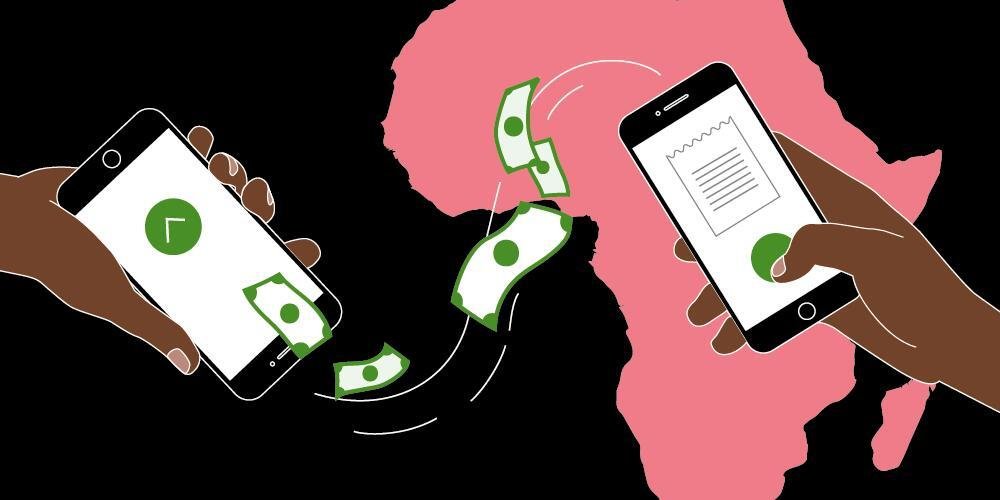
The platform is designed around a simple but structurally significant idea: users should be able to pay with the wallet they already have, without opening a new account or converting to a card-backed instrument, while merchants on the other side receive payment through a familiar checkout layer. PayPal handles the interoperability in between. The checkout button stays the same. The rails underneath change entirely.
For African travel merchants, the implications run in two directions simultaneously.
On the demand side, PayPal World could unlock a category of travellers that African OTAs have historically struggled to convert. Diaspora travellers booking on behalf of family members back home, intra-African business travellers paying in mobile money, and international tourists trying to use non-card instruments at African travel merchants are all constrained today by the same interoperability gap. A platform that bridges local wallets to global merchant infrastructure directly addresses that conversion failure.
The supply side is equally important. African OTAs that want to sell international inventory, whether hotel rooms, airline tickets, or packaged tours, often face the reverse problem: they cannot easily accept payment from international customers whose wallets are not connected to African payment rails. PayPal World’s confirmed partnerships with India’s UPI, China’s WeChat Pay, and Brazil’s Mercado Pago collectively represent close to two billion wallet users. If African travel merchants are connected to that network, they gain access to inbound payment flows from some of the world’s highest-volume outbound travel markets.
The structural context matters here. Africa is the world’s dominant mobile money market, and the problem for travel merchants has never been wallet adoption. It has been wallet isolation from international commerce. PayPal’s existing partnerships with M-Pesa and Flutterwave addressed parts of that gap, primarily enabling local payment acceptance. PayPal World extends the logic to both sides of the transaction, and critically, the merchant-side integration requires no new hardware or point-of-sale investment, which matters for smaller travel agencies operating on limited technology budgets.
None of this is without friction. The African fintech partnerships that will underpin PayPal World’s continental rollout are still being negotiated. Regulatory environments vary sharply across markets. The trust deficit PayPal carries in certain African markets, particularly Nigeria, where years of account restrictions and limited functionality left lasting commercial damage, will not dissolve on the strength of a platform announcement. Travel merchants evaluating PayPal World will also need to understand the fee structure for cross-border settlement, which has historically been a pain point in PayPal’s African deployments.
But the directional logic is sound. The African travel market’s payment infrastructure problem is not primarily a product problem. It is a connectivity problem. Wallets exist. Merchants exist. The gap is the layer that connects them across borders, currencies, and platforms without requiring either side to change how they operate.
If PayPal World delivers on its interoperability model, African OTAs could find themselves with access to a payment acceptance layer that was previously available only to merchants with the resources to integrate multiple regional payment providers independently. For smaller travel agencies, that matters more than almost any other technology development on the horizon.
The question is not whether the platform will launch. It is which African wallet providers will be in the network at launch, which markets will be prioritised, and whether the fee model will be competitive enough to drive real adoption among travel merchants operating on thin margins.
Those details will determine whether PayPal World becomes infrastructure or another announcement. In African travel, payments are distribution. The companies that control cross-border wallet interoperability will increasingly determine who can transact, who can scale internationally, and who captures the customer relationship.