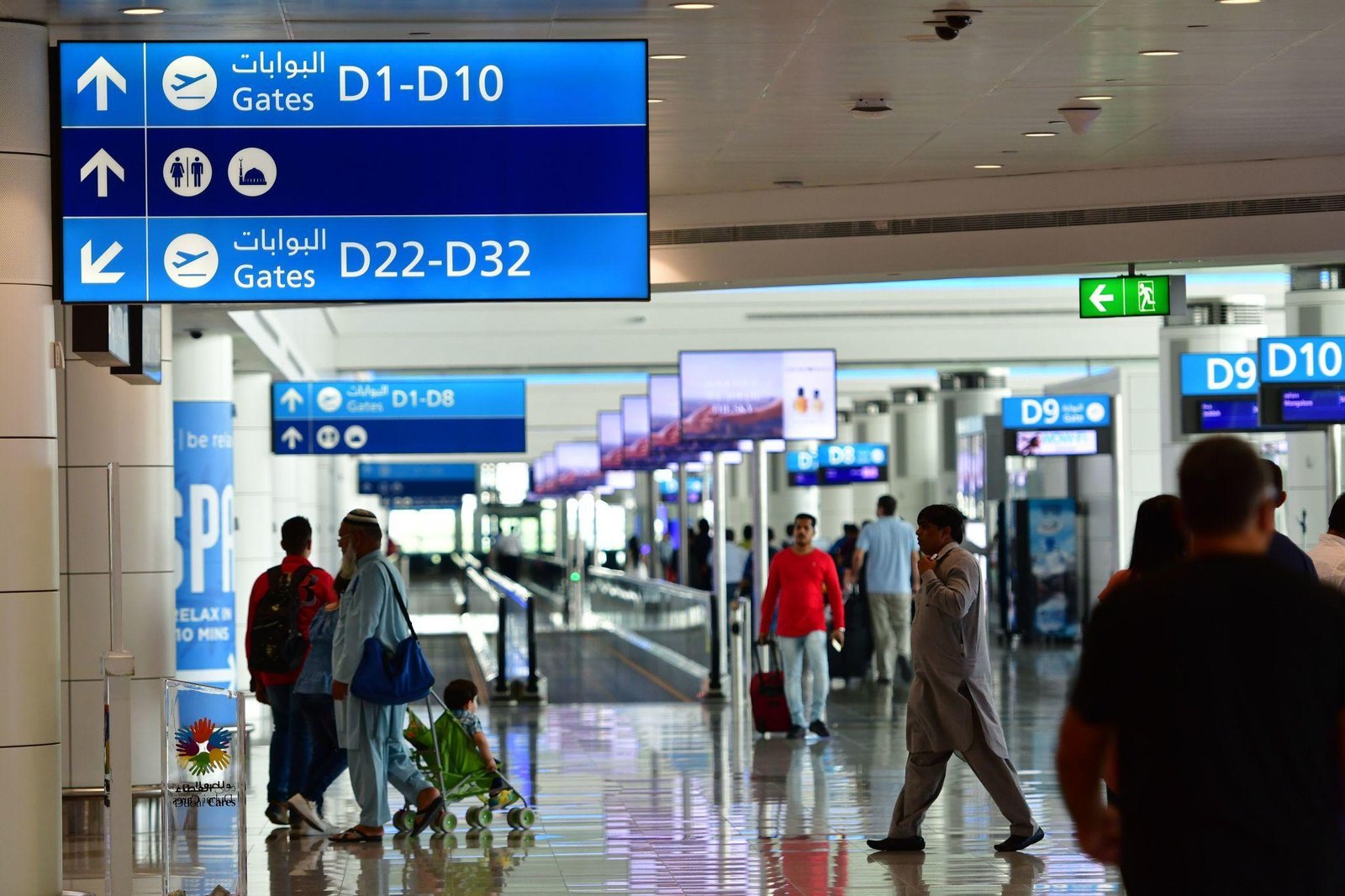
In late February 2026, thousands of passengers were stranded across Gulf hubs as airspace closures spread rapidly across the Middle East. Flights disappeared from departure boards, aircraft diverted onto unfamiliar routings, and airline contact centres were overwhelmed within hours. Less visible was another disruption unfolding behind the scenes: the distribution infrastructure that powers global airline retailing was suddenly being tested under crisis conditions nobody had planned for.
The airline distribution industry spent the opening months of 2026 watching a situation unfold that no retailing roadmap had accounted for. When US and Israeli strikes on Iranian military targets triggered a cascade of airspace closures across the Gulf, the immediate story was operational. The distribution story took longer to surface. It is still being written.
What began as an acute shock has become a sustained structural disruption. The Middle East sits at the geographic centre of some of the world’s most trafficked aviation corridors, connecting Europe to South Asia, East Africa to the Gulf, Southeast Asia to the North Atlantic. When those corridors narrow or close entirely, the consequences do not stay regional. They ripple through every distribution system, every booking platform and every agency that depends on Gulf carrier inventory to service its clients.
The scale of what closed was significant. Bahrain, Qatar, Kuwait, UAE and Iranian flight information regions all moved into varying states of restriction within days of the initial strikes. Bahrain’s restrictions have been extended through at least August 2026. Qatar’s airspace remains under partial closure procedures. The UAE has gradually restored operations but overflight routing remains constrained to specific waypoints. Iran continues to operate under broad limitations. The picture, four months on, is one of partial recovery layered over persistent uncertainty.
For Qatar Airways, the disruption was existential in the short term. Between 28 February and 24 March, the airline cancelled 4,929 scheduled flights, representing close to 89 percent of its entire planned service across that four-week window. Tens of thousands of transit passengers were stranded at Hamad International Airport in the initial days, as regional airspace closures prevented aircraft from departing or diverted them mid-flight. The airline moved quickly to issue flexible rebooking and refund policies and to communicate with its distribution partners across GDS and NDC channels. That communication itself revealed something important about where the industry stands in the distribution transition.
Qatar Airways directed trade partners managing NDC bookings to service them directly through their NDC platforms, specifically naming Amadeus Sell Connect, Travelport Smartpoint and Verteil as channels where changes could be made within commercial policy without contacting the airline. For all other GDS and aggregator channels, agents were directed to the B2B contact centre. The distinction matters. It shows the industry’s NDC infrastructure being stress-tested under real disruption conditions for the first time at significant scale, and it reveals a clear operational hierarchy emerging between NDC-connected partners and legacy channel users. Agents with modern platform access could service themselves. Everyone else joined a queue.
The episode also exposes the unfinished nature of the industry’s transition toward Offer and Order architectures. While airlines with mature NDC capabilities demonstrated faster servicing and greater flexibility during the crisis, most disruption workflows still depended on legacy booking records, manual intervention and fragmented communication channels. The industry’s future retailing model may be clearer than ever. Its operational readiness remains a work in progress.
Emirates, the region’s largest carrier and the single most important source of connecting capacity across Africa, South Asia and Southeast Asia, absorbed a different kind of pressure. The compression of regional corridors and sustained reduction in demand for Gulf-connecting itineraries pushed its scheduled capacity down sharply. Emirates operated 18 percent fewer seats in June 2026 than in the same month a year earlier. For travel sellers in Nairobi, Lagos, Colombo and Kuala Lumpur who depend on Emirates as a primary connection to Europe and North America, that reduction is not an abstraction. It is a live inventory problem that reshapes what they can sell and at what price.
The asymmetric recovery among Gulf carriers has created a distribution environment that is genuinely difficult to navigate. Royal Jordanian, operating outside the most affected airspace zones, grew capacity by 29 percent year on year. Flyadeal grew by 13 percent. Etihad by 8 percent. These carriers are absorbing displaced demand where their networks allow. But booking patterns are shifting in ways that are hard to model and harder to reverse once agents and corporate buyers have established new preferred routing habits.
The payments dimension adds a layer the distribution industry has been slow to acknowledge publicly. Of the 1.2 billion dollars in airline funds blocked globally, more than 40 percent sits across Middle East and North Africa markets. Some of that blockage predates the conflict and reflects longer-standing structural issues with currency repatriation. But the crisis has compounded the problem. When settlement is delayed or uncertain, agencies in affected markets gravitate toward carriers and routes where revenue flows more predictably. That shift changes distribution mix in ways that can persist long after the operational disruption has resolved.
The Middle East crisis may ultimately be remembered less for the routes that closed than for what it revealed about the industry’s retailing infrastructure. For years, airlines and technology vendors have argued that modern distribution architecture would perform better during disruption. That NDC-enabled servicing would be faster, more automated and less dependent on overwhelmed contact centres. In 2026, the industry finally received a real-world test at scale. The results are still emerging across markets still rebuilding their schedules and inventory.
But one conclusion is already clear: in the most operationally volatile region in commercial aviation, resilience has become as important as retailing innovation. The carriers and technology partners that build distribution infrastructure capable of performing under both conditions will have earned something no product demonstration can deliver.