
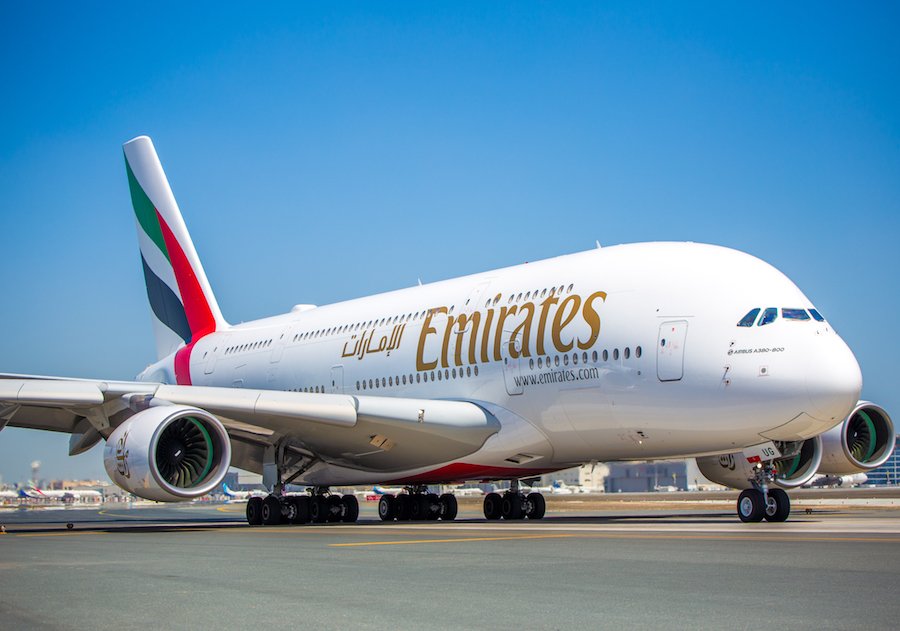
Emirates has officially launched Crypto.com Pay, allowing eligible UAE residents to pay for bookings on emirates.com and the Emirates app using the platform’s digital wallet, with transactions priced and settled in AED and processed under UAE regulatory oversight. The rollout comes almost exactly one year after the airline signed its July 2025 memorandum of understanding with Crypto.com, turning a partnership announcement into a live payment product. On desktop, customers select Crypto.com Pay at checkout, scan a QR code, and approve the transaction in the Crypto.com app before the booking confirms.
The launch is explicitly tied to Dubai’s Cashless Strategy under the D33 Economic Agenda, which targets 90 percent of financial transactions across government and private sectors going digital by the end of 2026. Adnan Kazim, Emirates’ Deputy President and Chief Commercial Officer, framed the initiative around expanding customer choice and keeping pace with a younger, digitally fluent traveler base. Eric Anziani, President and Chief Operating Officer of Crypto.com, called the partnership a milestone for the company’s Pay feature.
Some of the coverage since the launch has framed Emirates as a crypto payments pioneer. That framing does not hold up against the record. airBaltic became the first airline in the world to accept direct cryptocurrency payment for tickets back in 2014, and Vueling followed as the first in Europe in 2022, both working through third-party blockchain processors rather than a regulated fintech platform. Several widely circulated articles have also claimed Etihad and Air Arabia already accept crypto payments directly, and some misdate the Emirates-Crypto.com relationship back to July 2025 itself. Neither claim holds up against airline-sourced material, and a more reliable industry assessment from as recently as April 2026 stated plainly that no major full-service airline accepted crypto directly on its own booking site at that point. Those earlier implementations proved that airlines could accept cryptocurrency. Emirates demonstrates that a major global network carrier can integrate a licensed crypto payment option into its primary booking flow under a mature regulatory framework.
What actually makes this launch notable is not novelty, it is scale and regulatory weight. This is the first time a full-service Gulf carrier of Emirates’ size has built a crypto-linked payment option directly into its own checkout flow, under a licensed framework rather than a blockchain processor bolted onto the side. The prior adopters were budget or mid-size regional carriers running the payment through outside processors like BitPay. Emirates is doing this natively, inside its own digital channels, under UAE oversight. Importantly, Emirates is not taking on cryptocurrency price risk itself. Transactions are priced and settled in AED, making Crypto.com Pay function as an additional payment rail rather than introducing crypto as a booking currency.
The scope, for now, is deliberately narrow. Crypto.com Pay is available only to eligible UAE residents, and only for bookings priced and settled in AED. That is not a limitation so much as a design choice. Emirates is not rebuilding its payment stack, it is adding a new, tightly scoped rail to a checkout system that already processes a very high volume of transactions reliably. A narrow pilot, run inside a working system, is a lower-risk way to test whether crypto-native payment demand is real among UAE residents before any consideration of wider currency or geographic rollout.
The more interesting long-term question is whether Emirates treats this the way it has treated other digital payment experiments, as a contained feature for a specific market segment, or as a first step toward broader multi-currency crypto acceptance. Kazim’s comment about moving from signature to launch in under a year, credited partly to a regulatory environment that makes this kind of innovation possible, suggests execution speed may not be the constraint going forward. Regulatory equivalence in other markets, and whether Crypto.com Pay’s underlying compliance model can be extended beyond AED-denominated UAE bookings, is the more likely gating factor if this expands.
For now, what is confirmed is narrower than the headlines suggest. Emirates has not opened crypto payments to a global customer base, and it has not made itself the industry’s first mover on this technology. What it has done is bring a licensed, UAE-regulated crypto payment rail into a major full-service carrier’s core checkout flow for the first time, inside a strategy explicitly tied to a national digital economy target with an end-of-2026 deadline. If the model proves commercially successful, the bigger question may not be whether other airlines accept cryptocurrency, but whether they adopt regulated digital asset payment rails that settle immediately into local currency, the way Emirates has structured this one. That distinction, tested against Dubai’s own end-of-2026 target, could determine whether crypto payments remain a niche feature or become another standard checkout option alongside cards, wallets and bank transfers.