
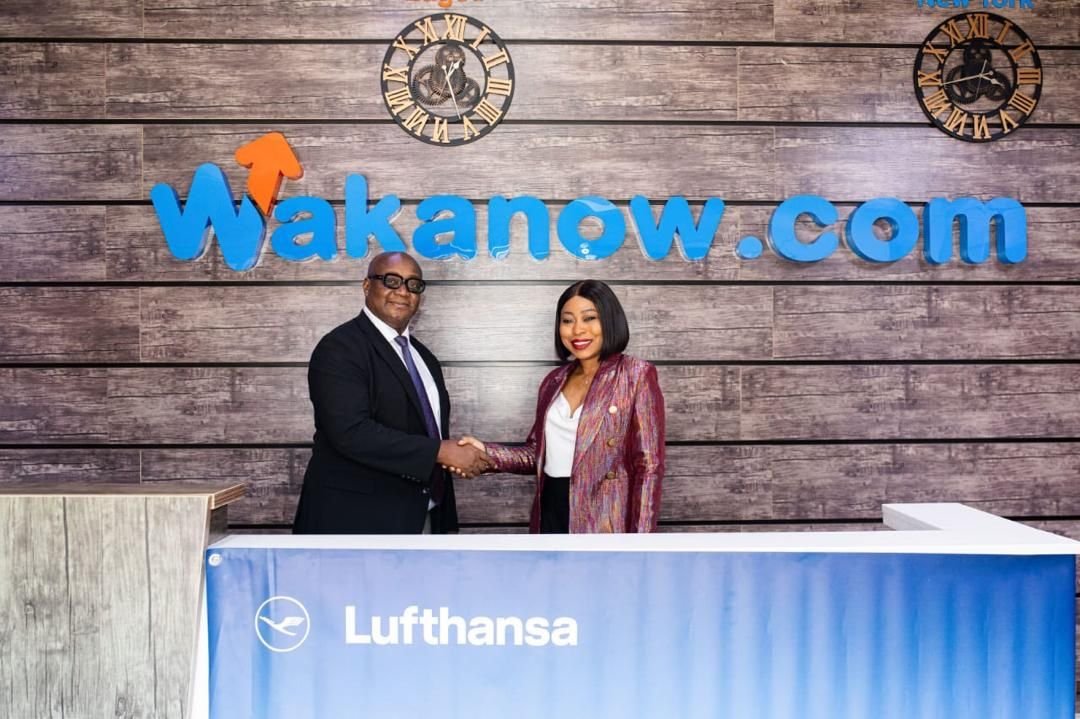
Wakanow announced this week that it has gone live with an NDC integration to Lufthansa Group’s content, a deal the Lagos-based travel company is calling a first for an African travel company. Strip away the framing and the real news is not the airline relationship itself. It is that Wakanow chose to build and hold that connection directly rather than route it through the aggregator layer most African agencies and OTAs rely on.
Most of the NDC conversation in African distribution to date has run through two channels: airlines building out NDC content themselves, including Lufthansa Group, Emirates and Etihad, or aggregators like AirGateway, Verteil and TPConnects building the connective tissue that lets smaller agencies and OTAs plug into that content without integrating each airline one by one.
Wakanow’s announcement describes a third path: a retailer building its own connection to a single airline group’s NDC content, without an aggregator sitting between the two. That is the story. The Lufthansa name is the vehicle for it.
The announcement itself, distributed as a joint release with quotes from both sides, credits the integration with faster search, richer fare and ancillary data, and a more personalized booking flow for Wakanow’s customers.
Two kinds of “direct,” and the release does not say which one this is. There is a difference between a direct commercial arrangement, where Wakanow negotiated terms straight with Lufthansa Group rather than through a third party, and direct technical connectivity, where Wakanow’s systems talk to Lufthansa Group’s NDC API without an aggregator sitting in the data path.
The release does not make that distinction, and without technical confirmation from either side, it should not be assumed. It is entirely possible for a deal to be commercially direct while still running over infrastructure supplied by a vendor. Until Wakanow or Lufthansa Group clarifies which is the case, “direct” in this story means direct relationship, not necessarily direct pipe.
That ambiguity does not undercut the commercial logic, whichever version turns out to be true. An aggregator connection is one integration that opens access to many carriers, at the cost of per-booking fees and less control over the data layer. Building and holding the connection yourself is the opposite trade: more control and potentially lower intermediary costs, but an arrangement that has to be negotiated and maintained separately for every airline relationship.
Wakanow’s release says the Lufthansa Group deal is part of “a portfolio of direct NDC integrations with leading international airlines,” with more in development, which suggests the company has decided that trade is worth making, at least with a handful of major partners.
What is claimed versus what is verified. The “first African travel company” framing comes from Wakanow’s own release and has been repeated verbatim across the outlets that picked it up, which appears to be straight syndication of a single press release rather than independent reporting. That does not make the claim false, but it has not been independently confirmed, and “first” claims in distribution technology are notoriously hard to verify given how many bilateral integrations happen quietly.
Why it matters anyway. Africa’s NDC adoption story so far has largely been supply-side: airlines building capability and aggregators distributing it downstream to agencies that mostly consume rather than integrate.
An OTA the size of Wakanow choosing to own part of that connection signals that at least one major African retailer sees enough volume and enough strategic value in the data relationship to take on the harder route for its highest-priority carriers. If that calculation holds for other large regional OTAs, it would mark a shift in where NDC integration effort concentrates on the continent, away from aggregator-mediated access and toward retailer-built or retailer-held infrastructure for the airlines that matter most to their bookings.
It also lands inside a Lufthansa Group strategy that has been unusually aggressive on NDC economics elsewhere, with GDS surcharges pushing agencies and OTAs toward NDC-enabled channels globally. A large Nigerian OTA holding its own connection to Lufthansa Group content could reduce its exposure to those surcharges on this booking flow, though the release gives no detail on volume or economics, so that should be read as a plausible incentive rather than a confirmed outcome.
The unanswered questions are now more interesting than the announcement itself. How many airlines are actually in Wakanow’s “portfolio” of direct integrations? What does building and holding this kind of connection cost against aggregator fees at Wakanow’s volume? Is another African OTA making the same bet? And which version of “direct” does this actually turn out to be?
Those are the questions worth chasing next. TDN will be following Wakanow’s “additional partnerships already in development” line and watching how competitors respond.