
AI agents are arriving faster than the underlying airline distribution infrastructure in many emerging markets.
On 21 September, Sabre argued that the industry may spend the next decade running on MCP, as it spent the last one working through NDC. The company says nearly 80 customers are piloting or in full production on its MCP server, including Virgin Australia, Flight Centre and several Internova brands. Sabre MCP now reportedly powers apps inside ChatGPT and Claude, and Virgin Australia’s conversational search runs on it. The figures are company-reported and the release does not separate pilots from live deployments, but this is not a concept anymore. Sabre launched the server in September 2025 and says it is already generating bookings.
Travelport is moving at the same pace from a different angle. Its TripServices platform reports that API-driven transactions rose from 43% of customer transactions in 2022 to 63% in 2026, and in July it connected more than 400 European agencies through Travelsoft’s Orchestra platform. Amadeus is more cautious about MCP alone, with CTO Sylvain Roy calling it an important first step that still needs commerce protocols like UCP to complete a transaction end to end. All three are converging on the same problem: how an AI agent actually reaches airline inventory and gets a transaction to settle.
Here is the uncomfortable part for emerging markets. MCP does not eliminate the distribution problems that came before it. It exposes them. An AI agent can only sell what the underlying systems can make available, service and settle. If an airline’s NDC content is incomplete, if post-sale servicing remains fragmented, or if local payment infrastructure cannot reliably support the transaction, putting an MCP layer on top does not make those problems disappear. It gives an AI agent a faster way to encounter them.
Think of the infrastructure underneath an agentic booking: airline inventory, offer and order management, NDC or API connectivity, servicing, payment and settlement. MCP provides an interface through which an AI agent can reach that infrastructure. If any layer underneath is weak, the AI agent becomes a fast, articulate interface to a slow, incomplete system.
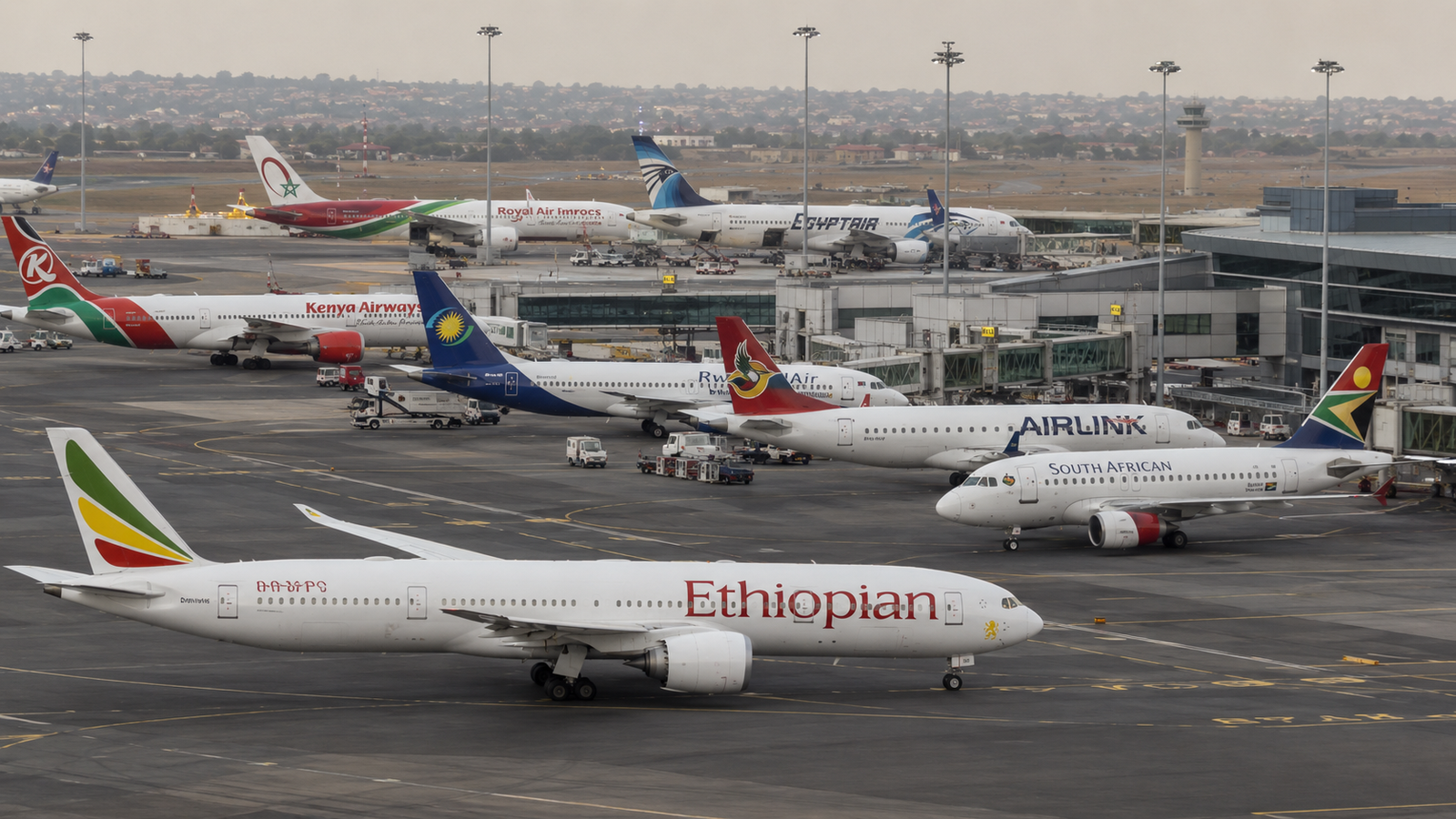
Africa’s position here is not simply “behind.” It is uneven. Kenya Airways became the first Sub-Saharan African airline to distribute NDC content through the Amadeus Travel Platform in April 2025, building on its earlier work with Verteil and its own NDC capability, and it has charged GDS surcharges on bookings made outside its NDC-enabled channels since 2022. That is real progress. But KQ’s own documentation of its earlier NDC rollout shows the transition problem clearly: even a direct NDC implementation did not initially carry the full functionality available through GDS channels. NDC adoption is not a connectivity checkbox. It is whether an airline can support the complete retailing journey, search through settlement, and MCP raises that bar again. Africa’s challenge is that a handful of airlines and technology providers have moved deep into modern distribution, while much of the market still runs on a mixture of traditional GDS workflows, direct connections, aggregators and partially implemented NDC.
The Gulf illustrates what a more complete build looks like. Sabre has launched NDC content from Qatar Airways, which it called its first EMEA-based NDC airline partner in 2022, and from Etihad Airways, which began in Oman and Bahrain in 2024. Saudia followed in January 2025, the first time it had made NDC content available on any GDS. That gives MENA carriers a working bridge into Sabre’s agent-ready infrastructure, and gives African carriers a model to study rather than a gap to close alone.
Payments deserve more weight than a footnote here, because they are where the whole chain either holds or breaks. An AI agent can search, compare, recommend and book, but someone still has to authorize, ticket, settle, refund, exchange and reconcile. Africa’s payment environment is fragmented across cards, bank transfers, wallets and mobile money, and that fragmentation does not disappear because an agent is doing the booking. Kora’s recent addition to the IATA Financial Gateway, giving airlines one route to settle across the continent’s cards, banks and mobile money, is the kind of infrastructure this moment actually needs. The real target for emerging markets is not MCP plus NDC. It is MCP plus modern airline retailing plus servicing plus payment and settlement, all working together.
Three clocks are now running at once. Airlines are still implementing modern distribution. GDSs and travel technology providers are building agent-ready infrastructure on top of it. And payments and servicing still have to make the transaction actually work once the agent has made its recommendation. In much of Africa, these three clocks are not moving at the same speed, and that gap, not Sabre’s announcement, is the real story.
None of this makes Sabre the villain. Its MCP server has moved from concept to customer deployment, and Amadeus and Travelport are racing to build their own answers to the same question. The more useful question for TDN’s readers is not whether Sabre is overhyping MCP. It is whether the supply side of African and MENA travel is ready to move at the same speed the technology providers are now moving.
That means different things for different players. Airlines should treat MCP as a reason to finish the fundamentals first: complete NDC content, retailable offers, exposed ancillaries, reliable servicing, working refunds and exchanges, documented APIs and payment options that match their markets, before exposing any of it to an agentic channel. Agencies and OTAs should be asking their technology providers whether they can search, book, ticket, modify, cancel, refund and reconcile NDC content through APIs, not just search and book. Aggregators that can normalize NDC, legacy content, payments and servicing into one connection have a real opening to become the bridge between African airlines and global AI distribution. And payment companies that can support the full lifecycle, not just the initial booking, are positioned to matter more in this shift than most of the industry currently expects.
The AI agent is only as intelligent as the distribution infrastructure underneath it. Sabre has shown that the agentic interface is moving from experiment into commercial deployment. Amadeus and Travelport are building their own approaches. The next phase of travel distribution is therefore unlikely to be decided by who connects to MCP first.
It will be decided by who has the infrastructure underneath it to actually fulfill what the agent promises. For Africa and MENA, that means the NDC conversation is not ending. It is becoming more consequential. Airlines still need better retailing. Agencies still need better connectivity. Aggregators still need to normalize fragmented content. Payment providers still need to make the transaction work beyond the initial authorization.
MCP may be the new interface. But the infrastructure underneath it will determine what the interface is actually capable of selling.