Two national carriers have picked Sabre for the systems underneath their retailing transformation. The retailing proposition may be what got Sabre through the door.
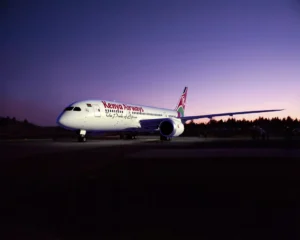
In six weeks, Sabre has secured two national carriers in East Africa. On 11 August, Air Tanzania said it will migrate its core passenger operations to SabreSonic on an accelerated timeline, alongside Sabre Mosaic NDC IT. On 22 September, Kenya Airways announced a Sabre platform that will become the airline’s “operational and commercial backbone,” covering reservations, ticketing, inventory management and airport check-in, and replacing a system that has served the airline for more than two decades. The scopes are not identical, and the releases use different product language. But the pattern is similar. Both airlines are replacing the core of their operation, and both announcements lead with retailing.
That framing is deliberate. Sabre’s language in both deals stresses modularity, meaning that airlines can modernise in stages and unlock value as it makes commercial sense. Kenya Airways will adopt Mosaic Offer Optimisation as part of the move, adding dynamic pricing and continuous learning to its offers. Its own results statement, published on 25 August, reported a loss after tax of KShs 16.1 billion for the first half, compared with KShs 12.2 billion a year earlier, even as revenue rose 9% to KShs 81 billion on 9% less capacity. For a carrier in that position, a pitch built around incremental value is a different proposition from a conventional big-bang replacement, even when the underlying project involves replacing the core system.
Not every East African carrier is buying the same thing. Ethiopian Airlines took the opposite route. It adopted Accelya’s FLX Select, a rapid-deployment NDC solution, and in January signed with Nucore Technologies to improve B2B distribution through NDC. Its own FAQ says it has Level 3 NDC certification from IATA. Ethiopian bought retailing layers and kept its PSS, while Air Tanzania and Kenya Airways are replacing theirs. That gives East Africa three visible models: full replacement with Sabre, retailing layers on an existing system with Accelya, and, until now, the Amadeus route Kenya Airways had been on.
That last route is where the most uncertainty sits. Sabre’s release does not name the system Kenya Airways is dropping. tech-ish reports that it is Amadeus Altéa, used for reservations, ticketing and departure control, which fits the airline’s history. In April 2025, Kenya Airways became the first Sub-Saharan airline to distribute NDC content through the Amadeus Travel Platform, following its adoption of Altéa NDC. In March 2026, the Kenya Association of Travel Agents reported that non-IATA agencies in Kenya and the region could now access that content through Amadeus. Agencies that only recently gained that access now need to know what happens to it when the PSS changes. Neither announcement says.
The agency side of Sabre’s regional position is a separate track. In March, Sabre extended its distribution representation agreement with TNS Global to cover Kenya, Tanzania and Uganda, taking TNS Global’s African footprint from 11 markets to 14. No announcement connects that deal to the airline wins, and we are not presenting them as a coordinated programme. But for an agency in any of those three markets, the practical picture is that both national carriers and the local Sabre representative are now aligned with one vendor.
What we could not verify. Sabre has not named Kenya Airways’ incumbent system, so the Altéa identification rests on a single secondary report. Sabre’s Kenya Airways release also does not name the specific Sabre product being deployed, so the two deals cannot be compared product for product. We could not establish Air Tanzania’s incumbent PSS. The announcements we reviewed give no go-live dates for either migration, and we found no public information on the vendor plans of RwandAir or Uganda Airlines.
The real test comes when the migrations go live. A PSS change is the point where NDC content, agency connectivity and settlement flows are either preserved or quietly rebuilt. Sabre has shown it can win national carriers by leading with retailing and letting the core system follow. What it has not yet shown is whether agencies and aggregators will get continuity of content while those carriers move. That will determine whether Sabre’s East Africa run becomes a distribution story or remains primarily a technology sale.