
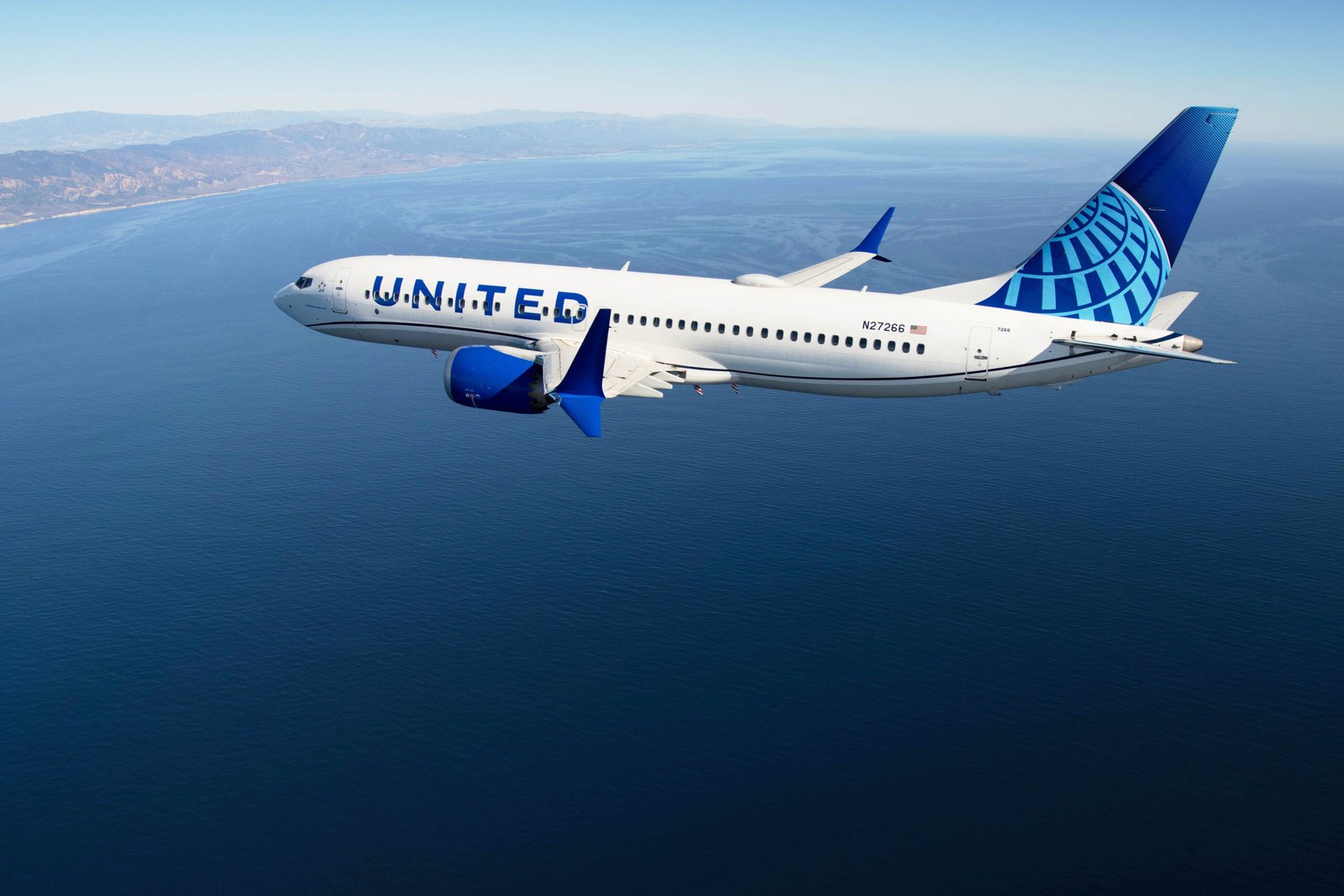
United Airlines is restricting unauthorised, third-party personal AI agents from buying, changing or servicing its tickets, directly on its own platforms and indirectly through agencies and aggregators. The stated reasons are security and federal rules, but the chief executive’s own explanation is about control of the customer, and the restriction reaches the same intermediaries airlines have spent a decade asking to sell through NDC. United has not banned those intermediaries. It has put a condition on how automation may operate through them.
What United changed
On 11 November 2026 United said it was restricting access, directly on its digital platforms and indirectly through travel agencies and aggregators, to “unauthorized, third-party personal AI agents or assistants”, as Skift reported. It revised its contract of carriage the same day. According to reports on the revised contract, AI agents may not make, modify or service a ticket even where a passenger supervises or approves each step, and United can cancel affected reservations without notice.
AI tools can still search schedules and show fares, but a person must complete the purchase. United gives two reasons. The first is security, since handing an agent payment details or login credentials can lead to unintended purchases, account changes or use of MileagePlus miles. The second is compliance with Department of Transportation and Federal Aviation Administration requirements, with the baggage declaration the example given, which a passenger must confirm personally.
Scope, verified and not verified. United has not banned agencies or aggregators. The restriction targets a defined class of agent that reaches United through them, and nothing in the coverage says that ordinary agency transactions over established NDC or GDS connections are prohibited. United’s wording, as Skift quotes it directly, restricts use by unauthorised, third-party personal AI agents or assistants, directly within its platforms and indirectly via agencies and aggregators. We have not read the contract text. The contract of carriage is published at united.com, but the version retrieved in searching predates the 11 November revision, so the new wording, including whether it uses the word unauthorised, and the rule numbers some reports give (6.J.6 for the restriction, 5.H for cancellation) are still to be checked against the live page. United’s news release could not be located and should be linked once found. Kirby’s remarks below come from Wall Street Journal reporting, which is paywalled, and are quoted second-hand.
The explanation that matters is Kirby’s
United’s explanation is not limited to security and regulatory compliance. Speaking at an event in Chicago, as reported by the Wall Street Journal, chief executive Scott Kirby said he does not want to create another middleman. Security and regulation can both be real concerns, and nothing in the coverage suggests otherwise. But an AI agent can reach United through an agency’s or aggregator’s otherwise legitimate connection, so a concern about who controls the customer relationship extends to the agency channel without necessarily targeting ordinary agency sales.
That is consistent with where United has stood for some time. In comments carried by PhocusWire earlier, Kirby said the customer is better served by coming direct, and described it as doing what is right for the customer rather than a distribution strategy. An AI agent is the newest candidate to own the shopping interface, the comparison and possibly the payment, and with them control of how an airline’s product is presented, upsold and linked to loyalty. United is, in effect, refusing it a place in the booking path before it has any scale to bargain with.
This reading of motive is our inference from Kirby’s remark and from United’s stated direct-first position. United has not described the rule in these terms itself.
The NDC contradiction
NDC was introduced in the early 2010s partly so that intermediaries could handle ancillary sales that would otherwise happen on an airline’s own website, as PhocusWire has noted. Airlines have since pressed agencies to move to NDC, and some OTAs now do exactly that through their own NDC integrations or through global distribution systems.
United’s position adds a condition to that relationship rather than closing it. An agency can still distribute United content through an approved NDC or GDS connection. What United has restricted is an unauthorised third-party personal AI agent acting through that connection. NDC is a distribution standard and does not decide who or what completes a transaction, so the restriction is not a limit on NDC itself.
The most consequential unanswered question is whether an airline can distinguish between an AI agent acting on behalf of a traveller and an AI system that an authorised agency deploys to automate its own distribution workflow. An agency could invest in AI to improve its search, pricing, booking and servicing. If airlines treat every third-party AI agent as one category, the effect on agency technology investment could be significant. United has not said how it reads that distinction, so this is a question to put to United and to agencies, not a conclusion. A related question is who decides which forms of automation are acceptable when the airline owns the inventory and the intermediary’s software handles the search and the sale.
Carriers are taking three different positions on the same question. United is restricting unauthorised agents. Southwest launched a ChatGPT plugin on 6 October that lets travellers search and compare its flights inside ChatGPT, but PhocusWire reports that users are sent to Southwest.com to complete the booking, and the airline describes the plugin as the first step in a phased approach developed with OpenAI and Amazon Web Services. JetBlue president Marty St. George, speaking at the Skift Commerce Summit on 11 November, said he understands why airlines are wary and fears intermediaries could one day seek compensation for directing bookings, yet he also said airlines should adapt if customers embrace AI booking tools, according to Reuters. Whether any of these approaches wins will show in how travellers and agencies behave over the coming quarters.
Where agencies and aggregators are exposed
The coverage leaves the practical questions open. United’s statement refers to unauthorised, third-party personal AI agents or assistants, meaning tools acting for a traveller. It does not say how United treats AI that an authorised agency runs inside its own search, pricing, booking or servicing workflow, nor how it will enforce the restriction or handle existing partner integrations. Those gaps matter because an agency or aggregator may not be able to see whether a request originated with a traveller’s AI agent, for example an AI-enabled browser, or an assistant that prepared the search before a human clicked buy.
One report suggests that a booking facilitated by an AI assistant through an online agency could still be voidable, and that reading rests on a single source. If that reading is correct, the implications could extend beyond the traveller to the agency or aggregator that facilitated the transaction. The issue may eventually surface in distribution agreements through representations, warranties and indemnities. That remains a forecast, not a reported development. The immediate test is whether United clarifies how it will detect and treat agent-originated bookings that arrive through intermediaries.
What to watch, and the question for Africa and MENA
Three things will show where this goes. The first is whether United publishes enforcement detail or changes its agency and aggregator agreements. The second is whether other carriers move towards United’s restriction, Southwest’s search-then-redirect model or the willingness to adapt that JetBlue’s president described. The third is whether United ever cancels a ticket on the ground that an agent was involved, because that would turn the restriction from a statement of intent into a cost for sellers.
The African and MENA angle needs reporting before it can be argued. We have not found an African or MENA carrier that has published a position on AI-agent bookings, and we have not checked individual carriers’ terms. What follows are questions to investigate, not established consequences of United’s decision. For Amadeus and Sabre, how will distribution agreements address AI agents operating through agency workflows? For TPConnects, Verteil and AirGateway, what happens when an agency or OTA uses an AI interface to interact with airline NDC content? For regional OTAs and aggregators, who carries responsibility if an AI-assisted transaction breaches an airline’s distribution conditions? For African and MENA airlines, will they build their own AI shopping interfaces, authorise outside agents or restrict them? Written questions to at least two NDC providers and two airlines before publication would give the piece reporting that the general coverage so far lacks.
United’s decision is less a verdict on AI than a statement about who controls the airline shopping relationship. Airlines have accepted intermediaries because they bring reach, technology and customers, even at a cost. AI agents offer a different proposition: they could own the customer interface, compare competing airline offers and influence the transaction without holding inventory. Airlines have to decide whether to treat them as another channel, a technology partner or an unauthorised intermediary. United has chosen restriction for now, Southwest is trying a search-and-redirect plugin, and JetBlue’s president has said airlines may have to follow customer behaviour. Carriers in Africa and MENA will eventually face the same strategic question: whether to control AI-assisted distribution themselves, authorise external agents or restrict them.