The numbers IATA published ahead of its 2026 Africa media roundtable should alarm anyone serious about the future of airline distribution on this continent. African carriers are on track to generate $200 million in combined net profit this year. Across the entire continent. That works out to $1.3 per passenger, against a global average of $7.9. No other region comes close to margins this thin.
These figures are not new in the sense that African aviation has long operated under structural disadvantages: high airport charges, constrained intra-regional connectivity, volatile currencies, and aviation infrastructure that has not kept pace with demand. What is less discussed is what margins of 1.3% mean specifically for how airlines distribute their inventory, and what it costs them to do so.
At $1.3 per passenger, African airlines are not buying distribution. They are subsidising it.
The Distribution Cost Was Never Designed for This Margin Environment
GDS booking fees vary by market and contract, but the order of magnitude is well established. Depending on the carrier agreement and region, GDS fees can run anywhere from $3 to $11 per segment. For a round trip, that figure doubles. For an African airline earning $1.3 per passenger, a GDS fee on a round-trip booking can represent a multiple of its entire net margin on that ticket.
This is not a new problem. But the conversation has mostly played out in markets where GDS fees are an irritant, not a structural question. For a Lufthansa or an American Airlines, the calculation is margin optimization. For a mid-size African carrier at 1.3% net margins, a round-trip GDS fee does not eat into profit. In many cases, it erases it. Global distribution pricing assumes a margin environment that does not exist here.
The playbook larger carriers have used to push back on GDS costs, surcharging EDIFACT bookings or forcing renegotiation, depends on volume as a threat. African carriers mostly cannot make that threat. The system works. It just was not built for this market.
NDC as a Cost Play, Not Just a Technology Upgrade
The global conversation around NDC has largely been framed around retailing capability: the ability for airlines to merchandise ancillaries, offer dynamic bundles, and present richer product content to travel agents. That framing is accurate but incomplete for African carriers.
For an airline earning $1.3 per passenger, the more relevant NDC value proposition is cost reduction. Direct connections, lower per-booking fees, and reduced dependency on EDIFACT infrastructure are not retailing improvements. They are cost line items. At a global average of $7.9 per passenger in profit, a carrier can afford to treat distribution as a retailing strategy question. At $1.3, it becomes a survival question.
The problem is that NDC adoption itself carries costs: technology implementation, API development or licensing, training agency networks to use new booking flows, and managing the transition period where both legacy and NDC channels run simultaneously. These are not trivial investments for carriers that are already operating at the margin.
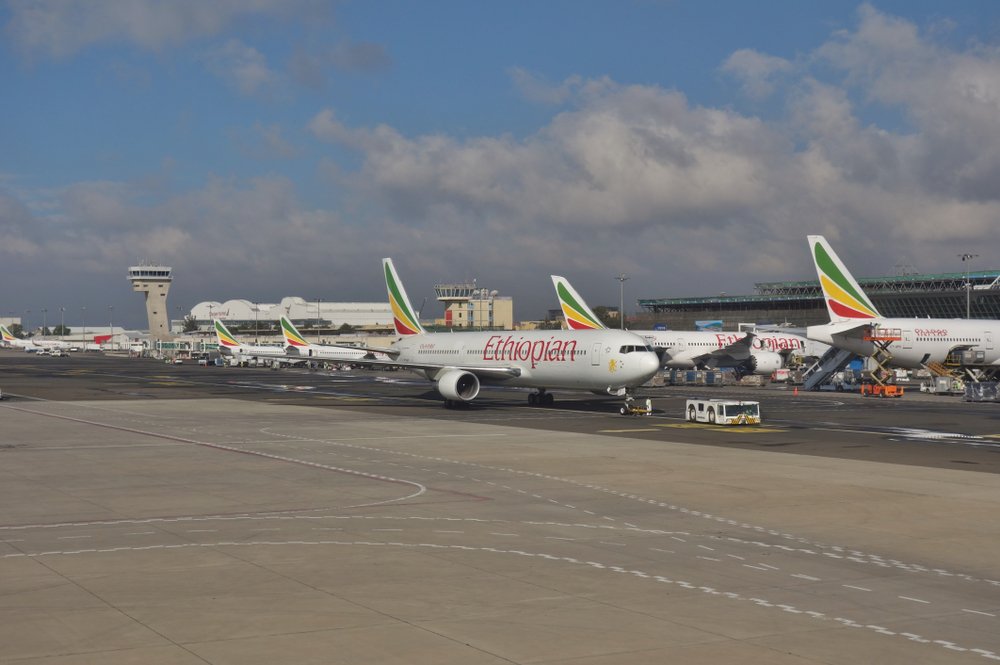
Ethiopian Airlines is the clearest African example of a carrier that has moved meaningfully on modern distribution. It adopted Accelya’s FLX Select platform for NDC content distribution in late 2024, giving it a more modular path than building bespoke connections carrier by carrier. But Ethiopian is not representative of the continent. It is the outlier: a carrier with scale, state backing, and a long track record of deliberate infrastructure investment.
The Agency Network Complication
African airline distribution cannot be separated from the structure of the agency market that sells it. Across much of sub-Saharan Africa, travel agencies remain the dominant booking channel for both corporate and leisure travel. The OTA infrastructure that has reduced agency dependency in Europe and North America has not replicated at scale on the continent. Agencies are not a legacy channel in Africa. They are the primary channel.
That matters for distribution strategy because it shapes where the pressure points sit. An African airline that wants to shift volume away from EDIFACT cannot simply incentivize consumers to book direct. The volume is not there to shift. It has to work through the agency community, which means investing in NDC-capable booking tools, running training programs, and managing the commercial disruption that comes with altering long-standing commission and incentive structures.
This is the part of the NDC conversation that technology vendors consistently understate. NDC success in Africa is not primarily an airline implementation problem. It is an agency enablement problem. Until African travel agencies have affordable, functional NDC booking tools embedded in their daily workflows, airlines cannot migrate volume regardless of what their own systems can do. The airline’s NDC readiness is necessary but not sufficient. The agency network’s readiness is the actual bottleneck.
Which means the cost of NDC transition in Africa falls disproportionately on the weakest part of the chain. Airlines with thin margins must fund agency enablement programs their agencies cannot fund themselves, to migrate volume through a channel those agencies are not yet equipped to use, in order to reduce fees they are currently paying to a system that does not price for their reality.
That is a multi-year effort. For carriers already operating on margins that leave no room for error, the appetite to absorb transition costs is limited.
What the Profitability Data Actually Demands
IATA’s profitability data for African aviation does not just describe a commercial challenge. It describes an environment in which distribution cost structure has become a strategic constraint of the first order.
The carriers that will navigate this most effectively are not necessarily the ones that move fastest on NDC technology adoption. They are the ones that negotiate smartest: renegotiating GDS agreements where volume gives them some leverage, identifying aggregator models that lower the cost of NDC connectivity without requiring full bespoke implementation, and building agency partnerships that make the transition commercially viable rather than commercially punishing for both sides.
The technology providers that stand to gain most in the African market are those that understand this dynamic and price accordingly. A distribution platform priced for carriers operating at 3.9% global average margins does not fit a market where the margin is 1.3%. Pricing, implementation models, and support structures that reflect the actual cost environment of African carriers are not a nice-to-have. They are the entry requirement for serious participation in this market.
IATA will make the case this week in Addis Ababa that African aviation’s potential is large and its structural barriers are addressable. That is true. But the distribution cost question sits beneath nearly every other challenge. You cannot fund infrastructure investment, route development, or agency digitization programs from $1.3 per passenger. The margin problem and the distribution cost problem are not separate conversations.
Fix distribution economics, or the rest of the strategy does not matter.