

Payment companies have made local passenger payments easier. But the infrastructure that allows African travel agents to fund and settle NDC bookings remains less visible.
African airlines have made significant progress in accepting payments from passengers across African markets, by card, bank transfer, mobile money and USSD. Payment companies have helped build much of that infrastructure. A different question remains: who is building the payment infrastructure for the travel agents expected to sell those airlines’ NDC content?
Passenger payment infrastructure is advancing
Kora joined IATA Financial Gateway (IFG) in June 2026, so airlines and travel agencies connected to IFG can accept cards, bank transfers and mobile money across Kora’s African markets through one integration. IATA, which represents more than 370 airlines, said the move strengthens its ability to serve carriers operating in or expanding across Africa. Flutterwave joined in July 2023, pitching it partly as a fix for the slow repatriation of funds from tickets sold in local currency.
Other providers work with airlines directly. Cellulant introduced split payments for Emirates in Kenya in February 2026, letting customers combine mobile money, mobile banking and local cards to get past wallet limits on high-value fares, and says it supports Emirates across 14 African markets. Paystack signed Africa World Airlines in 2024, adding bank transfer, USSD and QR payments for passengers in Ghana and Nigeria. Network International’s DPO unit enabled mobile money for flydubai customers in Kenya and Uganda in April 2025, having partnered with Amadeus on airline mobile money in 2021.
In Nigeria, OnePipe says it serves 9 of the 14 licensed domestic airlines, processing about $250 million and nearly one million tickets a year, mostly by bank transfer. Those figures come from the company’s own release and TDN has not verified them.
In almost every case, the payment is collected from the passenger, on the airline’s own website or app.
Three different problems
Three things are easily blurred. Collection is a passenger or agency paying with a local method. Funding is an agent paying the airline for an NDC order using money that is accessible in the agent’s own market. Settlement is the transaction being reconciled so that the right party receives the funds.
Kora’s announcement names travel agencies as well as airlines, which matters. It does not mention NDC, and it does not say whether the integration covers funding and settling agent-originated NDC orders or only collection. That is the first thing TDN would want answered.
The infrastructure exists. Is it reaching agents?
IATA already has the plumbing. IFG is described as the airline industry’s payment orchestration platform, and IATA’s own use case for NDC shows it handling agent profile management with upfront agent status validation and generating BSP and ARC settlement files, alongside the airline’s payment providers. Kora has entered that platform with African payment capabilities. Verteil was certified for IFG in 2019 and TPConnects is also an IFG solution provider. Hahn Air and Glyde are building agent-focused products of their own.
So the question is not whether infrastructure exists. Some of it clearly does, and nothing here suggests IFG is failing. The question is whether its capabilities, and those of the wider payment sector, translate into practical access for agents across African markets. That is a question of accessibility rather than acceptance. Having a payment provider connected to IFG does not automatically mean that every local payment method is available to every agent, in every market, for every NDC transaction. An agent in Rwanda may work with an airline that has an NDC payment gateway and an IFG connection and still be unable to fund the order conveniently in Rwandan francs.
Who is paying in an NDC booking
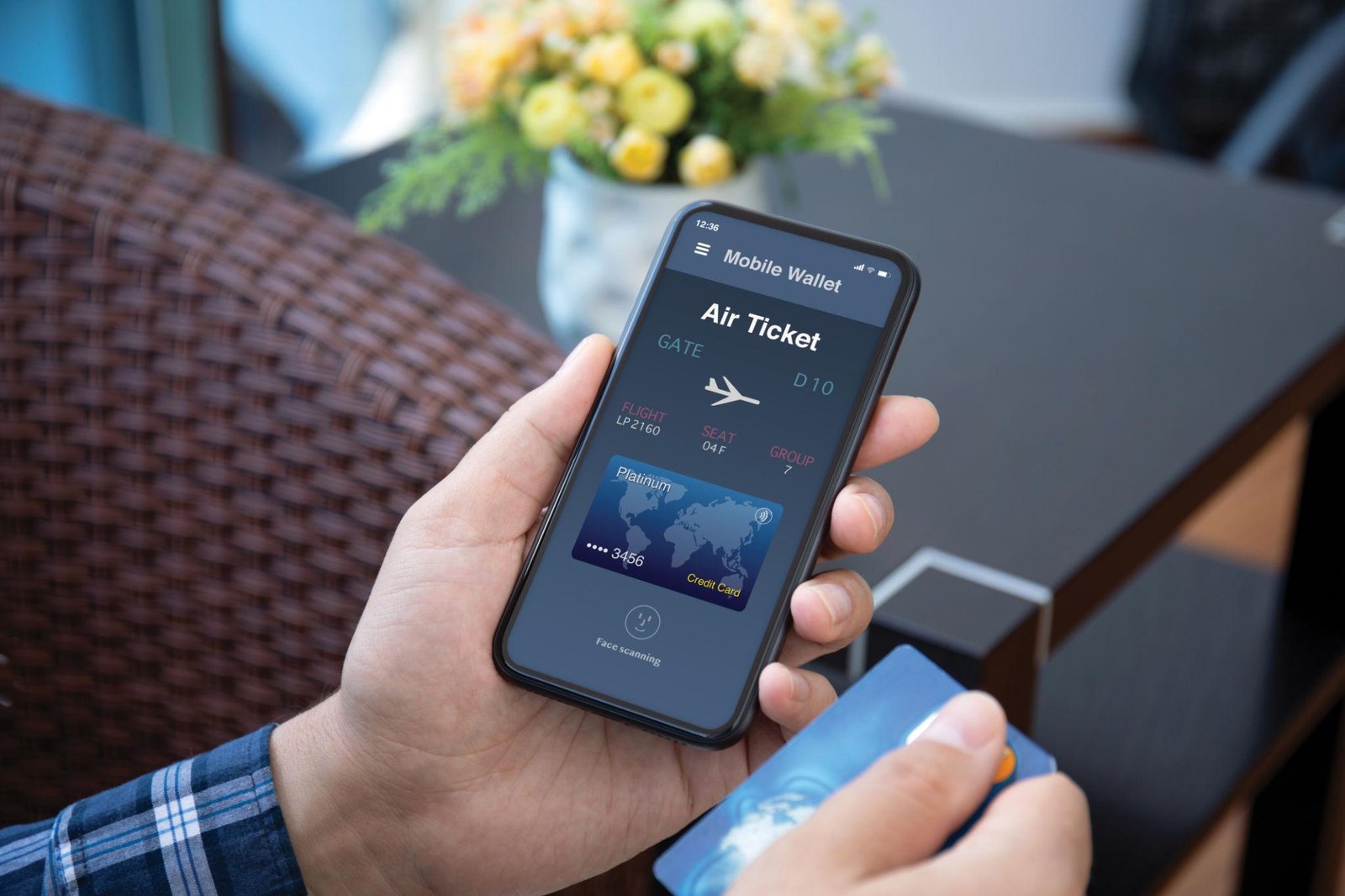
In an NDC booking made through an agent, the payment arrangement depends on the commercial model. The passenger may pay by card, but the agent may also be responsible for funding the transaction through BSP cash, IATA EasyPay or another authorised payment method. Mobile money and USSD matter to a traveller buying on an airline site. They do not obviously help an agency in Kampala or Lagos that has to fund an NDC order.
The options also vary by agent. IATA says GoLite agents can pay by credit card and EasyPay, while Go Standard and Go Global agents can also use BSP cash. EasyPay, a prefunded wallet, is used by more than 8,000 agents across more than 120 BSPs, according to IATA’s payment services fact sheet, and an earlier IATA regional post, undated in the version TDN saw, put its African availability at 27 countries. IATA Pay, a bank-to-bank method, is described as usable for NDC and agency portals, though its first scope was airline direct sales.
Verteil’s April 2026 Nile Air announcement says its platform supports flexible payment models, including deferred payment flows, without explaining whether that means issuing before payment, paying later on agreed terms or a credit facility. Those are commercially different arrangements. TDN found no public announcement of Verteil, TPConnects or AirGateway integrating an African local payment provider such as Kora, Cellulant, Paystack or OnePipe. That does not prove none exists. It means the providers have not made it visible.
Why the agent matters most for smaller airlines
The TPConnects and AFRAA 2025 survey found more than 40% of surveyed African airlines planning or implementing NDC, while 81% carry fewer than 2 million passengers a year. That combination is the commercial point. Carriers of that size have limited technology budgets and cannot easily rely on their own websites alone. For many of them, NDC only becomes commercially viable if agents can access and transact the content. That requires more than the ability to display an offer. It requires a workable way to pay for the resulting order.
Travel News South Africa reported in September 2025 that agents are leaving the BSP because the IATA guarantee has become unaffordable, and a poll it ran found a third of agents felt airlines were not receptive to direct transaction channels. African airlines, the same report said, struggle to make NDC pay given smaller budgets and thinner technology.
AFRAA’s Secretary General has said that infrastructure built for intra-African travel needs payment systems that reflect the prevalence of mobile payment and limited card penetration, and access for smaller agencies in markets with thin GDS coverage.
Agent payment tools are emerging, in one corner of the continent
There are signs of agent-side payment tools. Hahn Air’s HR-PAY Plus programme combines two distinct payment products. HR-PAY Plus, issued by Glyde, gives eligible South African travel agencies a virtual Mastercard for payments to airlines, hotels and other suppliers. Each agency receives a linked bank account funded by local bank transfer. HR-PAY Global, meanwhile, is a UATP-based account for buying Hahn Air’s HR-169 tickets, also funded in rand. A 1% rebate on HR-PAY Plus spend is split between the agency’s Glyde account and its HR-PAY Global account. Participation is currently limited to IATA Go Standard agencies, after an eligibility check by Hahn Air and Glyde.
Separately, in November 2026 Mastercard and Glyde announced Glydepay, which lets travel agencies and travel management companies in Southern Africa issue a virtual card per booking. Mastercard and Glyde describe it as the first issuance of a Mastercard Wholesale Program card in Southern Africa. That claim is about the Wholesale Program card specifically, not about virtual cards in general, which South African agencies were already using.
Neither announcement shows that these tools are built into African airlines’ NDC order-payment workflows, and both are confined to Southern Africa. Agent payment infrastructure is beginning to emerge. Its connection to NDC remains unclear.
What this reporting does and does not show
The account above rests on public announcements and provider materials. The claim that the accessibility of agent-side payment infrastructure for African NDC remains unresolved is TDN’s reading of what is absent from those sources. It is not a finding that nothing exists. TDN has not yet received responses from NDC providers or IATA on how an agent in Rwanda, Ghana or Nigeria funds an NDC order in local currency, and will update this piece if they answer.
The financial relationship is half the infrastructure
African airlines did not wait for NDC to fix local payments. They fixed them on their own websites, using providers who already understood bank transfer in Lagos and M-Pesa in Nairobi. That is a real achievement, and it carries a risk. If the agent channel continues to operate under payment arrangements that are difficult or expensive to access, while the airline’s own channel becomes easier to pay through, sales may increasingly shift towards direct channels. TDN has not seen evidence that this is already happening because of payment infrastructure, but it is a plausible commercial risk, and the intermediaries NDC needs to reach African markets would bear the cost. Displaying and selling an airline’s offer is only half of NDC distribution. The other half is a working financial relationship between airline and agent. The test for NDC providers is not whether they can connect to a payment gateway. It is whether they can show an African agent with a local bank account and no internationally enabled payment card how to fund an NDC order tomorrow morning.