
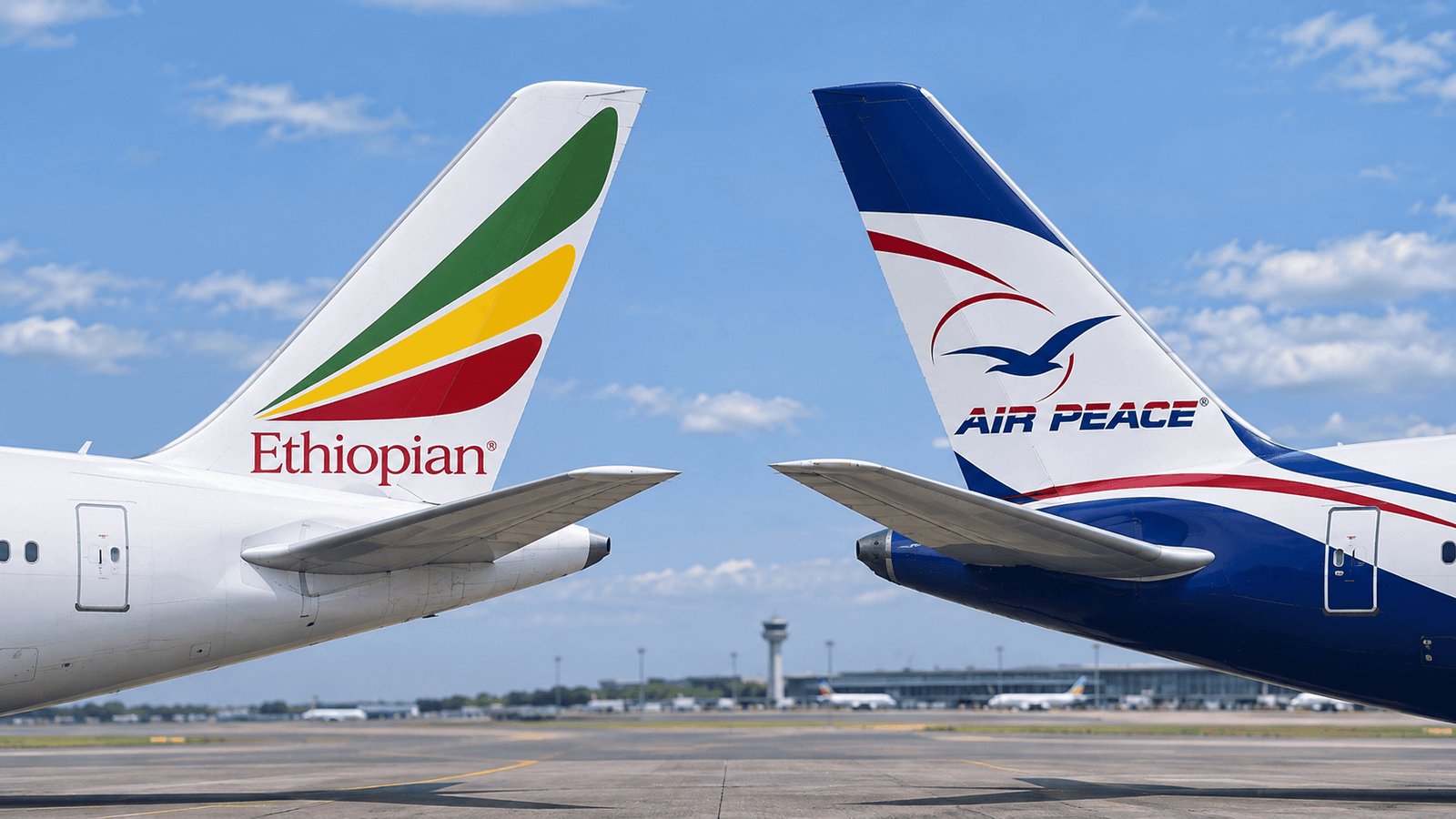
Ethiopian Airlines and Air Peace signed a bilateral interline agreement on 10 November, according to a release dated Addis Ababa. The agreement covers passengers and checked baggage, and allows each airline to issue tickets for eligible itineraries that include flights operated by both carriers. A traveller can book a qualifying journey on one ticket, with baggage checked through to the final destination where the itinerary and operating arrangements permit, without needing separate tickets for each carrier.
The commercial logic is easy to see. Air Peace’s domestic and regional network in Nigeria and West Africa can feed Ethiopian’s international network through Addis Ababa, while passengers arriving on Ethiopian flights can connect onward across Nigeria on Air Peace. The release places the deal within regional integration, tourism and the African Continental Free Trade Area. Air Peace Chairman and CEO Allen Onyema said it creates “greater opportunities for seamless travel in and out of the African continent.”
What the release does not contain is just as telling. It gives no routes, frequencies or passenger volumes for the agreement. It does not say which sales channels will carry the combined itineraries, whether GDS or NDC connectivity is involved, or how the two airlines will settle money between them. TDN has put written questions on these points to Air Peace and will update this piece if answers arrive.
Distribution is the first open question. An interline announcement establishes that two airlines will carry each other’s passengers. It does not establish that a travel agent in Lagos or Abuja can search, price and ticket the itinerary, on whose stock, in which system and at what commission. Interline itineraries have traditionally been sold through established ticketing and GDS processes. Whether anything newer, such as NDC or API-based connectivity, is planned here is not stated, and the answer determines how quickly agencies, which remain an important sales channel on long-haul routes in the region, can sell the product.
Settlement is the second. When one ticket covers two carriers, money has to move between them. That can involve industry interline billing and settlement processes, including IATA’s Simplified Interline Settlement (SIS) platform and the IATA Clearing House, or a bilateral arrangement. The release does not say which, if any, the two carriers will use. Foreign exchange availability and the repatriation of airline sales proceeds in Nigeria have been recurring industry concerns in recent years. The release is silent on how this agreement deals with either.
Servicing is the third. A single ticket means one passenger and two operators, so someone has to own changes, refunds, disruption handling and through-baggage responsibility. Interline agreements normally define these terms, but they are not public here.
The release also refers to Ethiopian’s multi-hub strategy, naming Lomé (ASKY), Lilongwe (Malawi Airlines), Lusaka (Zambia Airways) and Kinshasa (Air Congo). It does not say these hubs form part of this agreement. They do show a carrier extending its reach across Africa through equity stakes and partnerships, and an interline with one of Nigeria’s largest private airlines fits that pattern.
An interline is among the easiest airline partnerships to announce and among the hardest to make commercially useful. Until the sales channels, settlement terms and servicing responsibilities are visible, this agreement is best read as intent. Whether it matters will be decided by two practical tests: whether an agent can book it, and whether the two airlines can get paid.