

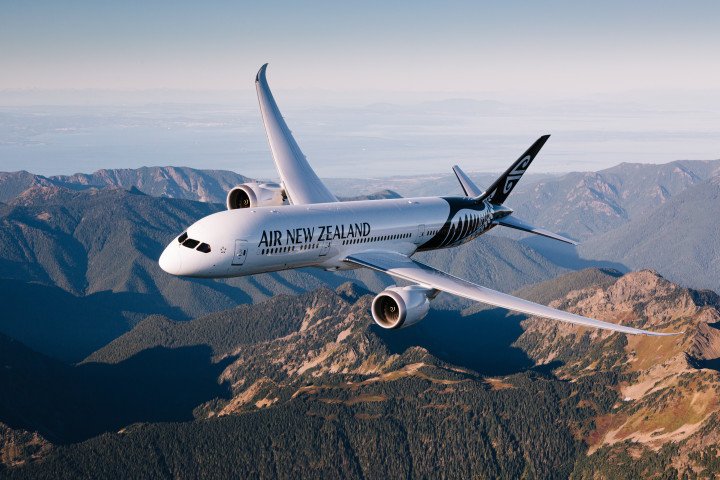
When Air New Zealand opens its Skynest pods to economy passengers on the Auckland-New York route later this year, most of the coverage will focus on the product itself: six lie-flat bunk pods tucked between economy and premium economy on a Boeing 787-9, bookable in four-hour sessions for NZ$495 on top of a regular fare. It is a genuinely novel thing. The travel press will love it.
But the more consequential story sits one layer beneath the beds.
To sell Skynest, Air New Zealand needed technology that could define a sleep session as a distinct inventory item, price it dynamically, attach it to an existing booking as an add-on, manage availability across two time windows per flight, and handle servicing and delivery as a separate product lifecycle. Not as a seat attribute, not as a baggage fee, not as anything a legacy passenger service system was ever built to accommodate.
IBS Software’s iRetail platform, announced this week as the commercial engine behind Skynest, did exactly that. And the reason that matters to anyone in airline distribution is what it demonstrates about where retailing architecture is heading, and what it exposes about where most of the industry still is.
The PSS Was Never a Retail System
The airline industry spent decades building infrastructure around a core constraint: the booked flight segment. Everything in a traditional passenger service system, from pricing and availability to ticketing and fulfilment, is organised around the PNR, the passenger name record, which in turn is organised around filed fares and flight inventory.
That architecture worked for selling seats. It was never designed for selling experiences.
An extra bag can be forced into that model as an ancillary fee. A seat upgrade can be appended as an EMD. But a four-hour sleep session, timed around meal service, limited to specific passengers, managed as its own inventory pool with its own fulfilment cycle? That is not a fare basis code problem. It is a retailing architecture problem.
Legacy systems do not have a product catalogue in the retail sense of the term. They do not have an order management layer that treats multiple purchased items as a single customer transaction, the way an Amazon cart does. They cannot dynamically price a pod session based on route, load factor, time of booking, or passenger tier without significant customisation that most carriers cannot afford to build or maintain.
This is the gap that the industry’s shift toward Offer-Order-Settle-Deliver architecture is meant to close.
What OOSD Actually Means in Practice
OOSD, which stands for Offer, Order, Settle, Deliver, is the framework IATA and the broader industry have coalesced around as the successor to the PNR-and-ticket model. It replaces fragmented records with a single, integrated customer order that tracks every product a passenger has purchased, from the seat to the pod to the lounge access, as one unified transaction across its full lifecycle.
Under a traditional PSS, one booking might exist across a PNR, an e-ticket, an EMD for the bag, a separate ancillary record for the seat selection, and whatever log the airline’s website created on its own. These records are loosely linked, not natively integrated. When something changes, whether a flight delay, a product substitution, or a refund request, each record has to be touched separately, often manually.
Under an order-centric model, all of that exists as a single object. The airline creates an offer, a priced bundle of products available to a specific customer, and when the customer accepts it, an order is created. That order is the source of truth for fulfilment, revenue accounting, servicing, and customer communication. Deliver the product, settle the payment, close the order. That is the sequence.
IBS Software’s iRetail platform is built around this architecture. Its Product Catalogue and Stock Keeper modules, which Air New Zealand used for Skynest, allow an airline to define and manage genuinely new product categories. Not just ancillaries bolted onto seat inventory, but standalone products with their own availability logic, pricing rules, and service delivery workflows. Skynest is, structurally, a new product category. It required a platform that could treat it as one.
The Legacy Modernisation Problem
The challenge for most airlines is that full migration to an OOSD architecture is not a software update. It is a transformation programme measured in years, not quarters.
Most carriers are running heavily customised PSS environments built on infrastructure that predates smartphones. The code that manages flight inventory at many major airlines is decades old. The processes built around it, covering check-in workflows, revenue accounting, customer service scripts, and interline billing, are deeply entrenched. Ripping out a PSS and replacing it with an order-centric platform is the aviation equivalent of rebuilding a ship while it is at sea.
The industry consensus is that full migration to OOSD for most airlines is at minimum a decade away, with a long coexistence period where ticket-based and order-based models run in parallel. The transition echoes the e-ticket migration of the 2000s: early adopters moved fast, the long tail resisted, and eventually the cost of maintaining two worlds became prohibitive.
What is changing now is the modular approach. Rather than requiring full PSS replacement, platforms like iRetail allow airlines to layer modern retailing capabilities on top of existing infrastructure. The Product Catalogue and Order Management modules operate as a retailing layer, creating offers and managing orders, while the legacy PSS continues handling the flight reservation underneath. The order management system becomes the commercial interface; the PSS becomes the inventory backend.
This is the pragmatic path most carriers are taking. It is slower and messier than a clean migration, but it allows airlines to bring genuinely new products to market without waiting for a full transformation programme to complete.
What Skynest Proves
Air New Zealand has been a consistent early mover in airline retailing innovation. Skycouch, its economy flatbed product using linked seat footrests, was a prior generation of the same instinct: identify an unmet passenger need on ultra-long-haul routes and engineer a product around it. Skynest is the logical extension, a separate bookable sleep environment that cannot be retrofitted into a seat.
The commercial logic is direct. On a 17-hour Auckland-New York flight, with six pods and two sessions per pod per flight, Skynest generates up to NZ$5,940 per flight in additional revenue at launch pricing. As the product scales to more aircraft and routes, and as session pricing potentially moves dynamically, the revenue contribution grows. The airline has already filed patents and run years of customer testing. The product infrastructure was ready. The retailing infrastructure, meaning the ability to sell, manage, and service it digitally, was the missing piece.
IBS Software’s broader relationship with Air New Zealand, which also covers cargo through iCargo and loyalty through iLoyal, gave the two organisations the working foundation to move quickly. The Skynest deployment stands as a specific proof point: what modern retailing architecture makes possible is not incremental improvement in how airlines sell ancillaries. It is the creation of product categories that did not previously exist in commercial aviation.
The Distribution Implication
For distribution professionals, the Skynest story raises a straightforward question: if airlines start launching products that only exist as OOSD orders and not as filed fares or EMDs, how does the intermediary ecosystem keep up?
The honest answer is that most of it cannot, yet. A traditional GDS booking path has no native mechanism to display or transact a time-slotted sleep session. NDC content pipes can carry richer product information, but the agency workflows, mid-office systems, and settlement infrastructure downstream were not built for order-based products.
This is not a crisis for next quarter. Skynest is one product on one airline on one route. But it is a directional signal. As carriers invest in modern retailing stacks, the gap between what airlines can now sell directly and what they can distribute through intermediary channels is going to widen before it narrows.
The intermediaries that move earliest to support OOSD content natively, whether aggregators, modern OTA platforms, or TMCs investing in API-first architectures, will have a structural advantage as the product innovation accelerates.
Skynest is a sleep pod. But it is also a preview of what the retailing stack is being built to enable. The infrastructure question is whether the rest of the distribution chain will be ready when the product pipeline catches up.
Travel Distribution News covers airline distribution, NDC, payments, and travel technology with a focus on Africa and emerging markets.