
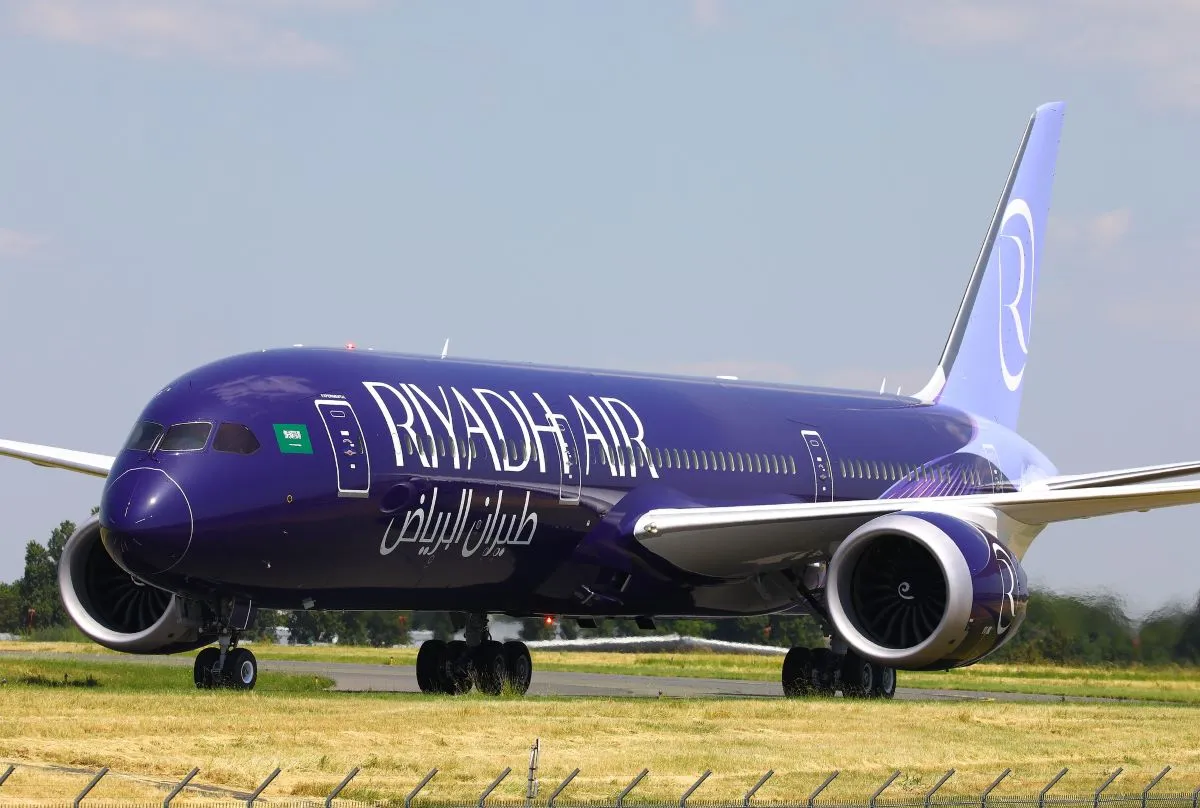
Riyadh Air has integrated its NDC content into the NuFlights platform, marking another step in the Saudi carrier’s pre-launch distribution buildout and adding to a growing body of evidence that Gulf airlines are accelerating their transition toward offer-and-order retailing.
The integration, announced on 18 May, uses NDC Schema 21.3 in a native Offer and Order Management configuration, meaning the connection is not a legacy PNR wrapper adapted for NDC, but a direct implementation of the IATA standard’s modern retailing framework. Travel management companies and agencies on the NuFlights platform gain access to Riyadh Air’s real-time fares, seat selection, and ancillary catalogue through a single connection.
Schema 21.3 is increasingly viewed as one of the more commercially mature iterations of the NDC standard, supporting richer offer management, ancillary merchandising, and more scalable servicing workflows. For airlines attempting to move toward true offer-and-order retailing, newer schema versions are becoming critical to closing the operational gaps that slowed earlier NDC adoption.
NuFlights, a travel technology aggregator headquartered in Doha and serving more than 1,400 agencies across 51 countries, has built its NDC proposition around tight integration between distribution content and back-office accounting. Its TRAACS system automatically reconciles NDC bookings, which the company argues eliminates the manual reconciliation overhead that has historically made NDC operationally expensive for agencies at scale.
“By achieving NDC 21.3 integration with Riyadh Air, we are not just providing more content; we are providing a complete end-to-end solution,” said Mohandas P Unni, CEO of NuFlights. “Our agencies can now book Riyadh Air’s richest content while enjoying 100% automated accounting and reporting.”
For Riyadh Air, the NuFlights connection is part of a broader distribution strategy being assembled ahead of commercial launch. The carrier has positioned NDC as a foundational element rather than an add-on, reflecting its status as a greenfield airline without the legacy infrastructure constraints that have complicated NDC transitions for established carriers. Vincent Coste, Chief Commercial Officer of Riyadh Air, described the integration as “a key milestone in expanding our global distribution reach” and said the airline is building a distribution ecosystem designed to support a digital-first commercial strategy.
The airline’s NDC approach is consistent with a wider pattern across Gulf and Middle East carriers. Etihad Airways has been among the more aggressive adopters in the region, and Saudi Arabia’s low-cost carriers, flyadeal and flynas, have both pursued NDC distribution as part of their commercial buildouts. Riyadh Air, launching without deep dependency on GDS-era infrastructure, is positioned to take that trajectory further by treating offer-and-order management as the default rather than a parallel channel.
For African agencies, however, the challenge has rarely been access to NDC content alone. The greater obstacle has been workflow fragmentation. Many agencies across the continent continue to operate in environments where accounting synchronization, BSP settlement, and payment orchestration remain heavily manual. Aggregators capable of normalizing those processes may ultimately become more commercially important than the airline APIs themselves, a dynamic the NuFlights model is directly positioned to address.
NuFlights’ growing NDC portfolio reflects the aggregator’s regional positioning. Recent integrations have included Airlink in February 2026 and Nile Air in April 2026, alongside earlier connections with Oman Air and Etihad. The pattern suggests the platform is deliberately building coverage across the Middle East and Africa corridor, a distribution corridor that remains technologically underserved relative to its traffic growth.
The broader significance of the Riyadh Air and NuFlights integration lies in what it reveals about the next phase of airline distribution across emerging markets. The future may not be defined by airlines replacing legacy channels outright, but by the rise of hybrid ecosystems where aggregators, fintech infrastructure, and API-native retailing collectively reshape how travel is sold, settled, and serviced.