Last week in Munyonyo, Uganda’s civil aviation authority hosted a three-day continental workshop on competition regulations in African air transport. The Director General of the Uganda Civil Aviation Authority, Fred Bamwesigye, used the occasion to say what his government has been signalling for years: liberalisation without competition safeguards is not liberalisation worth having.
“Open skies must be matched with fair competition,” Bamwesigye said. “Without strong competition frameworks, liberalisation can lead to market distortions, unfair practices, and reduced consumer confidence.”
That framing matters. Uganda is not opposing SAATM. It is conditioning its participation on regulatory readiness. The country has developed draft Civil Aviation Competition and Consumer Protection Regulations aligned with the Yamoussoukro Decision, with promulgation expected by June 2026, and internal consultations on SAATM accession are nearing completion ahead of a Cabinet memorandum. The distinction between obstruction and sequencing is not academic. It shapes how the rest of Africa’s holdouts are likely to move, and how quickly.
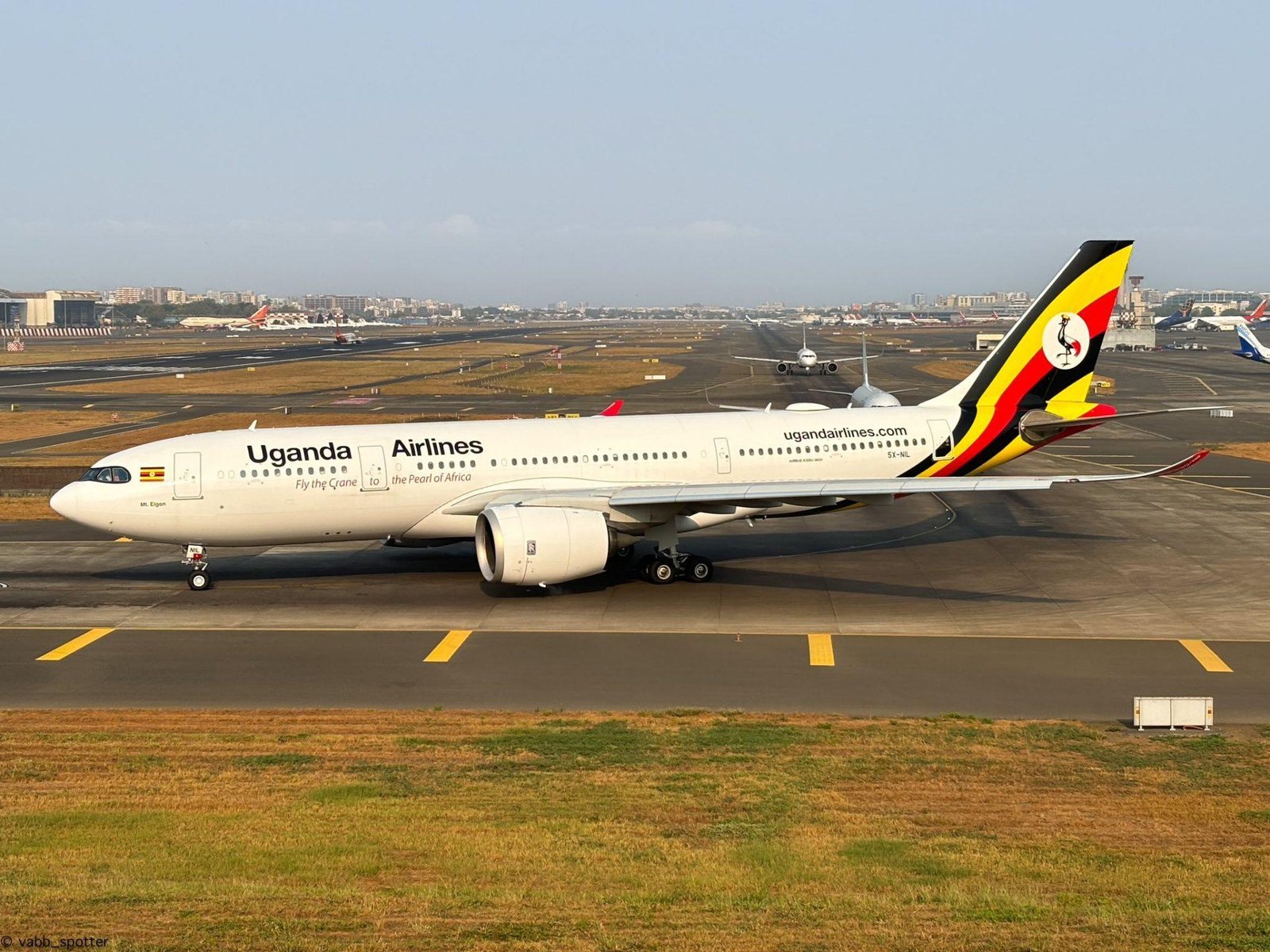
Uganda has in fact already implemented several of the measures SAATM requires. Multiple airline designations, unlimited flight frequencies, and fifth-freedom traffic rights on regional routes are already in place, with RwandAir and Kenya Airways among the carriers already benefiting from those arrangements. The political hesitation has always been about Uganda Airlines, not about the principle of open skies. Uganda’s reluctance to join SAATM since 2018 was explicitly tied to shielding its national carrier from competition while it built up operations and infrastructure. That calculation is now shifting.
What the numbers actually show
SAATM has produced 108 new intra-African routes between September 2022 and April 2025, and 38 AU member states have now signed the Solemn Commitment, representing more than 89% of intra-African air traffic. Those are meaningful numbers. But they coexist with a structural problem that the route count obscures.
Airlines continue to face difficulties securing traffic rights between city pairs, including within countries that have formally signed SAATM instruments. Some states that have not formally signed nonetheless allow relatively liberal access in practice.
Conversely, some signatories continue to apply restrictive policies on the ground. AFCAC’s practical enforcement mechanisms remain limited, and the gap between political commitment and operational behaviour is where most of the friction lives.
The gap between signature and operation is the real story.
Intra-Africa travel, particularly to West and North Africa, remains reliant on European hubs despite years of liberalisation efforts. Third- and Fourth-Freedom traffic rights represented 39% of total intra-Africa capacity as of June 2025, while Fifth-Freedom operations accounted for 22%.
Why this matters for distribution
Here is the connection that most aviation coverage misses. Market liberalisation does not just create new routes. It creates new retail complexity.
Every new intra-African route that comes online through SAATM is a route that needs to be sold. Today, most intra-African capacity on smaller carriers sits outside the major GDS platforms entirely, or is loaded with incomplete content, missing fare classes, and no ancillary visibility. African travel agents booking a Kampala-to-Bujumbura or Lomé-to-Abidjan sector are often working with direct airline connections, WhatsApp confirmations, and informal fare agreements rather than GDS-sourced inventory.
The GDS was not built for Africa. It was built for markets with large corporate travel programmes, high volumes of leisure transatlantic traffic, and agency ecosystems capable of generating the minimum booking volumes that made GDS economics viable. Africa was brought in largely as an afterthought.
That foundational asymmetry becomes more acute as the route network expands. If SAATM delivers on its mandate, the number of bookable intra-African city pairs will grow significantly over the next three to five years. The booking infrastructure required to retail that growth at scale does not currently exist in a consistent, scalable form. GDS content for African carriers is uneven. NDC adoption is concentrated in a small number of markets. And the agents who will need to sell these routes are in many cases not connected to any platform capable of handling the content properly.
The Uganda situation illustrates a broader pattern. Countries are not holding out on SAATM because they oppose connectivity. They are holding out because they have watched what happens when airline capacity expands faster than the surrounding commercial plumbing. More routes, without the airline retail systems to sell them efficiently and the competitive frameworks to keep pricing honest, benefits the largest carriers and the agents with the most direct relationships. Everyone else absorbs the friction.
The distribution implication
For the technology side of this industry, the practical question is not whether Africa will liberalise. It will. The question is whether the booking layer keeps pace with the route expansion.
Civil aviation and competition authorities must keep publishing transparent, public data on slots, charges, and performance so that investors can trust the rules as much as the runways. The same logic applies to content standards. Transparent, accessible retail infrastructure is the equivalent of slot transparency for the booking layer. African agents need to be able to access new intra-African inventory through the platforms they already use, at costs that make sense for the ticket values involved, with servicing capabilities that function after the booking is made.
Uganda joining SAATM, when it happens, adds one more set of city pairs to the network. It does not solve the structural underinvestment in the commercial plumbing those routes depend on. That problem belongs to the GDS providers, the NDC aggregators, and the airlines themselves.
Open skies without modern retail infrastructure risks creating connectivity that exists politically, but remains difficult to sell commercially.
This article is part of TDN’s ongoing coverage of airline distribution in Africa and emerging markets.