
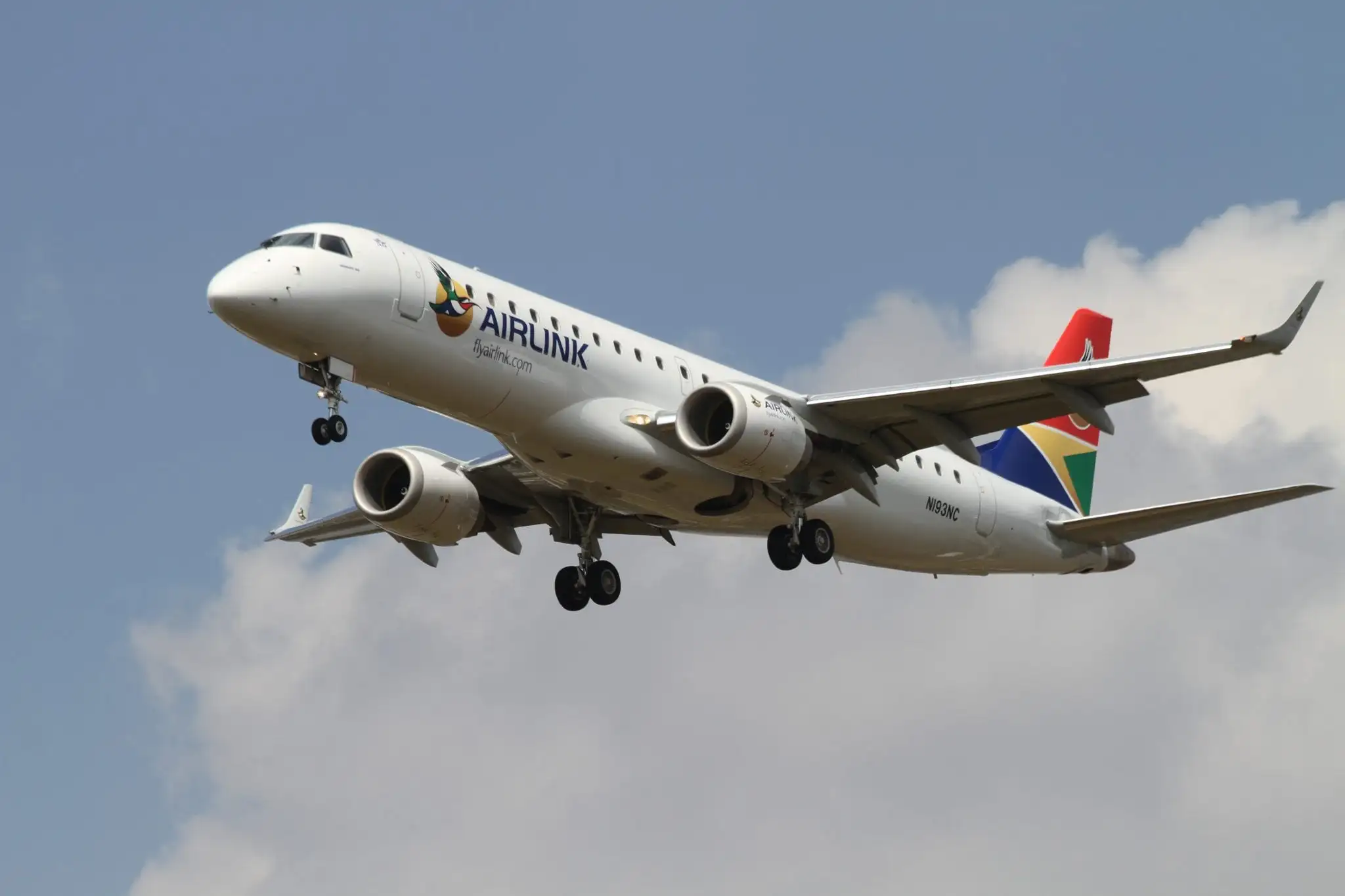
There is a version of this story that writes itself as marketing copy. A regional carrier without a single long-haul aircraft in its fleet lands a codeshare into Doha. It up-gauges its narrowbody fleet mid-decade rather than waiting for the next aircraft cycle. It opens new city pairs to Zanzibar and Mauritius while bigger, better-funded competitors are still debating the business case. It signs an interline deal with Uganda Airlines, deepens a partnership with Qatar Airways, and finds time to modernise its distribution stack through two separate NDC channels at once.
Any one of those moves would be a normal year for a regional airline. Airlink has been doing all of them, more or less simultaneously, for the past eighteen months. The advantage this produces is not any single decision. It is that Airlink treats sequencing itself as a cost, not a discipline, and appears organised to run several transformations at once rather than stagger them the way most capital-constrained regional carriers do. That is the pattern worth examining, and it is worth asking plainly whether it holds any lesson for carriers operating in similarly constrained markets across Africa, MENA, and other emerging regions.
The Moves, Taken Together
Individually, none of Airlink’s recent decisions are unusual. Fleet up-gauging to the Embraer E195-E2 is a straightforward economics play: roughly 136 seats against the E190’s 100, better unit costs, more range. Route expansion into Zanzibar, Mauritius, and a targeted push toward Abuja reflects the same demand signal every airline serving the continent can see: African regional demand continues to run ahead of the capacity available on many markets. The Qatar Airways codeshare that puts Doha on Airlink’s map for the first time is a well-worn strategy for regional carriers without wide-body aircraft of their own: borrow the reach.
What is unusual is the clustering. Most regional airlines pick one axis of transformation at a time, fleet or network or distribution, and work through it in sequence because that is what capital and organisational bandwidth allow. Airlink has been running fleet renewal, network expansion, partnership deepening, and distribution modernisation in parallel. According to CEO de Villiers Engelbrecht, the carrier is now operating close to 240 flights a day, a run rate equivalent to roughly 87,600 flights annually. That continues a trajectory that has taken Airlink from about 63,600 flights in 2019 to more than 83,500 in 2024. That is not incremental growth carried by one good route or one lucky partnership. It is the compounding effect of moving on several fronts without waiting for each one to fully mature before starting the next.
The Distribution Angle Fits the Same Pattern
Airlink’s approach to NDC is a smaller-scale version of the same instinct. Rather than choosing a single aggregator and waiting to see how the market responded, the airline became launch customer for Accelya’s FLX Select and has since gone live with at least five aggregator channels since July 2024, including AirGateway, Verteil, Thomalex, TravelIT and Nucore, with several more reportedly in onboarding as of early 2026. Chief Commercial Officer Katherine Whelan has described this as a deliberate decision to move early rather than wait for the market to force the airline’s hand.
The distribution strategy is therefore less interesting for any single technology choice than for what it reveals about the airline’s operating philosophy: Airlink did not wait for one aggregator relationship to mature before opening the next. That is consistent with everything else in this piece. Airlink treats sequencing as a cost, not a discipline, and appears willing to run parallel initiatives that most carriers of its size would stagger.
What This Is Not
It would be a mistake to read Airlink’s pace as pure operational excellence with no downside, and this month provided a clear illustration of why.
As the official airline sponsor of the Springboks versus All Blacks rugby series, Airlink staged a low-altitude flypast of two specially liveried Embraer jets over Cape Town’s DHL Stadium ahead of a sold-out match on 29 August. Flight-tracking data suggested the lead aircraft passed the stadium at a height that has prompted questions about applicable minimum-clearance requirements for flights over an assembly of people. The manoeuvre is now under review by aviation authorities even as the airline maintains it was planned, rehearsed, and approved.
The flyover and the NDC rollout are not the same kind of decision. One is a marketing activation and the other is commercial infrastructure. There is no reason to suggest that one caused the other.
But the episode does introduce an important qualification to the broader Airlink story.
A company that makes speed part of its competitive identity needs equally strong controls around the boundaries that cannot move at the same speed. Commercial urgency can be an advantage. It cannot become a substitute for governance, particularly in aviation.
Airlink’s pace has clearly helped it generate opportunities across fleet, network, partnerships and distribution. It also creates more decisions, more interfaces and more points at which execution has to be controlled carefully.
That is the other side of moving quickly.
Airlink’s model is not infinitely portable. Its position in the Southern African market, established relationships with larger international carriers, fleet economics and accumulated operational experience give it advantages that a smaller or weaker regional carrier may not have. The lesson, therefore, is not to copy Airlink’s individual moves. It is to examine the operating philosophy behind them.
The Lesson for Other Carriers
The honest takeaway for other airlines in emerging markets is not “move as fast as Airlink.” It is narrower than that.
Airlink’s results suggest that treating fleet, network, partnerships, and distribution as a single coordinated push, rather than four separate initiatives run in sequence, can compound faster than the conventional stagger-and-wait approach that capital-constrained regional carriers usually default to.
A carrier does not need Airlink’s specific route map or its aircraft order book to learn from that. It needs the willingness to run more than one transformation at a time, and the organisational discipline to keep those parallel efforts from colliding with each other.
That distinction matters.
Speed by itself is not a strategy. Running multiple initiatives simultaneously is not inherently smarter than sequencing them. The advantage comes when an airline has enough organisational discipline to move quickly without allowing one transformation to undermine another.
For regional carriers operating in fragmented and under-served markets, that may be the more interesting lesson from Airlink.
The constraint is not always capital. Sometimes it is the assumption that every decision has to wait for the previous one to finish.
Airlink appears to have challenged that assumption.
Speed, in other words, is a genuine strategic asset here. But it is only an asset when paired with judgment about where the edges are.