
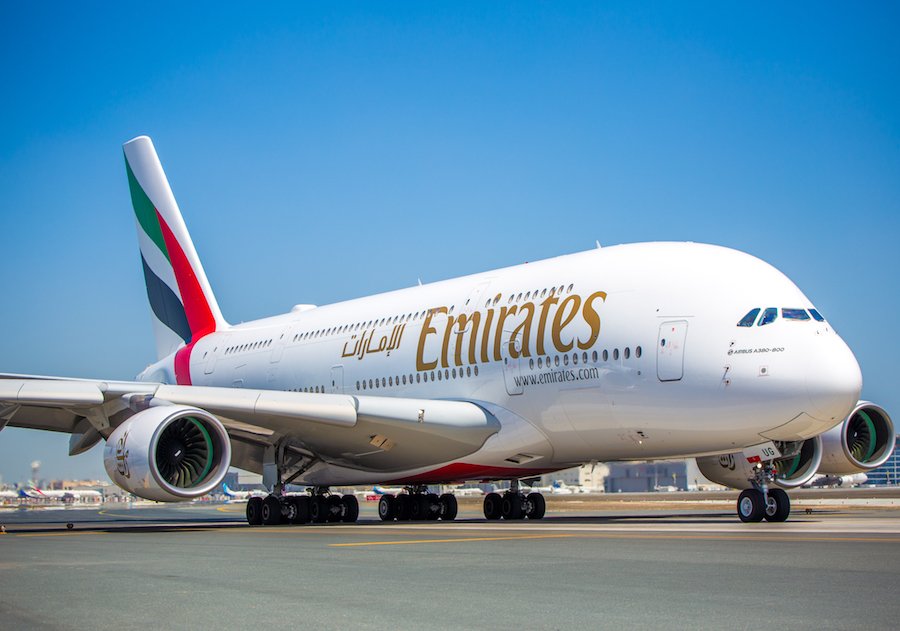
Emirates is not the airline you would expect to worry about distribution. It carries enormous direct demand, a brand that sells itself, and the technology resources to build almost anything it wants. The real question is not whether Emirates has an NDC strategy. It clearly does. The question is why an airline that already controls this much of its own distribution would voluntarily make its retailing capabilities available through the indirect channels it does not have to depend on.
The easy answer, the one the industry has repeated for a decade, is that airlines adopt NDC to escape GDS distribution costs. Emirates has some history here. It launched Emirates Gateway, its own NDC-enabled direct-connect platform, in October 2020, certifying Verteil Technologies as a technology partner that same month, with TPConnects following in February 2021 as a second certified aggregator route into the same platform. In 2021 Emirates also introduced a GDS surcharge of fourteen to twenty-five dollars per ticket, and travel sellers who booked outside Gateway paid the fee. But Emirates did not run that surcharge the way Lufthansa Group has run its own, as an escalating, repeated lever applied evenly across every channel. Within days, Travelport had negotiated a dedicated, surcharge-free channel for its own agency subscribers. Emirates has largely governed its GDS relationships through individually negotiated content and servicing agreements since, rather than through a recurring fee designed to keep squeezing the legacy channel. That is a different instinct than cost avoidance. It tells you Emirates is not solving a distribution-cost problem. It is solving a control problem.
NDC as connectivity, not destination
Emirates built that control methodically, and over a longer runway than the recent headlines suggest. DRCT, a Malta-based, IATA-certified NDC aggregator that had already proven itself moving NDC volume off the GDS for Lufthansa, signed on to distribute Emirates content in January 2022, giving travel management companies a third aggregator route alongside Verteil and TPConnects. The bigger structural move came the same month, when Emirates signed a new distribution agreement with Amadeus that gave the GDS’s trade partners surcharge-free access to Emirates content from that February and committed to rolling out NDC content across the Amadeus Travel Platform over the course of the year. Travelport followed in June 2024, going live with Emirates NDC content and full servicing, including modifications and cancellations, on its Travelport+ platform, expanding from an initial set of markets to North American agencies by that November. Sabre followed in December 2024, bringing Emirates NDC shopping, booking, and servicing into Sabre Red 360 and GetThere. In March 2025, Emirates went a step further with Expedia Group, fully integrating its NDC API directly with Expedia’s brands rather than routing through a GDS or aggregator, giving Expedia’s global customer base native access to Emirates’ complete fare and ancillary portfolio, with loyalty and hotel-package integration flagged as next. In January 2026, the same direct-connect logic extended into managed corporate travel, when Emirates rolled out a direct NDC integration with Navan, giving its business-travel customers access to NDC-exclusive fares and ancillaries without an aggregator in between.
None of this replaced anything. It added parallel, richer channels alongside what already existed, laid down one partner at a time across more than five years rather than in a single pivot. That is the part of the NDC conversation the industry keeps getting backwards. NDC is not where this story ends. It is the connective layer, the distribution interface, that lets Emirates expose product depth, differentiated fares, and dynamic pricing to sellers who were previously limited to whatever a GDS or a static OTA feed could display. The technology is the pipe. What flows through it is the actual point.
The GDS is not the obstacle
Emirates’ approach to its GDS relationships is the clearest signal of how it actually views them. It is not treating Amadeus, Sabre, and Travelport as legacy plumbing to be dismantled, and its 2021 surcharge, whatever its intent at the time, did not settle into the kind of repeated escalation that has come to define Lufthansa’s distribution cost charge. Instead Emirates has treated the GDS as reach it still needs, now populated with a new kind of content it did not previously have the means to deliver through those channels.
That reframes the supposed rivalry entirely. NDC does not eliminate the GDS. It changes what the GDS is being asked to carry. The more useful question is not airline versus intermediary. It is which layer of the distribution stack each party ends up controlling once offers become dynamic and orders become the unit of the transaction instead of the ticket.
Why a direct powerhouse still needs an indirect channel
Emirates already owns a direct relationship with millions of travelers through its own site and app. That should, in theory, make NDC redundant. It does not, because direct and indirect distribution are not competing for the same job.
Direct channels give Emirates the customer relationship. NDC gives it a mechanism for extending the sophistication of that direct experience, the dynamic pricing, the bundled ancillaries, the personalization, into channels it does not own. Emirates Gateway, the airline’s own NDC-powered direct-connect platform, exists precisely to let travel sellers access that same depth of content outside the traditional GDS pipes, whether through a browser-based booking portal, a direct API integration, or a certified aggregator such as Verteil, TPConnects, DRCT, or AirGateway, live on Emirates content since 2021. NDC is not competing with the direct channel. It is the tool that lets Emirates export what the direct channel already does well.
The architecture underneath the acronym
Here is where the Emirates story stops being about NDC at all. NDC is the distribution interface, the standardized way an offer travels between an airline’s system and someone else’s screen. Offer and Order is the broader commercial architecture underneath it, the shift from filing static fares into a system for someone else to sell, toward constructing an offer in real time, tailored to a customer and a moment, and eventually managing it as a single order rather than a ticket bolted to separate ancillary records. NDC exposes that capability to outside sellers. Offer and Order is the deeper ambition NDC is exposing.
Emirates has reportedly been among a small group of carriers, alongside names like Lufthansa Group and Qatar Airways, exploring ONE Order concepts, the longer-term IATA architecture that would eventually merge the reservation, the ticket, and ancillary documents into a single order record. That work remains early and industry-wide, not a signal that Emirates is retiring the ticket on any near-term timeline. What it does confirm is that Emirates is not treating NDC as a self-contained project. It sits inside a longer architectural direction the airline is tracking deliberately, even where the destination is still years out.
From distributing seats to constructing offers
Put the pieces together and the shift in posture becomes clear. The old distribution question was where can I get my inventory listed. The question Emirates is now positioned to ask is what exactly should be offered to this customer, through this channel, at this moment, and Emirates has built the brand, over decades, to have an unusually rich answer. It has always sold differentiated product rather than a commoditized seat. NDC and Offer and Order are simply the first infrastructure capable of carrying that differentiation into channels the airline does not control directly. The strategic bet is whether Emirates can sell indirectly with the same richness it already sells directly.
Payment is not an afterthought
None of this holds together if payment stays where it has always sat, at the back office, disconnected from the offer itself. Dynamic pricing, personalized bundles, and order-based servicing all multiply the complexity of settlement, refunds, exchanges, currency handling, and reconciliation across a growing list of channels and intermediaries. A modern offer, sold through a modern channel, still has to clear through a payment system capable of matching its complexity, and a distribution stack that gets more dynamic while its settlement layer stays static can eventually become the constraint at exactly the point it was trying to differentiate.
Emirates has treated payment as connected work rather than separate plumbing for longer than most of the industry has been paying attention. In 2021 it became the first airline to launch Emirates Pay, an account-based payment method for ticket purchases built on a white-label solution jointly developed by IATA and Deutsche Bank, using real-time, open-banking rails rather than card networks. The point was never simply to add a new checkout button. It was to give the airline a settlement option that did not depend on the same card-network economics its distribution partners were also negotiating around. As offers become more dynamic and orders become more complex, that kind of payment infrastructure stops being a customer-experience detail and becomes part of the same commercial architecture as the offer itself.
The reconciliation gap nobody advertises
None of this is friction-free for the agencies on the other end of it, and the friction is worth naming rather than glossing over. Content moving through Travelport and Sabre gets serviced inside those platforms, so it largely rides on reconciliation workflows agencies already have for GDS bookings. Emirates’ true direct-connect channels are a different story. Gateway, Expedia, and Navan settle under an Order Reference rather than a PNR, frequently outside the IATA BSP entirely, through direct airline billing, virtual cards, or aggregator statements. Mid and back-office systems were built around PNR-based ARC and BSP reporting, and Order Reference formats are not standardized across airlines, so an agency without a normalizing layer on its own systems is often left reconciling those bookings by hand rather than through the batch process it is used to. This is not unique to Emirates. ARC’s 2025 report found 47 percent of U.S. TMCs had not yet fully reconciled NDC Orders with their back-office reporting. But it is a real cost sitting underneath the retailing story, and any agency leaning into Emirates’ direct channels at volume needs to price that operational overhead in before assuming the richer content is free.
The real significance of a giant that didn’t have to move
Emirates’ NDC strategy matters precisely because Emirates did not need it. For carriers fighting GDS dependency or distribution cost, NDC was framed as an exit ramp. For Emirates, it functions instead as an export mechanism, a way of making the retailing capabilities it already runs on its own channels, the bundles, the personalization, the dynamic pricing, portable into an ecosystem of agencies, aggregators, and OTAs it has no intention of abandoning.
That reframes where this is heading industry-wide. The future is unlikely to be NDC against the GDS, or direct against indirect. It looks more like a single connected architecture, where NDC supplies connectivity, the GDS supplies reach, direct channels supply the customer relationship, Offer and Order supplies the commercial logic, retailing decides what gets sold, and payment makes the whole thing economically possible to execute. Emirates is not choosing a side in a distribution war. It is quietly demonstrating that the war was never the point.