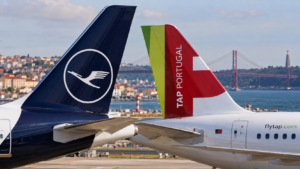

When Lufthansa introduced a distribution cost surcharge on GDS-booked tickets in September 2015, the reaction from travel agencies and global distribution systems was swift and hostile. But the decision was not primarily about the surcharge. It was about who controls the retail relationship between an airline and its customer, and Lufthansa had decided, with unusual commercial clarity, that the answer should be the airline.
That single decision reordered the distribution industry’s assumptions. It accelerated IATA’s New Distribution Capability programme from a technical standard into a commercial battleground. It forced Amadeus, Sabre, and Travelport to build NDC connectivity pipelines they had previously had little urgency to build. It produced a wave of direct connect contracts between carriers and major corporates. And it planted the idea, now embedded in every serious airline distribution strategy, that the GDS content agreement is not a permanent condition but a negotiating position.
No African carrier has done anything comparable. The question worth examining is not which airline comes closest in network size or fleet modernity, but which carrier, if any, has the distribution infrastructure, commercial positioning, and organisational will to play the role Lufthansa played in Europe. The honest answer, carrier by carrier, reveals something more instructive than a ranking.
What Made Lufthansa’s Move Possible, and Why It Held
Lufthansa’s 2015 move did not succeed because of the surcharge itself. It succeeded because the carrier had spent years building the conditions that made the threat credible. Its Passenger Service System was capable of generating differentiated offers. Its direct booking channels were mature enough to absorb volume displacement from agency channels. And its O&D mix, heavily weighted toward business travellers on high-yield European routes, gave it leverage over the corporate travel management companies whose bookings GDS operators needed to protect.
The framework that made the move possible has five components. First, PSS modernity: a reservations and inventory system capable of producing attribute-based offers, not just fare class availability. Second, direct channel maturity: a booking infrastructure that can handle meaningful volume without the GDS intermediary and a customer base willing to use it. Third, agency dependency ratio: the lower the proportion of revenue flowing through GDS-connected travel agencies, the lower the cost of disrupting those relationships temporarily. Fourth, NDC certification and aggregator readiness: the technical infrastructure for distributing NDC content at scale, including aggregator and TMC connectivity. Fifth, and hardest to engineer: the internal commercial will to absorb short-term revenue risk in exchange for long-term channel control.
Run Africa’s leading carriers against each of those five criteria and the picture that emerges is not one of failure. It is one of structural deferral.
Ethiopian Airlines: The Infrastructure Is There. The Incentive Has Not Arrived.
Ethiopian Airlines is the closest thing to a Lufthansa analogue on the continent, and not primarily because of its network. The carrier operates one of the most modern fleet compositions in the world, has built MRO and cargo capabilities that generate non-passenger revenue at scale, and holds equity stakes in regional carriers through the ASKY model that mirrors, in structure if not in commercial philosophy, the Lufthansa Group approach to European consolidation.
On distribution specifically, Ethiopian has achieved IATA NDC Level 4 certification and has been active in NDC aggregator conversations. Its PSS, running on Radixx for some segments and with Sabre underpinning its core reservations, gives it a reasonable base for differentiated offer generation. The direct booking channel through ethiopianairlines.com is functional and increasingly promoted.
The diagnosis, however, is this: Ethiopian’s growth strategy depends on Addis Ababa functioning as a transfer hub for intercontinental traffic, and that traffic is disproportionately agency-intermediated. Disrupting GDS relationships at scale, even partially, carries a revenue risk that the carrier’s current expansion phase does not invite. The commercial will for a Lufthansa-style confrontation exists theoretically. The timing calculus does not yet favour it.
Kenya Airways: Distribution Strategy Is the Least of Its Problems Right Now
Kenya Airways has the heritage and the SkyTeam membership to make a credible claim to distribution leadership on the continent. It was among the earlier African carriers to engage seriously with NDC as a concept, and its partnership with Kenya Airfreight Handling gives it a broader logistics positioning that could, in a different financial environment, support more ambitious retailing ambitions.
The distribution diagnosis here is structural but of a different kind. A carrier that has been through multiple government bailouts, equity restructurings, and revenue shortfalls does not have the balance sheet latitude to absorb the short-term agency booking displacement that a serious direct channel push would require. Distribution transformation is expensive in the transition period, and Kenya Airways has consistently been operating in a mode where transition costs are unaffordable. Until its financial position stabilises sustainably, its distribution strategy will remain defensive rather than generative.
Royal Air Maroc: The Underestimated Candidate
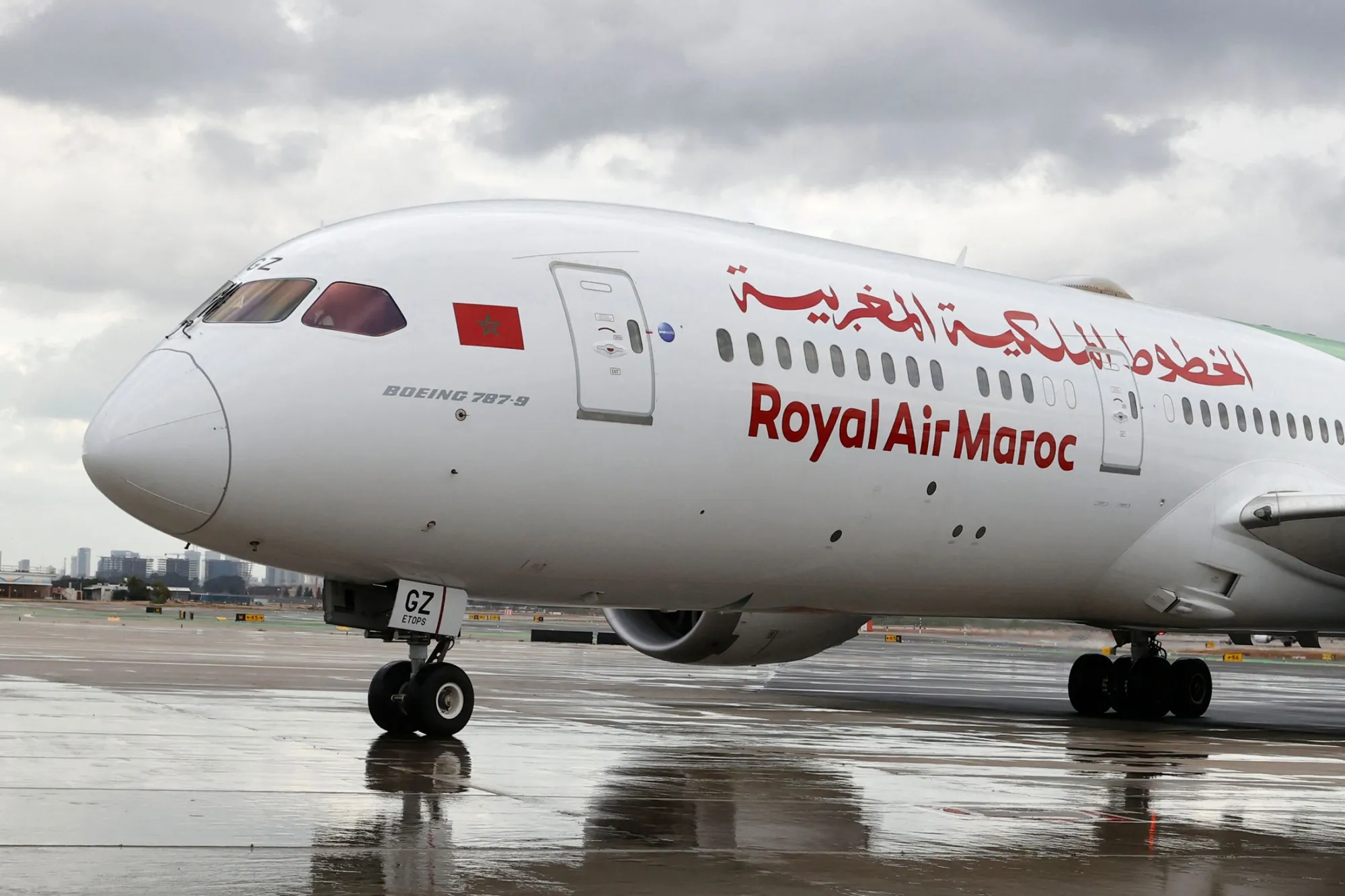
Royal Air Maroc does not appear in most pan-African distribution conversations because it operates primarily in the Francophone sphere and because Casablanca has not achieved the mindshare of Addis or Nairobi as a continental hub narrative. That absence from the conversation is a mistake.
RAM joined oneworld in 2020, giving it alliance connectivity and the associated incentive to invest in distribution standards that meet the expectations of alliance-level corporate travel programmes. Its route network includes significant North Africa and West Africa coverage that no other carrier matches from a single hub. And its PSS environment, following its investment in Amadeus Altea, gives it a platform for offer and order development that is not trivially behind where Lufthansa was in 2013 or 2014.
The diagnosis for RAM is different from Ethiopian or Kenya Airways. The constraint is not financial instability or growth-phase caution. It is market geography. A serious GDS surcharge or direct connect push requires a large, addressable, digitally mature corporate travel market in your primary catchment. Morocco’s corporate travel base, while growing, does not yet generate the volume that would make the confrontation economically decisive. RAM’s distribution move, when it comes, will likely be calibrated and market-specific rather than sweeping.
South African Airways: A Restructuring Story Is Not a Distribution Story
South African Airways was, for many years, the default answer to any question about African aviation leadership. Its Johannesburg hub, its longhaul network, and its Star Alliance membership gave it a profile that no other sub-Saharan carrier matched. The distribution question for SAA today is almost beside the point.
The airline that emerged from business rescue in 2021 is a fundamentally smaller operation with a restructured network, a reduced fleet, and an ownership structure that is still settling. The distribution infrastructure decisions that SAA will need to make are real and consequential, but they are decisions for a carrier that is still establishing whether it has a viable route network, not one that is ready to confront its GDS partners. The comparison to Lufthansa 2015, a carrier at the peak of its network confidence and financial stability, does not currently apply.
The Gap Is Contractual, and the Vendor Community Has a Direct Interest in Closing It
The diagnosis across all four carriers points to the same underlying condition. The gap between where African carriers sit on distribution and where Lufthansa was in 2015 is not primarily a capability gap. Ethiopian has the PSS. RAM has the alliance standards incentive. The technical infrastructure for NDC distribution at scale exists and is accessible.
The gap is contractual and structural. GDS full-content agreements, which require carriers to make all fares and inventory available through GDS channels on parity terms, remain the dominant commercial constraint on African carrier distribution strategy. These agreements were negotiated in environments where the carriers had limited leverage and where direct channel alternatives were immature. Many are long-dated. Breaking or renegotiating them carries legal and commercial risk that individual carriers, absent the financial cushion or market dominance that Lufthansa possessed, are not positioned to absorb unilaterally.
This is precisely where the NDC aggregator and travel technology vendor community operating in Africa has a direct commercial interest that it has not yet fully acted on. The aggregators, the PSS vendors, the NDC connectivity platforms, and the payments infrastructure providers who want African airline distribution to move in the direction of offer and order, direct channel maturity, and retailing sophistication cannot wait for a single carrier to play the Lufthansa role on its own. The commercial case for that carrier to move is weakened by the same contractual structures that suppress the market the vendors are trying to build.
The more productive model for the African market is collective pressure: aggregators building compelling direct-connect value propositions that reduce the cost of GDS displacement for individual carriers, technology vendors investing in migration support that lowers the transition risk, and the industry bodies that represent African carriers treating distribution contract modernisation as an infrastructure priority comparable to airport development or safety certification.
The Lufthansa of Africa will not emerge from one carrier’s courage. It will emerge when the contractual terrain makes the move rational for the carrier that is best positioned to lead it. Building that terrain is the distribution industry’s actual work on this continent.