Airline retailing is no longer a future ambition. Across global markets, carriers are moving beyond traditional fare filing toward dynamic offer creation, continuous pricing, and Offer & Order architectures. The objective is to reclaim the commercial layer and compete in a marketplace where personalization, flexibility, and direct customer relationships are becoming baseline expectations.
In Africa, this shift is underway. But the transformation is not simply a delayed version of what is happening elsewhere. It is a structurally different transition, shaped by distinct conditions that influence both pace and direction.
Understanding that difference matters not to excuse slower adoption, but to accurately assess what progress actually looks like in this context.
The Trajectory Is Forward — The Conditions Are Different
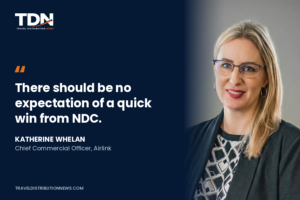
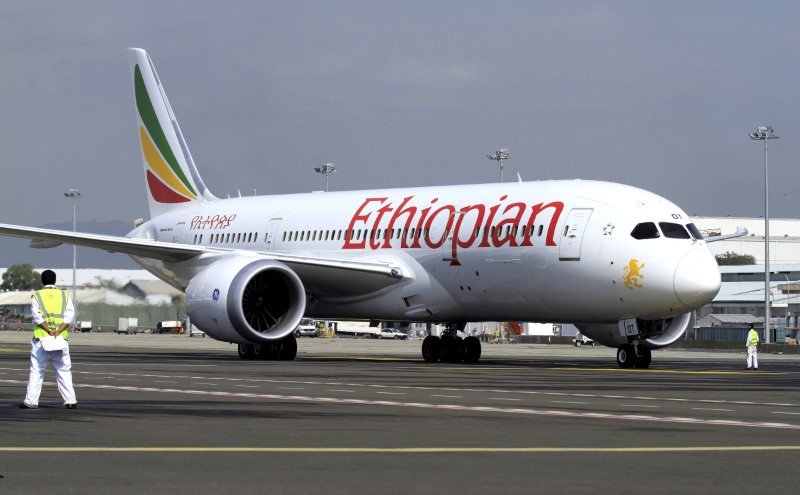
Carriers such as Ethiopian Airlines, Kenya Airways, and Airlink are actively investing in digital distribution capabilities and aligning with broader industry trends. NDC engagement, API-based connectivity, and partnerships with global technology providers are becoming increasingly common across the continent.
The trajectory is clearly forward-moving. Where Africa diverges is not in ambition, but in execution conditions.
Legacy systems cannot be replaced overnight. Distribution environments remain hybrid, combining traditional agency models with emerging digital channels across markets at very different stages of maturity. Payment ecosystems vary significantly between countries, introducing complexity in settlement and reconciliation that airlines in more mature markets rarely encounter.
These are not temporary constraints. They are structural realities that redefine what retailing transformation requires and what it costs.
The Architecture Problem
Much of the industry’s retailing infrastructure has been designed in environments with standardized connectivity, mature distribution ecosystems, and relatively uniform payment systems.
African markets operate differently. In several countries, mobile money remains dominant while traditional card infrastructure is limited. Distribution is often fragmented across numerous local agencies with limited API connectivity. Infrastructure reliability can vary not only between countries, but within them.
Under these conditions, global retailing frameworks cannot be applied directly. They require adaptation and in some cases, entirely different approaches.
The question is not whether to adopt modern retailing models, but how to make them function within a fundamentally different operating environment.
This is where many global technology providers have historically struggled. Systems built for high-bandwidth, low-latency environments do not always translate effectively. Pricing models designed for mature markets do not reflect local economics. Implementation timelines assume levels of internal technical capacity that are not always present.
The Partnership Dilemma
To close capability gaps, most African airlines are working closely with global technology providers and distribution partners. These collaborations provide access to modern retailing infrastructure and market reach that would be difficult to build independently.
But these partnerships introduce a structural tension that is rarely addressed directly.
As retailing evolves, value concentrates around three elements: control of the offer, ownership of pricing logic, and management of the customer relationship. These are not peripheral considerations — they are the commercial core of modern airline retailing.
When airlines rely heavily on external platforms to generate, distribute, and service offers, they gain speed and access. But they also shape where control ultimately resides and whether it can be reclaimed over time.
The partnerships that will prove most effective are not those that simply provide infrastructure, but those that enable capability transfer alongside it.
The Leapfrog Opportunity
Africa is not only a story of constraint. In several markets, the relative absence of deeply entrenched legacy systems creates space for more flexible approaches.
Airlines that are not bound by decades-old system architectures or rigid distribution frameworks have greater freedom to adopt API-first models, integrate distribution and payments more directly, and design retailing strategies aligned with local market conditions.
This is already visible in areas such as mobile money integration, particularly in East Africa, where payment innovation is enabling flows that remain difficult to replicate in more traditional card-based environments.
The opportunity is not simply to follow global retailing trends, but to develop models that reflect the realities of high-growth, digitally evolving markets.
What the Next Phase Requires
The first phase of retailing transformation was defined by adoption gaining access to the tools and frameworks shaping the industry.
The next phase will be defined by capability and control.
For African airlines, this means strengthening core distribution infrastructure, building internal commercial expertise, and ensuring that current partnerships do not become long-term dependencies. It means engaging with global frameworks while maintaining the flexibility to adapt them.
The distinction that will matter in the coming years is not between airlines that participated in retailing modernization and those that did not. It will be between those that built genuine capability and those that relied on access provided by others.
Africa’s airlines have more agency in that outcome than current narratives suggest.
The conditions are more complex. The stakes are no different.