

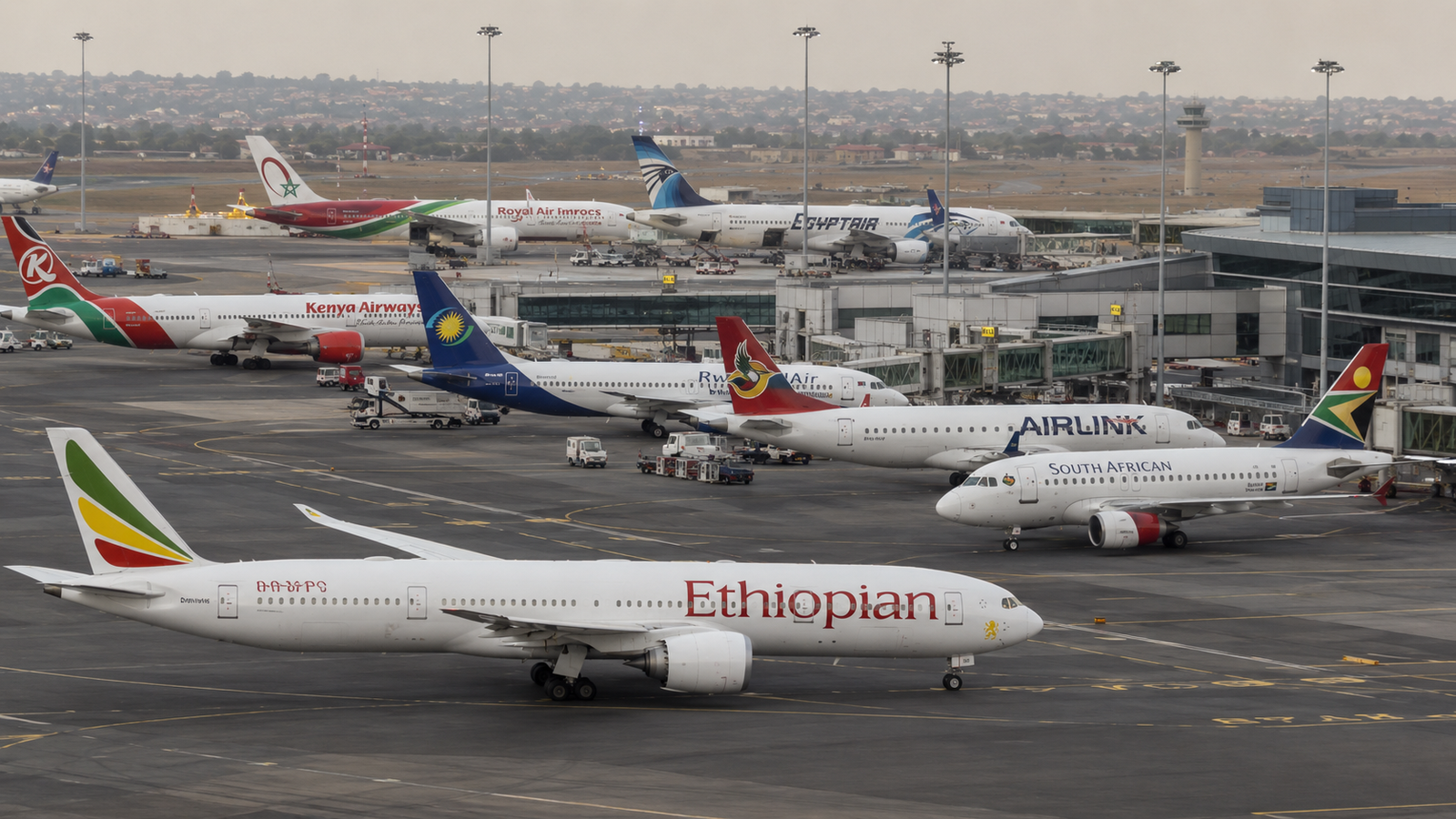
The AfDB’s $7 billion aviation programme is generating headlines. The distribution implications are generating silence.
The African Development Bank’s appointment of Nigeria’s aviation minister, Festus Keyamo, as continental champion for its $7 billion Integrated Aviation Transformation Programme for Africa landed this week with the kind of fanfare that large institutional commitments tend to attract. The number is real. The ambition is real. And buried within the programme’s three core pillars (SAATM operationalisation, safety oversight, and skills development) is a question that nobody in the mainstream aviation press is asking: if open skies finally comes to Africa at scale, what happens to how African airlines sell tickets?
That question is not academic. It sits at the intersection of route economics, technology readiness, distribution architecture, and consumer behaviour. And the answer, for anyone watching African aviation distribution closely, is that liberalisation would not simply grow the market. It would reshape the commercial machinery underneath it.
African carriers currently account for less than three percent of global air traffic. The continent’s population represents roughly eighteen percent of the world’s total. That gap is not purely a function of infrastructure deficits or safety concerns, though both contribute. It is substantially a function of connectivity: the absence of viable, affordable intra-African routes that would allow passengers to move across the continent without routing through Paris or Dubai. SAATM, the Single African Air Transport Market, was designed as the structural answer to that problem. Launched formally in 2018 under AU Agenda 2063, it has moved slowly. Thirty-four African countries have signed up, covering more than eighty percent of the continent’s aviation market on paper. In practice, bilateralism still governs most of the routes that matter.
What the AfDB programme signals, if it gains genuine political traction behind Keyamo’s appointment, is a renewed push to make SAATM operational rather than aspirational. For distribution professionals and travel technology companies, the implications deserve serious attention.
The first implication is structural. Open skies does not just create new routes. It creates an entirely new distribution problem. In mature markets, the response to that problem has increasingly shifted toward airline-controlled retailing: NDC, direct channels, dynamic offers, as carriers seek to recapture margin from intermediaries and present differentiated products to travellers. In Africa, that shift is already underway but uneven. Carriers with the technology investment and commercial sophistication to execute NDC are in the minority. Most African airlines still operate within legacy distribution frameworks that were designed for a different era, serving a fraction of the routes and passenger volumes that a genuinely liberalised continental market would require.
A more connected Africa does not automatically produce a more sophisticated African distribution ecosystem. It creates the conditions for one, and the pressure. Airlines opening new intra-African routes will face a choice: continue distributing through legacy channels at margin-eroding cost, or invest in the capability to retail directly, dynamically, and at scale. That is a technology question as much as a commercial one, and it will stress-test the readiness of both carriers and their technology partners.
The second implication runs through the OTA layer. Online travel agencies operating in Africa have historically built their business models around international travel: outbound from Africa, inbound from outside. Intra-African travel has represented a smaller and more complex revenue opportunity, characterised by thin margins, currency volatility, and fragmented airline inventory. A liberalised market with more routes, more competition, and more affordable fares changes that equation materially.
The opportunity for African OTAs to become genuinely continental platforms, rather than country-level or corridor-level businesses, has always been constrained by the supply side. There were not enough routes to aggregate. Connectivity improvements change what an African OTA can be. But they also raise the stakes on technology infrastructure. Aggregating dynamic NDC content from multiple carriers across multiple currencies and payment methods, at speed, is a different problem from aggregating published fares through a single GDS connection. The OTAs that are investing in that capability now are positioning ahead of a market that does not fully exist yet.
In a recent TDN interview, a senior executive at Wakanow, Nigeria’s leading OTA, offered a view that reflects the broader tension: the appetite among African travellers to move across the continent is real and growing, but the booking infrastructure to capture that demand at scale remains incomplete. Liberalisation accelerates the commercial urgency of solving that problem.
The third implication concerns the GDS position in an open-skies Africa. Global distribution systems built their African footprint in an era when airline distribution was effectively synonymous with GDS distribution. The commercial model reflected that: override agreements, booking fees, dependency. As NDC has evolved globally, GDS providers have adapted, building NDC aggregation capabilities and repositioning as technology platforms rather than pure distribution intermediaries. That repositioning is still playing out.
In Africa, GDS penetration varies significantly by market and carrier. Some of the continent’s more sophisticated airlines have been early movers on NDC. Others remain deeply embedded in legacy distribution arrangements. A SAATM-driven expansion of African aviation would bring more carriers, more routes, and more distribution decisions into the frame simultaneously. The architecture of African aviation distribution is not yet locked in. That matters because liberalisation tends to reward whoever controls the commercial layer between airline inventory and traveller demand. The GDS players that have invested in Africa will have a first-mover advantage in terms of relationships and infrastructure. But the technology architecture of a liberalised African aviation market will be built largely over the next decade, and the distribution standards and commercial frameworks that govern it are not yet fixed.
The fourth implication is payments, and it may be the most fundamental. African aviation distribution does not have a technology problem in isolation. It has a payments problem that interacts with every other layer. Currency convertibility, card acceptance, mobile money integration, cross-border settlement: the friction in African travel payments is not a peripheral concern. It is often the reason a booking does not complete. For a continental market to function at anything approaching its potential, the payments infrastructure underneath it has to work across dozens of currencies, dozens of regulatory environments, and an increasingly complex mix of payment methods.
The AfDB programme does not specifically address payments infrastructure. But any serious attempt to operationalise SAATM will encounter the payments layer immediately. Airlines pricing routes across African markets, OTAs aggregating that inventory, and travellers attempting to purchase across borders will all hit the same friction points. The travel payments companies investing in African infrastructure today, in settlement rails, local acquiring, and multi-currency reconciliation, are building something that a liberalised African aviation market would desperately need.
None of this is guaranteed. The AfDB’s programme is a commitment of intent, and African aviation has a long history of policy ambition that has not translated into structural change. SAATM itself is eight years old and still largely aspirational. Keyamo’s appointment as African champion adds political visibility; it does not resolve the bilateral agreements, slot constraints, safety certification gaps, and commercial arrangements that have kept African aviation fragmented.
But the direction of travel matters. Institutional capital at this scale, combined with renewed political engagement at the ministerial level, creates conditions that are qualitatively different from where the conversation was five years ago. Distribution companies, technology providers, OTAs, and payments players that are building for African aviation need to take the macro trajectory seriously, not because SAATM will be fully operational next year, but because the market it would create is large enough to justify investment decisions now.
The $7 billion headline will fade. The distribution question will remain. And for the airlines, OTAs, and technology companies operating in this space, that question is increasingly urgent regardless of what any institution announces in Brazzaville.
Travel Distribution News covers airline distribution, NDC, GDS dynamics, travel payments, and travel technology with a focus on Africa and emerging markets.