The Middle East and North Africa are not moving toward airline retailing at the same pace. While Gulf carriers are embedding NDC and Offer-Order architecture into their commercial strategies, many North African airlines remain tied to legacy distribution models. The result is a growing competitive divide that could reshape market share, ancillary revenue, and agency relationships across the region.
The Middle East and North Africa’s airlines are moving toward modern distribution, but not together. Across six carriers that collectively represent the region’s commercial aviation backbone, the gap between ambition and action has never been wider. Gulf carriers are embedding NDC into their core retailing strategy. North Africa’s flag carriers are still treating it as a technology footnote. And in Egypt, a private airline is outpacing the national flag carrier that dwarfs it in size. The divergence is not technical. It is strategic.
Emirates: The GDS Giant Finally Opens the NDC Channel
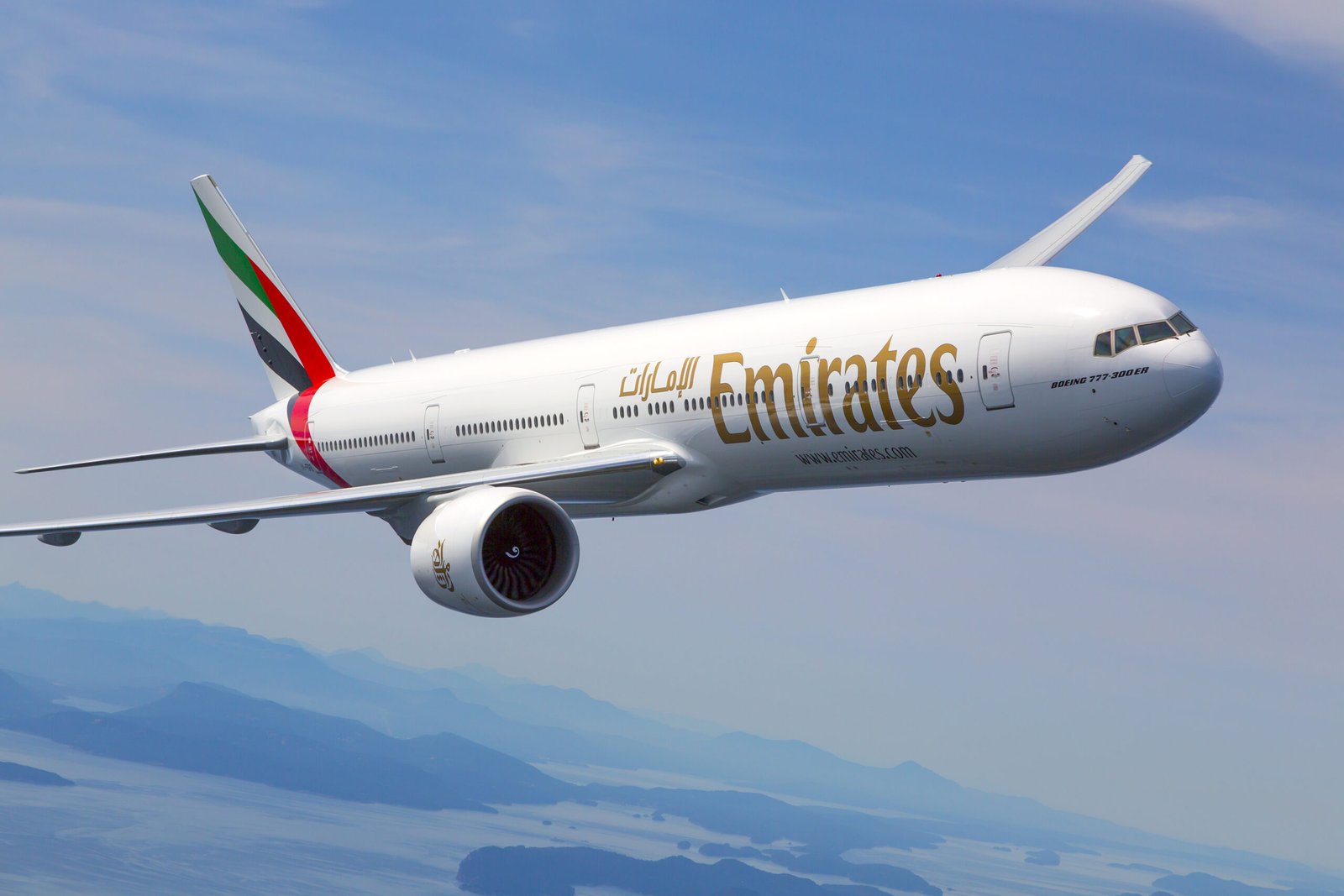
For years, Emirates occupied an unusual position in the global distribution debate. It was large enough to impose a GDS surcharge and make it stick, yet cautious about NDC in a way that surprised the industry given its scale. That caution has given way.
In 2024, Emirates signed agreements with both Travelport and Sabre to distribute its NDC content, including dynamic fares and ancillaries, through their respective platforms. Travelport went live with Emirates NDC content on its Travelport+ platform in June 2024. Sabre followed in December 2024. Emirates also expanded its direct NDC partnership with Expedia Group, enabling the OTA to sell Emirates fares natively through NDC channels.
The result is that Emirates is now distributing NDC content through two of the three major global distribution systems simultaneously. For an airline of its volume, that is a significant structural shift. The long-term read is that Emirates is not abandoning GDS distribution but reshaping its terms, using NDC to unlock richer content, dynamic pricing, and ancillary revenues through channels it previously had to leave money on the table in.
What Emirates has not done is move aggressively on GDS surcharges to force agency transition, as Lufthansa Group has. Its approach is to pull agencies toward NDC through content differentiation rather than push them with penalties.
Etihad: Early Mover, Multi-Partner Strategy
Of the three Gulf majors, Etihad committed to NDC earliest and most visibly. It achieved IATA NDC Level 4 certification, one of the highest levels awarded, meaning partners can shop, order, and amend orders entirely through the NDC connection without reverting to legacy channels for servicing. That is not a trivial achievement. Many carriers that claim NDC capability still require EDIFACT fallback for post-booking servicing.
Etihad’s distribution strategy beyond certification has been deliberately multi-partner. It partnered with Verteil Technologies to expand NDC reach in India, a high-volume market where Verteil’s aggregator network is deeply embedded with travel agencies. It is also live on Travelport’s platform for NDC content by country.
The Verteil partnership is worth noting in context. Etihad was one of the early anchor airline partners for Verteil, and that relationship helped validate Verteil’s platform commercially at a time when NDC aggregators were still proving their case to airlines. The dynamic has since matured, with Verteil now carrying multiple MENA carriers on the same infrastructure.
Etihad’s position today is that of an airline that moved on NDC before the industry consensus caught up, and is now benefiting from having established channel relationships that others are only beginning to build.
Qatar Airways: Broad but Quiet
Qatar Airways has NDC content available across multiple distribution channels, including through TMC partnerships with TravelPerk via Amadeus, but it has not been a loud voice in the NDC debate. There are no public GDS surcharge announcements, no aggressive agency mandates, and no headline-grabbing technology partnerships of the kind Etihad or Riyadh Air have generated.
That restraint reflects Qatar’s commercial positioning. As a carrier whose revenue is heavily weighted toward premium long-haul corporate and high-yield leisure, and one that has consistently won on product rather than price, the urgency to use NDC as a fare control lever is lower than for carriers fighting harder for margin. Qatar’s NDC moves are incremental and GDS-friendly, which keeps the travel agency community comfortable and preserves the corporate relationships that drive its load factors.
The question for Qatar is whether that measured approach will serve it as NDC adoption among TMCs accelerates and content differentiation becomes a competitive factor in corporate contract negotiations. For now, it is present in the NDC ecosystem without being a driver of it.
Saudia: Catching Up Through the GDS Channel
Saudi Arabia’s original flag carrier is not the most aggressive NDC mover in its own country, which says something about how dramatically the domestic landscape has shifted. But Saudia has been active.
In 2025, Amadeus launched Saudia’s NDC content on its platform, making fares and ancillaries available through Selling Platform Connect to agents across Amadeus’ global network. Shortly after, Saudia expanded its distribution deal with Travelport to include NDC, with the content going live for agents on Travelport Plus.
Being live on both Amadeus and Travelport for NDC in the same year is a meaningful milestone. It means Saudia’s NDC content is now accessible to the majority of global travel agency desktops that use GDS-based workflows, without requiring agencies to adopt a separate API connection or aggregator tool. That is important for a carrier whose traditional distribution has been heavily agent-mediated in markets across Asia, the Middle East, and Europe.
The larger context is that Saudia is navigating the emergence of Riyadh Air, which has been built from scratch on modern retailing architecture, at the same time as it is trying to modernize its own distribution stack. Managing that without cannibalizing itself, while keeping agency relationships intact, is the central tension in Saudia’s NDC story.
Riyadh Air: The Native Case Study
Riyadh Air is the most consequential NDC development in MENA, and arguably one of the most significant globally, because it is not retrofitting NDC onto a legacy system. It was built on modern Offer and Order architecture from day one.
The airline partnered with FLYR to deliver its Offer and Order retailing platform, making it the world’s first native ONE Order network carrier. That distinction matters because ONE Order, the next evolution beyond NDC, unifies the passenger name record, ticket, and electronic miscellaneous documents into a single order record. Most airlines implementing NDC are still running parallel systems, reconciling legacy records with modern offer management. Riyadh Air does not have that problem.
Its distribution footprint has been built just as deliberately. Sabre was named as its first global distribution partner in May 2025, covering both NDC and traditional EDIFACT content. Travelport signed a multi-year agreement with the carrier in November 2025, with NDC as the primary integration and legacy content as secondary. Riyadh Air’s NDC content then went live on Verteil’s aggregator platform in April 2026. It also signed a distribution and servicing deal with TPConnects, giving agencies access through the Iris aggregator platform. And in March 2026, Travelfusion integrated Riyadh Air NDC content, including dynamic fares, branded products, and ancillaries.
That is five distribution partnerships confirmed before the airline had carried a single commercial passenger at scale. Riyadh Air launched its first public commercial flights in 2026, meaning it entered the market with a more complete NDC distribution stack than carriers that have been flying for decades.
The Vision 2030 dimension is inseparable from this. Saudi Arabia is building Riyadh Air as infrastructure for an aviation hub ambition, targeting over 100 destinations by 2030. Modern retailing architecture is not a nice-to-have in that context. It is a prerequisite for the revenue management flexibility and ancillary yield the hub model requires at scale.
EgyptAir: The Flag Carrier Gap
EgyptAir is Africa’s most capacity-heavy carrier by departure seats in 2026, with over ten million seats scheduled from January to October. It serves more than 80 destinations. It is a Star Alliance member. And its NDC activity, as of mid-2026, amounts to a single aggregator partnership.
In September 2025, EgyptAir launched its NDC content on TPConnects’ Iris platform. The launch was accompanied by a travel seller event in Cairo and genuine enthusiasm from both parties. But there is no evidence of EgyptAir pursuing a GDS NDC integration, no ARM index registration, and no public roadmap for extending NDC beyond the Iris channel.
For an airline of EgyptAir’s scale, that is a distribution strategy that has not yet begun in any serious sense. The Iris integration gives a subset of travel sellers access to NDC content, but the bulk of EgyptAir’s agency distribution still runs through EDIFACT-based GDS workflows that offer no differentiated content, no dynamic pricing, and no ancillary merchandising capability.
The institutional constraints are real. EgyptAir operates within a state-owned structure with procurement and technology decision-making that moves on government timelines, not commercial ones. But the competitive pressure is also real: Nile Air, a private carrier with a fraction of EgyptAir’s network, is running circles around it on distribution modernisation.
Nile Air: The Private Carrier Paradox
Nile Air has no long-haul flights. It does not appear in global airline capacity rankings. And it has a more advanced NDC distribution strategy than Egypt’s national carrier.
The airline is on three NDC platforms simultaneously. It expanded its use of Amadeus’ NDCX platform, rolling out NDC content across Saudi Arabia, the Gulf region, and Europe. In April 2026, it launched NDC distribution via Verteil Direct Connect, targeting Egypt and GCC markets initially. And it expanded a partnership with PMI Flight for international NDC distribution beginning in November 2025.
The commercial logic is straightforward. Nile Air’s primary revenue markets are Egypt-to-GCC routes, where Egyptian labour migration and the Gulf’s large Egyptian diaspora community generate consistent demand. Those GCC markets, particularly Saudi Arabia and the UAE, are where travel agency adoption of NDC is growing fastest because of Riyadh Air and Etihad pulling the local agency community toward modern platforms. A carrier that cannot deliver NDC content in those markets is increasingly invisible to the agents who are building NDC-first workflows.
Nile Air is not leading the NDC conversation in MENA. But it is responding to market signals faster than institutions ten times its size, which is the more important observation.
Royal Air Maroc: The Silence
Royal Air Maroc is the fourth largest African carrier by capacity, a oneworld member, and operating the most ambitious fleet expansion programme on the continent, targeting 200 aircraft by 2037. It sits in an alliance alongside British Airways, Iberia, and American Airlines, all of which have been among the most aggressive adopters and proponents of NDC globally.
There is no public record of Royal Air Maroc pursuing an NDC distribution strategy. No aggregator partnerships have been announced. No GDS NDC integration is public. No ARM index certification appears in IATA’s registry. In the same period that its oneworld partners have been restructuring agency economics around NDC content, RAM has been silent.
That silence will carry a cost. As IAG carriers deepen NDC-only content and interline agreements through NDC channels become standard practice, RAM’s ability to participate in premium interline traffic with its alliance partners will increasingly depend on distribution architecture it has not yet built. Morocco’s tourism growth is accelerating, with capacity up over 21 percent in 2026, and the country’s appeal to European leisure travellers is rising. RAM is well-positioned commercially. It is not well-positioned distributionally.
What the Divergence Means
The MENA NDC story is not a story of fast and slow. It is a story of structurally different incentives producing structurally different outcomes.
The Gulf carriers moved first because they had the capital, the tech partnerships, and the commercial urgency to differentiate content and capture ancillary revenue at scale. Riyadh Air moved fastest of all because it had no legacy to protect. North Africa’s carriers are moving slowly because they are state institutions operating in markets where travel agency distribution is entrenched, EDIFACT workflows are the norm, and the downside of disrupting agency relationships is visible while the upside of NDC revenue is still abstract.
What changes that calculus is not technology. It is commercial pressure from airlines that have already made the shift. As Gulf carriers deepen NDC content advantages and travellers begin booking experiences that North African carriers cannot replicate through legacy channels, the gap becomes a revenue problem, not just a distribution problem.
That moment is approaching faster than most of the carriers in this analysis appear to appreciate.