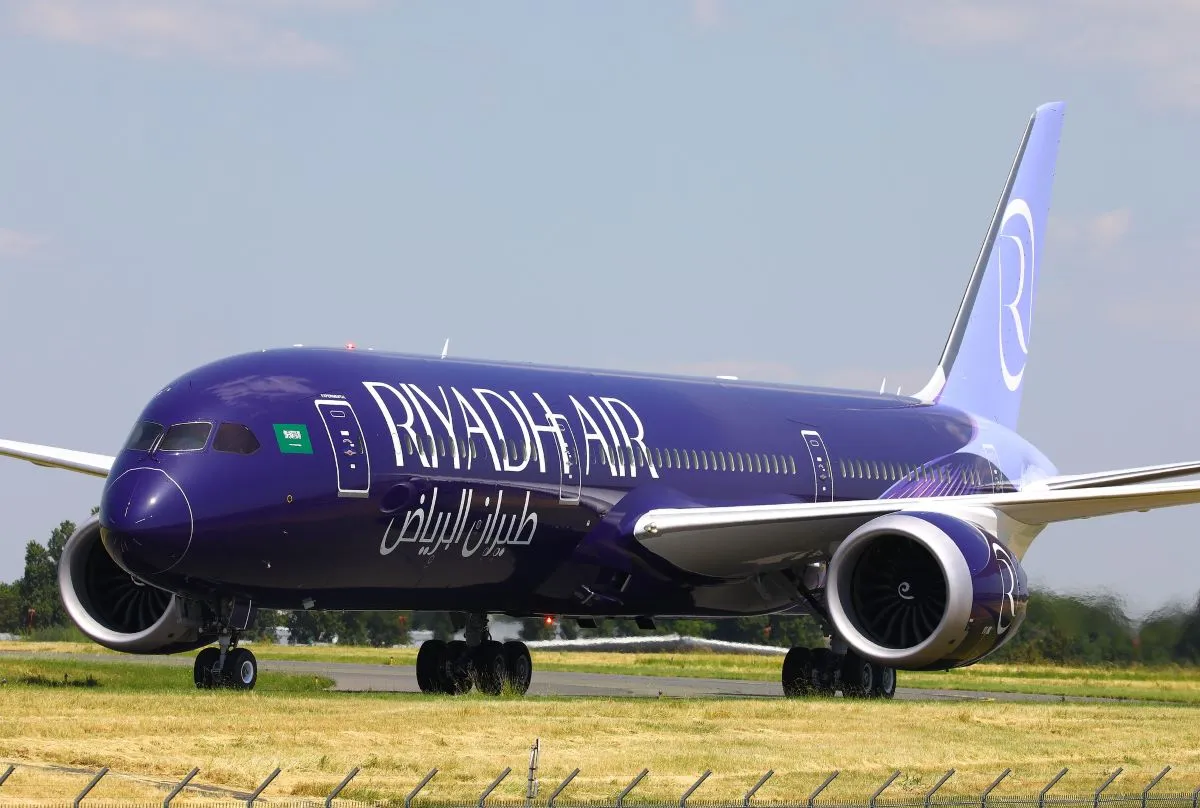
Riyadh Air has secured approval from the US Department of Transportation to operate flights to and from the United States. The DOT granted the exemption authority on June 16, covering an application the airline filed in May, and it functions as a placeholder authorization while a permanent foreign air carrier permit works through the system over a two-year term.
The timing matters less for what it says about US aviation policy than for what it confirms about Riyadh Air’s launch sequence. This is a carrier that has spent the past two weeks compressing milestones that usually take new entrants years to clear. It took delivery of its first Boeing 787-9s in early June, flew its maiden commercial service to London Heathrow on June 10, opened domestic service between Riyadh and Jeddah on June 14, and added Dubai on June 18. Cairo, Madrid and Manchester follow through July. It also became an IATA member this month, at the association’s World Air Transport Summit in Rio de Janeiro.
None of that happened by accident, and neither did the distribution side of the business.
As TDN reported this week, Riyadh Air entered commercial service with five confirmed distribution partnerships already in place: Sabre as its first global distribution partner, covering both NDC and EDIFACT content; Travelport, with NDC as the primary integration; Verteil’s aggregator platform; a distribution and servicing deal with TPConnects’ Iris platform; and Travelfusion, carrying dynamic fares, branded products and ancillaries. That is a more complete NDC distribution footprint than airlines that have been flying for decades, built before Riyadh Air carried a single paying passenger at scale.
The US approval extends that pattern into a new market. An airline with NDC content already live across three aggregator platforms and two of the three major GDSs is now positioned to bring that same distribution architecture into the largest outbound travel market in the world, rather than backfilling it after the fact. Corporate travel buyers and agencies serving US-Gulf demand will have dynamic, NDC-based content available across multiple channels from the carrier’s first day of US-adjacent relevance, not years into its network build-out.
That is the part of this story worth holding up against the rest of the region. EgyptAir, Africa’s most capacity-heavy carrier by scheduled seats, has one NDC aggregator partnership, through TPConnects’ Iris platform, and no public GDS NDC integration or ARM index registration. Royal Air Maroc has no publicly announced NDC distribution strategy at all. Both airlines are expanding their networks. Neither has matched the distribution infrastructure decisions that a pre-revenue Saudi startup made as a baseline requirement before opening its doors.
Riyadh Air’s US clearance is a regulatory story on the surface. Underneath it, it is another data point in the same gap TDN has been tracking all year: airlines that build retailing capability into their launch plan from day one, and airlines that are still treating distribution as something to figure out after the network is already flying.