The low-cost carrier’s group-level agreement is less a return to the old distribution model than a sign that airline retailing is becoming more layered.
An airline signing with a GDS is not news. A large low-cost carrier doing so on a model that keeps its own systems in the loop is. Air Arabia’s group-level agreement with Amadeus, announced on 2 October, suggests the GDS is adapting to how low-cost carriers sell rather than waiting for them to adapt to it. It also suggests that airline distribution is becoming more layered, not that one channel is replacing another.
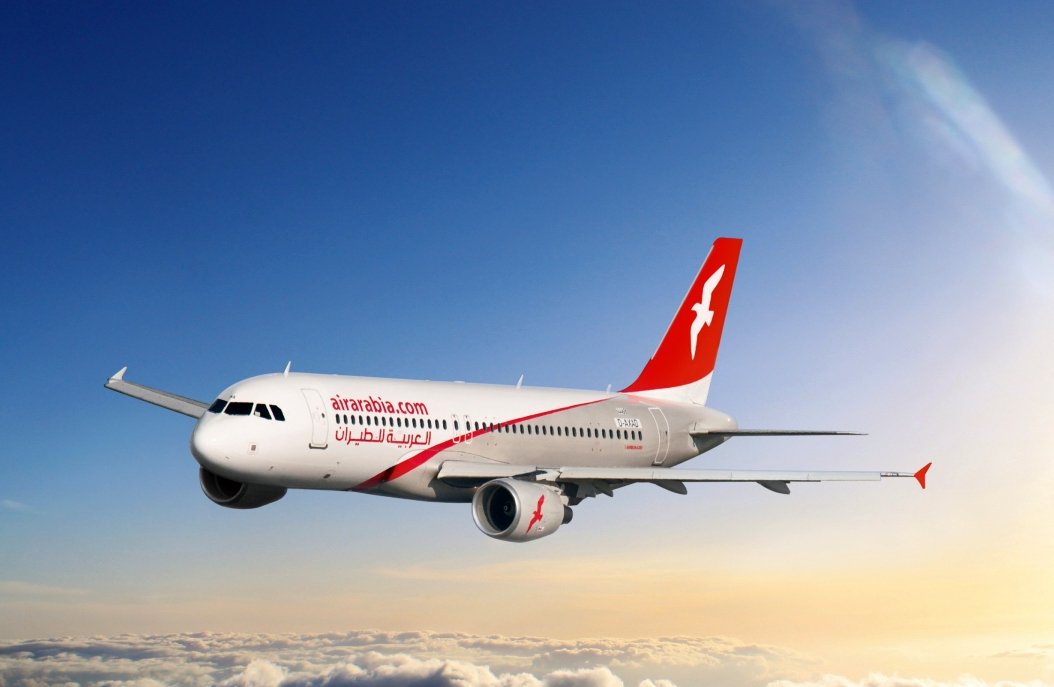
Amadeus says the agreement lets Air Arabia extend its presence across the Amadeus network of travel sellers, who can serve its customers through established workflows. Air Arabia describes itself as the largest budget carrier operator in the Middle East and North Africa, with more than 20 million passengers a year and over 200 routes from six hubs across the UAE, Morocco, Egypt and Pakistan. The release does not say which group entities are covered, when content goes live, whether the deal is exclusive, or what agencies earn or pay to sell it. It also does not mention NDC. The relationship is not entirely new either. Amadeus announced in September 2011 that it had signed distribution agreements with nine low-cost and hybrid carriers, and its own release named Air Arabia Maroc among them. The group-level framing therefore appears to broaden a relationship that reaches back at least fifteen years within the Air Arabia group.
The commercial model is the interesting part. The release says the agreement uses light ticketing, which lets travel sellers book and manage budget carrier content in standard GDS workflows while connecting directly with the airline’s systems in real time. Amadeus does not describe the mechanics, so what follows is TDN’s interpretation. In a traditional GDS arrangement, fares and inventory live in the GDS and tickets are issued through it. Low-cost carriers have long been an awkward fit for that structure, because their reservation systems, fare logic and ancillary sales were built around their own channels. Light ticketing appears to resolve this by leaving the airline’s system as the source of truth while the agent works from the workflow they already use. The GDS becomes less a place where inventory lives and more a place where inventory is seen and sold.
That is why the model matters strategically. The carrier does not have to rebuild its commercial logic around GDS conventions, and the agent does not have to learn a new tool. Each side keeps what it values most.
Why would a carrier of Air Arabia’s size want this at all? Amadeus’s 2025 Global Report argues that indirect distribution helps low-cost carriers reach higher-yield segments such as business travelers, and drives demand on international routes and in markets where the airline’s brand and e-commerce presence are less developed. That is a vendor’s claim, but it maps neatly onto a carrier with hubs in Egypt, Pakistan and Morocco. Amadeus’s Maher Koubaa added a second argument, pointing to agency support before, during and after the trip, including changes, disruptions, refunds and rescheduling. For a low-cost carrier, post-booking servicing carries real cost and customer-experience implications. When agencies handle changes, disruptions, refunds and rescheduling, part of that servicing sits within the agency relationship rather than with the airline directly.
For the agency, “standard workflow” is not a convenience. A seller handling dozens of airlines cannot maintain a separate process for each one. Content that sits in the same display, and is bookable and serviceable the same way as everything else, gets sold. Content behind a separate portal tends to be sold only when the customer asks for it by name. Amadeus makes a related point itself: airline channel strategies can fragment content, and overcoming that fragmentation adds cost and complexity for travel sellers. A familiar workflow is, among other things, a defence against that cost.
Light ticketing also sits awkwardly in the usual story of the shift from EDIFACT to NDC. EDIFACT is the decades-old messaging standard on which classic GDS content runs, and NDC is the IATA standard that lets airlines send richer offers through APIs. The conventional narrative treats them as two ends of one road. This agreement is not described as a conventional EDIFACT distribution arrangement, nor is the announcement framed as an NDC rollout. The Amadeus figures show a platform serving several models at once. Only four airlines were live with NDC content on the Amadeus platform in 2022, against 35 by the end of 2025, and Amadeus manages NDC APIs for 50 of its 200 airline IT customers. Beside them sit the older EDIFACT content, the low-cost carriers and now light ticketing. That is a stack, not a staircase.
The numbers should not be read as a scoreboard. Amadeus recorded 484.5 million travel agency air bookings in 2025, up 2.8 percent, while bookings in its Middle East and Africa region fell 2.8 percent. That describes a large, steady business operating in a difficult region, not a GDS sweeping the field.
The counterargument is serious, and it deserves to be stated plainly. A GDS agreement does not signal a return to the old model. Airlines keep investing in direct channels, APIs, NDC and offer-and-order thinking, and nothing in the announcement suggests Air Arabia is scaling back its own digital retailing. The useful question is no longer whether an airline sells through a GDS or directly, but which mechanism creates value for which customer at what cost. A carrier can build richer offers on its own channels and still accept that a large share of travellers book through an agent who will not leave their workflow. Those positions do not contradict each other.
Nor is Air Arabia alone. The Amadeus report names Breeze Airways, Flyadeal, Frontier Airlines, JetSMART and Viva as carriers that chose to distribute through the platform in 2025, and describes an acceleration in low-cost carriers incorporating indirect distribution. Flyadeal, a Saudi low-cost carrier, signed a worldwide distribution agreement with Amadeus, and Amadeus says more than 170 low-cost or hybrid carriers rely on its platform. These are Amadeus’s own figures, and “relying on the platform” can mean arrangements of very different depth. TDN has also not verified how Air Arabia or its peers distribute through other GDSs and aggregators, so no conclusion about Amadeus’s competitive position should rest on this deal alone. The narrower point stands, however: low-cost carriers are being treated as a distribution opportunity, not only as a direct-channel success story.
The old assumption was that low-cost carriers would eventually move distribution almost entirely to their own channels and leave the GDS to fade as retailing modernised. Air Arabia’s choice does not refute that outlook, but it complicates it. Distribution rarely gets replaced. It gets stacked. Airlines will keep building their own shops, and agencies will keep working where their customers are. The infrastructure worth watching is whatever sits between the two and makes them behave like one market. Air Arabia has just placed a bet on that layer. Whether the economics reward it, for the airline and for the agencies selling its seats, is what TDN will be watching next.